

Creating Career Path...

Finding Further Careers...

Food Safety Microbiologist

View this career for different education levels:

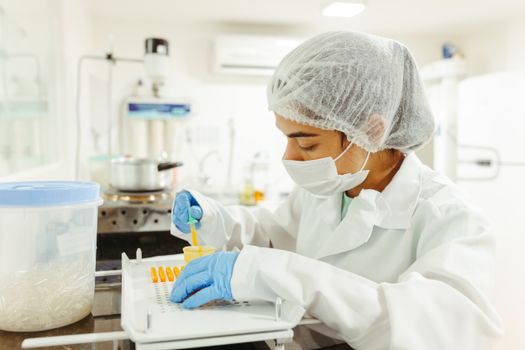
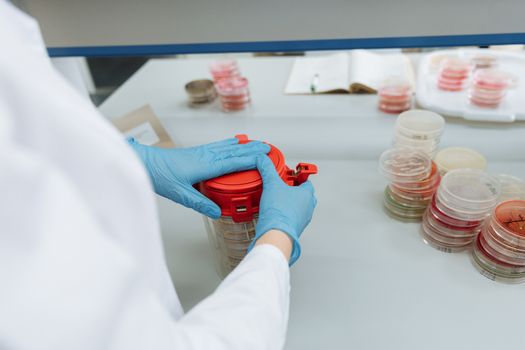
A Food Safety Microbiologist is like a detective for food! Their main job is to make sure that the food we eat is safe and free from any tiny, invisible nasties like bacteria or mould that could make us ill. They work in laboratories, carefully testing food samples from farms, factories, and even shops. They use special equipment to find out what kinds of microbes are present, how many there are, and if they are dangerous. This helps food companies understand how to process, store, and package food safely. Imagine a Food Safety Microbiologist testing a batch of ready meals or some fresh fruit. They might look for bacteria like Salmonella or E. coli, which can cause food poisoning. They also help develop better ways to keep food fresh for longer and advise on hygiene practices in food production. It is a really important job because it protects everyone's health and helps ensure we have a safe and reliable food supply in the UK.

Food Safety Microbiologist

Flag Media

Please select a reason for flagging this content.

📊 Statistics

Typical Starting Salary

A new Food Safety Microbiologist in the UK might start on a salary of around 20,000 to 25,000 pounds per year. As you gain more experience, this can go up quite a lot!

Experienced Salary Range

With several years of experience, a Food Safety Microbiologist in the UK can expect to earn between 30,000 and 45,000 pounds annually, and even more for senior roles.

Job Market Outlook

The demand for skilled food scientists and microbiologists in the UK remains steady, as ensuring food safety is always a top priority for companies and the government.

🚀 Careers in this path

Flag Media

Please select a reason for flagging this content.

Food Technologist

Imagine you are a detective for food! You'd work in a lab to check if food is safe to eat, making sure there are no tiny bugs called microbes that could make people ill. You'd also help invent new foods and improve old ones, making them taste great and last longer on the shelf.

Flag Media

Please select a reason for flagging this content.

Environmental Health Officer

An Environmental Health Officer is like a community hero who makes sure local restaurants, shops, and places where food is made are super clean and safe. They visit places, check everything from kitchens to storage, and advise people on how to stop germs spreading, so everyone stays healthy.

Flag Media

Please select a reason for flagging this content.

Quality Assurance Technician in Food Production

In a factory that makes yummy snacks or meals, a Quality Assurance Technician makes sure every single batch of food is perfect. They check for the right ingredients, correct cooking temperatures, and that the packaging is sealed properly, all to guarantee the food is safe and delicious when it reaches people's homes.

Build Your Foundations

Ace Your Science Classes

Focus on getting good grades in science subjects, especially Biology and Chemistry. These subjects are super important for understanding microbiology.

At school, pay close attention in your Biology lessons where you learn about cells, bacteria, and other tiny organisms. Chemistry will help you understand how different substances interact, which is crucial for lab work. Maths is also helpful for data analysis later on. Try to participate in science clubs or competitions if your school offers them.

Explore Microbes

Start learning about microbes in everyday life. You can do this by reading books, watching documentaries, or even doing simple experiments at home (with adult supervision!).

Look up how yeast makes bread rise, or how mould grows on old food. These are all examples of microbiology in action. You could visit science museums that have exhibits on bacteria or food production. Understanding how microbes affect us daily will spark your curiosity and make learning more exciting.

Visit a University Open Day

Attend open days at universities that offer science courses, particularly those with departments in Biology, Microbiology, or Food Science.

This is a great way to see what university life is like and what kind of facilities they have. You can talk to current students and professors, ask questions about courses, and even see some of the labs where future food safety microbiologists learn. It helps you get a feel for what higher education in science involves.

Higher Education & Skills

Choose a Relevant Degree

After school, you'll need to study at university to get a degree in a science subject like Microbiology, Food Science, or Biotechnology.

Many universities in the UK offer Bachelor's degrees (BSc) in these fields. Look for courses that include modules on food microbiology, food safety management, molecular biology, and laboratory techniques. Some degrees might even offer a 'sandwich year' where you can do a year-long placement in industry, which is fantastic for gaining experience.

Gain Lab Experience

During your degree, try to get as much practical experience in a laboratory as possible. This could be through your course's practicals or summer internships.

University courses will have laboratory sessions where you learn how to use equipment, perform experiments, and analyse samples. If you can find a summer internship at a food company, a research lab, or even a local council's food testing lab, that would be incredibly valuable. It helps you apply what you've learned and shows employers you have hands-on skills.

Develop Key Skills

Work on skills like attention to detail, problem-solving, and good communication. These are important for any scientist.

In a lab, being careful and precise is super important to get accurate results. Food safety microbiologists often have to figure out why food is contaminated, which requires great problem-solving skills. You'll also need to be able to explain your findings clearly to colleagues and sometimes even to people who aren't scientists, so good communication, both written and verbal, is essential.

Start Your Career

Apply for Entry-Level Roles

Look for jobs as a Junior Microbiologist, Laboratory Technician, or Food Safety Assistant in food manufacturing companies, public health labs, or contract testing labs.

Many companies that make or process food will have their own labs. You can also find opportunities with organisations like the Food Standards Agency (FSA) or local councils. Contract testing labs provide services to many different food businesses. Be prepared to start in a role where you learn the ropes and work under supervision.

Seek Professional Development

Once you're working, continue learning by attending workshops, courses, and getting involved with professional bodies like the Institute of Food Science & Technology (IFST).

The world of food safety is always changing with new science and regulations. Staying up-to-date is crucial. Professional bodies offer resources, networking opportunities, and sometimes even certifications that can boost your career. Attending conferences allows you to learn about the latest research and connect with other professionals in the field.

Specialise and Advance

As you gain experience, you can choose to specialise in certain areas like dairy, meat, or ready meals, and move into more senior roles.

With experience, you might become a Senior Microbiologist, Lab Manager, or even a Food Safety Consultant. Some microbiologists might even go on to do a Master's (MSc) or PhD if they want to get involved in research or academia. Specialising makes you an expert in a particular field, which can open up many exciting opportunities.

🎬 Useful Videos

🎯 View Apprenticeships

Explore relevant apprenticeships that can help you kickstart your career in Food Safety Microbiologist. Apprenticeships offer hands-on experience and training while earning a wage.

Career Progressions

This page showcases various career options and the pathways to reach them. Each career listed here shares transferable skills and knowledge, making it easier for individuals to transition between them.

Your current career is highlighted to help you see how it fits into the broader landscape of potential career choices. By clicking on any career, you can learn more about it, including the training and education required to pursue it.

Remember, progressing in your career often involves further learning and training. This page provides insights into future career options as well as those that can lead up to your current one.

These career progression decisions are informed by comparing the skills and knowledge needed for different occupations, along with data on how people move between them. Explore the possibilities and discover the exciting journey ahead in your career!

Sample Qualifications

A Food Safety Microbiologist's primary role involves applying microbiological principles to ensure food safety, which directly aligns with the core expertise of a Microbiologist. While food safety is the specific application, 'Microbiologist' is the broader and most accurate professional classification from the given list, encompassing the fundamental scientific discipline required.

How to become

You can get into this job through:

  • a university course
  • an apprenticeship
  • working towards this role

University

To become a microbiologist, you could do a degree in:

  • microbiology
  • biology
  • life sciences
  • biological science

Some degree courses include an integrated master's qualification like MBiol or MSci. You'll usually have more time for independent research and they're designed to lead directly onto further postgraduate study like a PhD.

Training programme for the NHS

If you want to work in the NHS as a microbiologist, you could apply to the Scientist Training Programme (STP) after your degree.

You'll train on the job, get paid a salary and receive a master's degree at the end.

Entry requirements

You'll usually need:

  • 5 GCSEs at grades 9 to 4 (A* to C), or equivalent, including English, maths and science
  • 2 or 3 A levels, or equivalent, including biology for a degree
  • a degree in a relevant subject for postgraduate study

More Information

Apprenticeship

You may be able to become a microbiologist by doing an apprenticeship, for example:

  • Scientist Level 6 Degree Apprenticeship
  • Research Scientist Level 7 Degree Apprenticeship

These apprenticeships can take between 3 and 5 years to complete.

Entry requirements

You'll usually need:

  • 4 or 5 GCSEs at grades 9 to 4 (A* to C) and A levels, or equivalent, for a degree apprenticeship

More Information

Work

You might be able to get into microbiology by working your way up from a laboratory technician.

You would need to study part time for a biological science degree or degree apprenticeship while you work.

Volunteering

Volunteering in the NHS is a good way to get work experience in a healthcare lab. This can be helpful when you apply for jobs or training.

More Information

Professional and industry bodies

You can join the Microbiology Society to get professional recognition, find training opportunities and make new contacts.

Further information

You can get more advice about working in microbiology from the Microbiology Society and Health Careers.

Interested in More Career Paths?

Explore other careers or use our AI to discover personalised paths based on your interests.

Stay connected

Join our newsletter to stay up to date on features and releases

Address
Developing Experts Limited
Exchange Street Buildings
35-37 Exchange Street
Norwich
NR2 1DP
UK

Phone
01603 273515

Email
[email protected]

Copyright 2026 Developing Experts, All rights reserved.