
Creating Career Path...

Finding Further Careers...

Water Quality Scientist

View this career for different education levels:

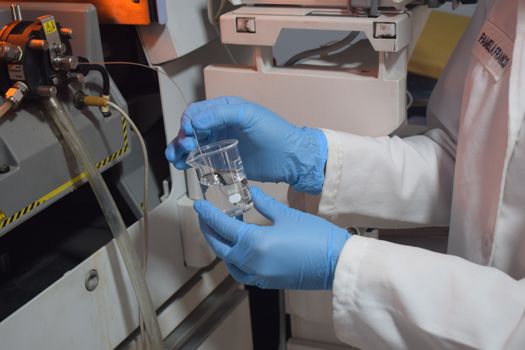
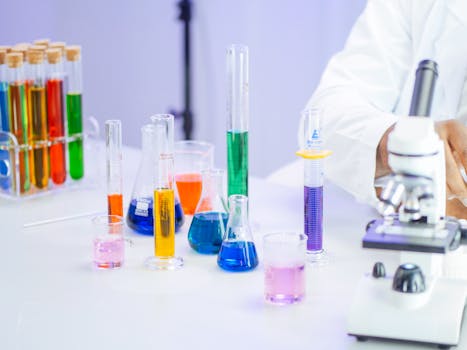
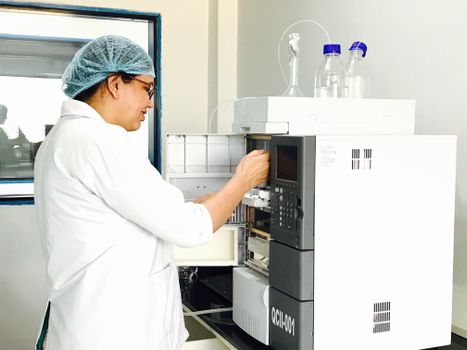
Imagine being a superhero for water! A Water Quality Scientist makes sure that the water we drink from our taps, and the water in our rivers, lakes, and seas, is clean and safe. They work in laboratories, testing water samples to check for any harmful chemicals, bacteria, or other things that shouldn't be there. They use special equipment to analyse the water and understand what's in it. It's not all lab work though! Water Quality Scientists also go out into the field to collect samples from different places, like reservoirs or treatment plants. They help investigate pollution incidents, advise on how to improve water quality, and make sure that water companies and other organisations are following strict rules to protect our environment and our health. It's a really important job because clean water is essential for everyone.

Water Quality Scientist

Flag Media

Please select a reason for flagging this content.

📊 Statistics

Average Salary Range

For an entry-level Water Quality Scientist in the UK, you might expect to earn between 20,000 and 25,000 pounds a year. Experienced scientists can earn 35,000 to 50,000 pounds or more, depending on their responsibilities and where they work.

Job Outlook

There's a steady demand for Water Quality Scientists in the UK, driven by the need to meet environmental regulations and maintain public health. The water industry is always looking for new talent.

Typical Working Hours

Most Water Quality Scientists work around 37-40 hours a week, usually Monday to Friday. However, some roles might involve being on call or working occasional weekends to respond to urgent issues, like a pollution incident.

🚀 Careers in this path

Flag Media

Please select a reason for flagging this content.

Environmental Scientist focusing on Rivers

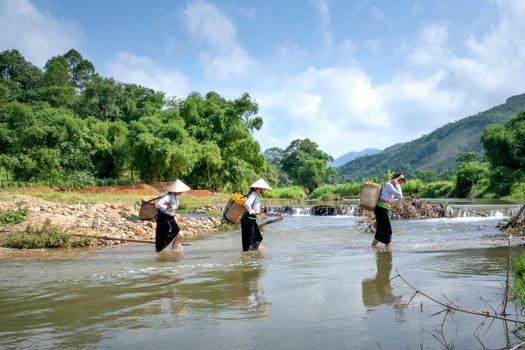
Imagine you're a detective for our rivers! You'd visit local rivers and streams, take samples of the water, and look for tiny insects or fish that tell you if the water is healthy. You'd work out if pollution is a problem and suggest ways to make the river cleaner for all the plants and animals that live there, and for people too.

Flag Media

Please select a reason for flagging this content.

Public Health Water Officer

Think about the water that comes out of your tap at home. A Public Health Water Officer makes sure it's always super clean and safe to drink. You'd visit places where water is treated and check that all the processes are working perfectly. You'd also investigate if anyone ever gets poorly from water and help prevent it from happening again.

Flag Media

Please select a reason for flagging this content.

Marine Biologist specialising in Coastal Waters

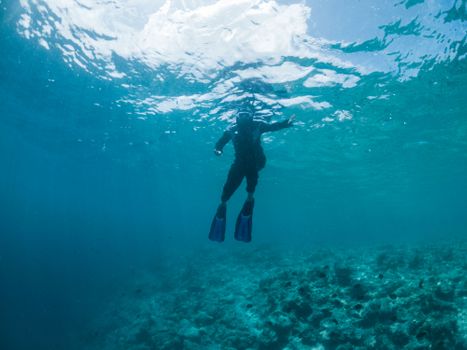
If you love the sea and the creatures in it, this could be for you! A Marine Biologist specialising in Coastal Waters studies the water right next to our beaches and shorelines. You'd check how clean it is for fish, crabs, and even bigger sea creatures. You'd also look at how things like litter or chemicals might affect their homes and help protect our precious coastlines.

Build Your Foundation

Excel in Science and Maths

Focus on your science subjects like Biology, Chemistry, and Physics, as well as Maths. These subjects are crucial for understanding water quality.

Doing well in these subjects now will set you up perfectly for future studies. Pay attention in lessons, ask questions, and try to get involved in any science clubs or experiments your school offers. Understanding how chemicals work together or how living things affect water is really important for a Water Quality Scientist.

Explore Environmental Topics

Learn about the environment, pollution, and how our actions affect natural resources, especially water.

Read books, watch documentaries, or explore websites about environmental issues, conservation, and climate change. Understanding these big topics will help you appreciate why water quality is so vital and the kind of challenges scientists face in protecting it.

Develop Practical Skills

Practice your observation skills, how to follow instructions carefully, and how to record information accurately during experiments.

Science often involves careful experiments and recording what you see. Even simple experiments at home (with adult supervision!) or in school can help you develop these skills. Learning to pay close attention to detail and write down your findings clearly is key for any scientist.

Further Your Education

Choose A-Levels or Equivalent

After your GCSEs, pick A-levels (or Scottish Highers/BTEC equivalents) that focus on science, such as Biology, Chemistry, Environmental Science, and Maths.

Most universities will expect you to have at least two science A-levels (often Chemistry and Biology are preferred) to study a relevant degree. These subjects will deepen your knowledge and prepare you for university-level science. Check university entry requirements for specific courses you might be interested in.

Complete a University Degree

Go to university to study a science-related degree like Environmental Science, Chemistry, Biology, Marine Biology, or a related engineering field.

A Bachelor's degree (BSc) is usually the minimum requirement. Look for courses that include modules on water quality, environmental monitoring, analytical chemistry, or microbiology. Some degrees might even offer placements or field trips to water treatment plants or laboratories, which would be fantastic experience.

Consider a Postgraduate Degree

For more specialised roles or research, think about studying a Master's degree (MSc) in a specific area of water science.

While not always essential, a Master's degree can give you an edge, especially for higher-level positions or if you want to focus on a particular aspect like water treatment, pollution control, or aquatic toxicology. It allows you to delve deeper into a specific area you're passionate about.

Gain Experience and Start Your Career

Seek Work Experience or Internships

Try to get some work experience during your university holidays or after graduation at a water company, environmental consultancy, or laboratory.

This is a fantastic way to see what the job is really like day-to-day. You could help with sample collection, laboratory analysis, or data entry. Even a short placement can give you valuable insights, connections, and show potential employers you're serious about the field.

Apply for Entry-Level Positions

Look for jobs such as 'Trainee Water Quality Scientist', 'Laboratory Technician', 'Environmental Assistant', or 'Graduate Scientist' with water companies, environmental agencies (like the Environment Agency), or scientific consultancies.

Your first job will be a chance to learn on the job, develop practical skills, and work alongside experienced scientists. You'll likely be involved in collecting samples, conducting routine tests, analysing data, and contributing to reports. Many organisations offer graduate schemes designed to help you develop your career.

Join Professional Organisations

Consider becoming a member of relevant professional bodies like the Institute of Water or the Royal Society of Chemistry.

These organisations offer networking opportunities, access to training courses, conferences, and resources that can help you stay up-to-date with the latest developments in water science and even work towards professional chartership. It shows you're committed to your field and ongoing learning.

🎬 Useful Videos

🎯 View Apprenticeships

Explore relevant apprenticeships that can help you kickstart your career in Water Quality Scientist. Apprenticeships offer hands-on experience and training while earning a wage.

Career Progressions

This page showcases various career options and the pathways to reach them. Each career listed here shares transferable skills and knowledge, making it easier for individuals to transition between them.

Your current career is highlighted to help you see how it fits into the broader landscape of potential career choices. By clicking on any career, you can learn more about it, including the training and education required to pursue it.

Remember, progressing in your career often involves further learning and training. This page provides insights into future career options as well as those that can lead up to your current one.

These career progression decisions are informed by comparing the skills and knowledge needed for different occupations, along with data on how people move between them. Explore the possibilities and discover the exciting journey ahead in your career!

Sample Qualifications

A Water Quality Scientist often studies water bodies (lakes, rivers, oceans) to assess their quality and pollution levels, which aligns significantly with the scientific investigation and analysis of marine and aquatic environments undertaken by an Oceanographer, particularly in the context of chemical or biological oceanography. While 'Water treatment worker' is too operational and 'Quality control officer' too generic, 'Oceanographer' is the closest scientific role among the choices that deals directly with water quality in natural environments.

How to become

You can get into this job through a university course.

University

You can study for a degree in oceanography or a related subject, like:

  • ocean science
  • geology
  • physics
  • marine science
  • biology or chemistry
  • environmental science

Employers often look for students with postgraduate qualifications, like a master's degree or PhD. They also value experience of working in marine science, engineering or oceanographic research.

You can get experience by choosing a course that includes work placements or internships with a marine company or research centre.

You can find marine companies and research organisations through the Society for Underwater Technology.

Entry requirements

You'll usually need:

  • 5 GCSEs at grades 9 to 4 (A* to C), or equivalent, including English, maths and science
  • 3 A levels, or equivalent, including at least 1 science
  • a degree in a relevant subject for postgraduate study

More Information

More Information

Career tips

You could contact marine companies to see if you could work with them on a project as part of your university dissertation or postgraduate research. This would allow you to build up contacts in the industry, who may be able to help you find work once you complete your studies.

Further information

You can find out more about becoming an oceanographer from the:

Interested in More Career Paths?

Explore other careers or use our AI to discover personalised paths based on your interests.

Stay connected

Join our newsletter to stay up to date on features and releases

Address
Developing Experts Limited
Exchange Street Buildings
35-37 Exchange Street
Norwich
NR2 1DP
UK

Phone
01603 273515

Email
[email protected]

Copyright 2026 Developing Experts, All rights reserved.