



Creating Career Path...

Finding Further Careers...

Hairdresser

View this career for different education levels:

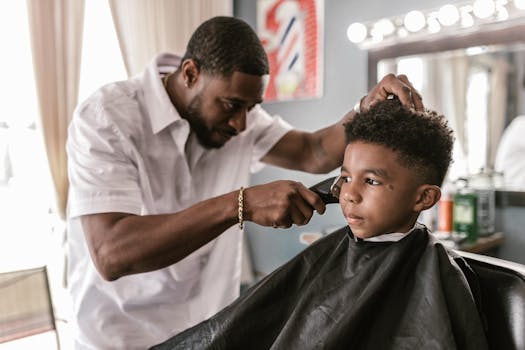
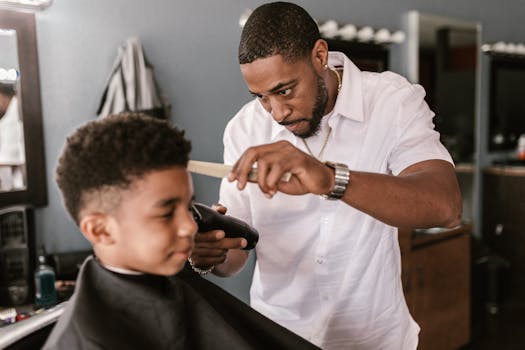
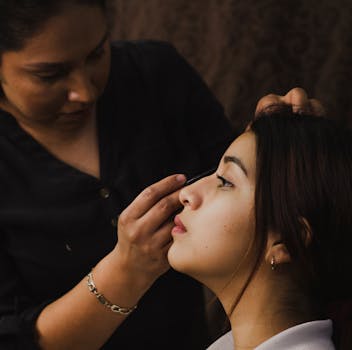
As a hairdresser in the UK, your primary role involves consulting with clients to understand their desired look, then shampooing, cutting, colouring, and styling hair. This career is much more than just cutting hair; it demands a blend of creativity, technical skill, and excellent customer service. You'll need to stay updated with the latest trends and techniques, offering advice on hair care and products to help clients maintain their style. Building a rapport with clients is crucial, as many return to a stylist they trust and feel comfortable with, making communication and interpersonal skills just as important as your styling abilities. Beyond the practical aspects, hairdressers often create a welcoming atmosphere, providing a space for clients to relax and feel pampered. The day-to-day responsibilities can vary significantly depending on your work environment. In a busy salon, you might be booked solid with appointments, ranging from quick trims to complex colour corrections or elaborate up-dos for special occasions. You'll also be responsible for maintaining cleanliness, sterilising tools, and managing bookings or product sales. For those who choose to be self-employed or mobile, there's the added responsibility of marketing, managing finances, and transporting equipment. Career progression can lead to becoming a senior stylist, salon manager, trainer, or even owning your own business.

Hairdresser

Flag Media

Please select a reason for flagging this content.

📊 Statistics

Average Salary Range

For experienced hairdressers in the UK, salaries typically range from around 17,000 to 25,000 GBP per year. Highly skilled stylists in high-end salons or those who are self-employed can earn significantly more, potentially exceeding 35,000 GBP, especially if they build a strong client base and offer specialist services. Entry-level or apprentice roles often start around the National Minimum Wage or National Living Wage.

Employment Opportunities

The UK hair and beauty industry is robust. There are approximately 45,000 hair and beauty businesses in the UK, employing over 300,000 people. Many opportunities exist in salons, spas, cruise ships, or as mobile hairdressers or salon owners. Growth in this sector is generally stable, with a constant demand for skilled professionals.

Working Hours

A standard working week for a hairdresser is often around 37-40 hours. However, this frequently includes evenings and Saturdays, as these are popular times for clients. Flexible working patterns are also common, especially for mobile hairdressers or those working part-time. Self-employed individuals have the flexibility to set their own hours.

🚀 Careers in this path

Flag Media

Please select a reason for flagging this content.

Colour Technician

Specialises in hair colouring services, including highlights, balayage, full head colours, and colour correction. This role requires an in-depth understanding of colour theory, chemical processes, and client consultations to achieve desired results and maintain hair health.

Flag Media

Please select a reason for flagging this content.

Barber

Focuses specifically on men's grooming, offering services such as haircuts, beard trims, shaves, and other male hair styling. This often involves precision cutting techniques, straight-razor shaving, and keeping up-to-date with current men's hair trends.

Flag Media

Please select a reason for flagging this content.

Bridal Hair Specialist

Works specifically with brides and their wedding parties to create bespoke hairstyles for their special day. This typically involves consultations, trial sessions, and on-the-day styling, often requiring travel to wedding venues and proficiency in intricate up-dos and long-hair styling.

Build Your Foundational Skills

Complete a recognised qualification

Enrol in a Level 2 or 3 NVQ Diploma in Hairdressing. This provides essential practical skills and theoretical knowledge.

Look for colleges or private training providers offering NVQ Level 2 and Level 3 courses in Hairdressing. These programmes cover a wide range of techniques from cutting and styling to colouring and perming, as well as health and safety and client consultation. Funding options like student loans or apprenticeships might be available, so check with the institution or the National Apprenticeship Service. Gaining these qualifications is crucial for professional recognition and employment in the UK.

Gain practical experience

Seek out an apprenticeship or work experience placement in a salon to apply your learning in a real-world setting.

Apprenticeships are an excellent way to learn on the job while still gaining a qualification. You'll typically work alongside experienced stylists, assisting with tasks, observing techniques, and gradually taking on more responsibility. If an apprenticeship isn't immediately available, consider asking local salons for work experience or a salon assistant role. This hands-on exposure is invaluable for developing speed, confidence, and client communication skills.

Develop core techniques

Master fundamental cutting, styling, and basic colouring techniques, focusing on precision and client satisfaction.

Practice makes perfect! Spend time perfecting your skills in various hair cutting methods (e.g., blunt cut, layered cut, graduation), blow-drying techniques, and styling for different hair types. Understand colour theory and how to safely apply semi-permanent, permanent, and highlights. Pay close attention to detail, symmetry, and ensuring the client's comfort throughout the process. Building a strong foundation here will set you up for success in more advanced techniques later.

Advance Your Expertise

Specialise in a niche area

Consider advanced training in specific areas like creative colouring, extensions, bridal hair, or barbering.

Once you have a solid foundation, exploring a specialisation can make you more marketable and allow you to charge higher prices. For example, becoming an expert in balayage, ombre, or vivid colours can attract a specific clientele. Similarly, mastering hair extensions or intricate up-dos for weddings and events can open up new opportunities. Barbering is also a distinct path, requiring different skills for men's grooming. Research which areas are in demand or genuinely interest you.

Build a client base and portfolio

Actively seek out new clients, build rapport, and document your best work through high-quality photos.

Networking within your local community, utilising social media, and offering introductory discounts can help attract new clients. Excellent customer service and building strong relationships will encourage repeat business and referrals. Create a digital portfolio, perhaps on Instagram or a personal website, showcasing your diverse skills and best transformations. This portfolio is crucial for demonstrating your abilities to potential employers or new clients.

Stay current with trends and products

Regularly attend workshops, trade shows, and online courses to keep your skills and knowledge up-to-date.

The hair industry is constantly evolving with new trends, products, and techniques. It's vital to stay informed and adaptable. Follow leading stylists, brands, and industry publications. Attend professional development courses on new cutting methods, colouring systems (e.g., Olaplex, K18), or styling tools. Trade shows like Salon International offer fantastic opportunities to see demonstrations, network, and discover new innovations. Continuous learning is key to remaining competitive and exciting in your craft.

Explore Career Progression

Become a senior stylist or salon manager

Take on more responsibility, mentor junior staff, and potentially manage salon operations.

With experience and proven skill, you can progress to a Senior Stylist role, often having a larger client book and commanding higher prices. If you enjoy leadership, moving into a Salon Manager position involves overseeing daily operations, managing staff, stock control, and ensuring client satisfaction across the board. This requires strong organisational, communication, and problem-solving skills, often building on experience gained through your years on the salon floor.

Work as a freelance hairdresser

Establish your own mobile hairdressing business or rent a chair in a salon, offering greater flexibility.

Freelancing offers autonomy and the ability to set your own hours and pricing. You could become a mobile hairdresser, visiting clients at their homes, or rent a chair in an established salon. This path requires business acumen, including managing your finances, marketing your services, insurance, and self-employment taxes. It's a great option for those who prefer to be their own boss and have built a loyal client following.

Open your own salon

Develop a business plan, secure funding, and launch your own hairdressing salon.

Opening your own salon is a significant step that requires extensive planning and investment. You'll need a comprehensive business plan covering market analysis, financial projections, branding, location, staffing, and legal requirements. Securing funding, perhaps through a business loan or personal investment, is crucial. This path allows you to create your own brand, culture, and team, but it comes with considerable responsibility and the need for strong entrepreneurial skills.

🎯 View Apprenticeships

Explore relevant apprenticeships that can help you kickstart your career in Hairdresser. Apprenticeships offer hands-on experience and training while earning a wage.

Career Progressions

This page showcases various career options and the pathways to reach them. Each career listed here shares transferable skills and knowledge, making it easier for individuals to transition between them.

Your current career is highlighted to help you see how it fits into the broader landscape of potential career choices. By clicking on any career, you can learn more about it, including the training and education required to pursue it.

Remember, progressing in your career often involves further learning and training. This page provides insights into future career options as well as those that can lead up to your current one.

These career progression decisions are informed by comparing the skills and knowledge needed for different occupations, along with data on how people move between them. Explore the possibilities and discover the exciting journey ahead in your career!

Sample Qualifications

How to become

You could get into this job through:

  • a college course
  • an apprenticeship
  • working towards this role

College

You could take a college course that will give you some of the skills and knowledge you'll need to start in this career.

Courses include:

  • hairdressing
  • barbering
  • women's and men's hairdressing

You may be able to combine these courses with other subjects like make-up and nails.

Entry requirements

Entry requirements for these courses vary.

More Information

Apprenticeship

You could apply to do an apprenticeship to get into this job, for example:

  • Hairdressing Professional Level 2 Intermediate Apprenticeship
  • Barbering Professional Level 2 Intermediate Apprenticeship
  • Creative Hair Professional Level 3 Advanced Apprenticeship

These apprenticeships take between 1 and 2 years to complete.

Entry requirements

You'll usually need:

  • some GCSEs, usually including English and maths, or equivalent, for an intermediate apprenticeship
  • 5 GCSEs at grades 9 to 4 (A* to C), or equivalent, including English and maths, for an advanced apprenticeship

More Information

Work

You might be able to start work as a trainee hairdresser or barber and learn on the job.

Your employer would expect you to take a part-time course to get qualifications, either at a college or in their own training school.

You may also be able to work freelance and rent space in a salon or barbershop, though you'll usually have to supply your own equipment.

More Information

Career tips

If your aim is to manage or open your own salon or barbershop, it may help to get some business qualifications alongside hairdressing experience.

Further information

You can find out more about careers in hairdressing and barbering from the Hair and Beauty Industry Authority (HABIA) and National Hair and Beauty Federation (NHBF).

Interested in More Career Paths?

Explore other careers or use our AI to discover personalised paths based on your interests.

Stay connected

Join our newsletter to stay up to date on features and releases

Address
Developing Experts Limited
Exchange Street Buildings
35-37 Exchange Street
Norwich
NR2 1DP
UK

Phone
01603 273515

Email
[email protected]

Copyright 2026 Developing Experts, All rights reserved.