
Creating Career Path...

Finding Further Careers...

Power Systems Engineer

View this career for different education levels:

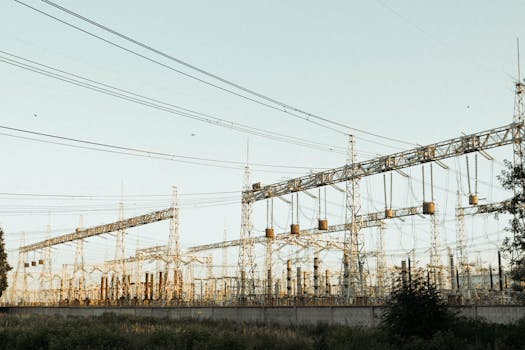
Imagine all the electricity that powers our homes, schools, and businesses across the UK. It doesnt just appear; it needs to be generated, transmitted, and distributed safely and efficiently. Thats where a Power Systems Engineer comes in! They are like the architects and problem-solvers behind the entire electrical grid. Their job involves designing new power stations, like those that use wind or solar energy, and making sure that the electricity generated can travel smoothly through big cables and substations to reach every plug socket. They also work to improve existing systems, making them more reliable and environmentally friendly. A big part of a Power Systems Engineers work is to make sure the UK always has enough electricity, even when lots of people are using it at the same time. They use their knowledge of physics, maths, and computer systems to predict how much power will be needed and how to get it to where it needs to go without any blackouts. They might spend time in an office designing systems on computers, or they could be out on site inspecting equipment at a power plant or substation. Its a crucial role that helps keep our modern world running, especially as we move towards greener energy solutions for the future.

Power Systems Engineer

Flag Media

Please select a reason for flagging this content.

📊 Statistics

Average UK Salary (Entry-Level)

For someone just starting out as a Power Systems Engineer in the UK, you could expect to earn around 28,000 to 35,000 pounds per year.

Average UK Salary (Experienced)

With more experience, a Power Systems Engineer in the UK can earn between 45,000 and 70,000 pounds per year, and even higher for very senior roles.

Job Growth Outlook

The demand for Power Systems Engineers in the UK is expected to remain stable or even grow in the coming years, especially with the country's focus on renewable energy and upgrading existing power networks.

🚀 Careers in this path

Electrical Design Engineer

Imagine designing the electrical systems for new buildings like schools or hospitals. You'd work out where all the wires, sockets, and lights need to go to make sure everything works safely and efficiently. It's like being an architect for electricity!

Flag Media

Please select a reason for flagging this content.

Renewable Energy Technician

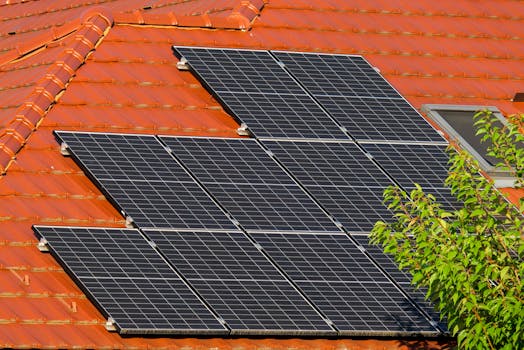
This job is all about working with green energy, like wind turbines or solar panels. You could be helping to install them, check they're working properly, or fix them if they break down, helping us get clean electricity for everyone.

Smart Grid Controller

Think of this as being a traffic controller, but for electricity! You'd use computers to manage how power flows around the country, making sure everyone has enough electricity, especially from new sources like solar and wind, and keeping the system stable.

Build Your Foundations

Focus on Key Subjects

In school, pay extra attention to subjects like Maths and Physics. These are super important for understanding how electricity works and solving engineering problems.

Maths helps you with calculations and problem-solving, which are at the heart of engineering. Physics teaches you about electricity, circuits, and energy, which are the basic principles of power systems. Also, Design & Technology or IT subjects can be useful for developing practical skills and understanding computer-aided design.

Get Curious About Energy

Learn about different ways we create electricity, like from wind, sun, or power stations. Watch documentaries or read articles about how power grids work.

Understanding where our electricity comes from and how it gets to us is a great start. Explore renewable energy sources like wind turbines and solar panels, and also traditional methods like nuclear or gas power stations. Learning about the challenges of delivering power to everyone, everywhere, will give you a good grasp of what a Power Systems Engineer does.

Join a STEM Club

If your school has a Science, Technology, Engineering, and Maths (STEM) club, join it! You can do fun projects and meet people who also love these subjects.

STEM clubs often involve hands-on activities like building robots, creating simple circuits, or exploring coding. These activities are brilliant for developing practical skills, teamwork, and an interest in engineering in a fun and supportive environment. It's a great way to see if engineering is really for you!

Gain Qualifications

Choose the Right A-Levels or College Course

After GCSEs, you'll need to choose A-Levels or a college course that includes Maths and Physics, and ideally another science or engineering-related subject.

Most universities offering engineering degrees will require strong passes in A-Level Maths and Physics. Further Maths, Chemistry, or Design & Technology can also be beneficial. If you prefer a vocational route, a BTEC National Diploma in Engineering could also set you on the right path, often providing practical skills alongside theoretical knowledge.

Go to University

Study for a degree in Electrical Engineering, Electronic Engineering, or Power Engineering at university. This is where you'll learn all the complex stuff.

A Bachelor's degree (BEng or MEng) is typically required. Look for courses accredited by the Institution of Engineering and Technology (IET) as these are recognised by the industry. An MEng (Master of Engineering) often includes an extra year of study and is usually preferred for becoming a Chartered Engineer later on. University will teach you about circuit design, power generation, transmission, distribution, and control systems.

Consider an Apprenticeship

Some companies offer degree apprenticeships where you work and study at the same time, earning a degree while getting hands-on experience.

Degree apprenticeships are a fantastic way to combine academic study with practical, paid work experience. You'll usually spend one day a week at university and the rest working for a company in the power sector. This allows you to apply what you learn immediately and build up a network of contacts, often leading to a full-time job with the company upon completion.

Start Your Career

Apply for Graduate Schemes

Many large engineering and energy companies offer special programmes for university graduates. These schemes provide training and experience in different areas of the business.

Graduate schemes are structured programmes, usually lasting 2-3 years, designed to develop your skills and knowledge across various departments or projects within a company. You might rotate through different roles like design, operations, or project management, gaining a broad understanding of the power industry. This is an excellent way to kick-start your career and explore different specialisms within power systems engineering.

Gain Practical Experience

Look for internships, work experience, or entry-level roles in energy companies, consultancies, or organisations involved in power generation or distribution.

Hands-on experience is incredibly valuable. Even if it's not a formal graduate scheme, securing an entry-level position as a junior engineer or an internship during your studies will help you apply your academic knowledge to real-world challenges. You'll learn how to use industry-standard software, work on live projects, and collaborate with experienced engineers, building essential skills for your career.

Work Towards Chartership

Once you have enough experience, you can work towards becoming a 'Chartered Engineer' (CEng), which shows you're a highly skilled and professional engineer.

Becoming a Chartered Engineer is a significant achievement and a mark of professionalism and competence. It involves demonstrating that you meet specific professional standards set by the engineering institutions, such as the IET. This usually requires several years of responsible engineering experience after your degree, followed by an application and professional review. Chartership enhances your career prospects, credibility, and earning potential.

🎯 View Apprenticeships

Explore relevant apprenticeships that can help you kickstart your career in Power Systems Engineer. Apprenticeships offer hands-on experience and training while earning a wage.

Career Progressions

This page showcases various career options and the pathways to reach them. Each career listed here shares transferable skills and knowledge, making it easier for individuals to transition between them.

Your current career is highlighted to help you see how it fits into the broader landscape of potential career choices. By clicking on any career, you can learn more about it, including the training and education required to pursue it.

Remember, progressing in your career often involves further learning and training. This page provides insights into future career options as well as those that can lead up to your current one.

These career progression decisions are informed by comparing the skills and knowledge needed for different occupations, along with data on how people move between them. Explore the possibilities and discover the exciting journey ahead in your career!

Sample Qualifications

A Power Systems Engineer designs, develops, and maintains electrical power systems, which often involves infrastructure projects like power plants and transmission grids. While 'Civil engineer' is a broad term, out of the given options, it is the closest as power systems infrastructure heavily relies on civil engineering principles for its construction and stability. None of the other specialist engineering roles are relevant.

How to become

You can get into this job through:

  • a university course
  • a college course
  • an apprenticeship
  • working towards this role

University

You can do a foundation degree, higher national diploma or degree in civil engineering.

Many universities specialise in particular areas of civil engineering, like:

  • transport engineering
  • environmental engineering
  • coastal and maritime engineering

You can search for accredited courses through the Institution of Civil Engineers. Some courses include a work placement, which can be useful for making industry contacts to help you find work after university.

You can also do further study for a postgraduate master's qualification in civil engineering, if you've got a degree in a related subject like maths, science or geology.

Entry requirements

You'll usually need:

  • 2 or 3 A levels, or equivalent, including maths and a science for a degree
  • a degree in a relevant subject for postgraduate study

More Information

College

You could take a course at college, which might help you to get work as a trainee civil engineer, or to apply for further study at university.

Subjects include:

  • civil engineering
  • maths, physics or geography
  • construction and the built environment

Entry requirements

Entry requirements for these courses vary.

More Information

Apprenticeship

You can apply to do a Civil Engineer Level 6 Degree Apprenticeship with an engineering or construction company.

This takes around 5 years to complete.

Entry requirements

You'll usually need:

  • 4 or 5 GCSEs at grades 9 to 4 (A* to C) and A levels, or equivalent, for a higher or degree apprenticeship

More Information

Work

You could work as a civil engineering technician and study on the job for a degree or apprenticeship.

You'll usually need 5 GCSEs at grades 9 to 4 (A* to C), or equivalent, including English, maths and science. Employers may also look for 1 or 2 A levels, or equivalent qualifications.

More Information

Professional and industry bodies

You can join the Institution of Civil Engineers (ICE) for professional development opportunities and to make industry contacts.

Further information

You can learn more about how to become a civil engineer from the Institution of Civil Engineers (ICE).

Interested in More Career Paths?

Explore other careers or use our AI to discover personalised paths based on your interests.

Stay connected

Join our newsletter to stay up to date on features and releases

Address
Developing Experts Limited
Exchange Street Buildings
35-37 Exchange Street
Norwich
NR2 1DP
UK

Phone
01603 273515

Email
[email protected]

Copyright 2026 Developing Experts, All rights reserved.