
Creating Career Path...

Finding Further Careers...

Power Systems Engineer

View this career for different education levels:

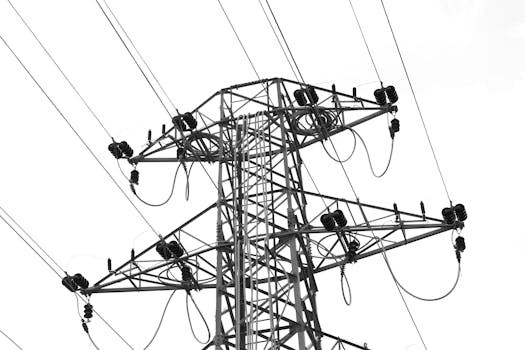
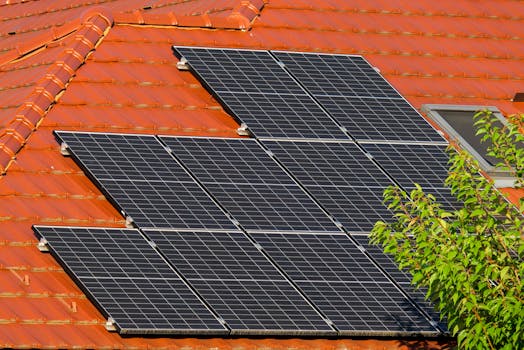
Imagine all the electricity we use every day to power our homes, schools, and hospitals. A Power Systems Engineer is like a superhero who makes sure all that electricity gets to where it needs to go safely and efficiently. They design, build, and look after the big networks that carry electricity, like giant invisible roads for power. This includes things like power stations where electricity is made, huge cables that transport it across the country, and the smaller lines that bring it to your street. They also work on making sure we have enough power for everyone and that it comes from clean sources like the sun and wind.

Power Systems Engineer

Flag Media

Please select a reason for flagging this content.

📊 Statistics

Average Starting Salary

New Power Systems Engineers in the UK can expect to earn around 28,000 to 35,000 pounds a year. That is a good starting point for a very important job.

Experienced Salary

With more experience, a Power Systems Engineer in the UK can earn much more, typically between 45,000 and 65,000 pounds a year. Some very experienced engineers can earn even more, over 70,000 pounds.

Job Growth

There is a growing need for Power Systems Engineers in the UK, especially as we build more wind farms and solar parks. This means there will likely be lots of jobs for people who choose this path in the future.

🚀 Careers in this path

Power Station Operator

Imagine you are in charge of a big, important place that makes electricity for lots of homes and schools! You would help make sure all the machines are working properly to create power, so everyone can have lights and play computer games.

Flag Media

Please select a reason for flagging this content.

Renewable Energy Technician

You would be like a superhero for our planet, working with sunny solar panels or big windy turbines to make clean electricity! You would help install and look after these amazing machines that use nature to power our world, without making any yucky pollution.

Electric Car Designer

Do you love cars and helping the environment? You could be someone who thinks up and designs cool new electric cars! You would help make sure they are super safe, fun to drive, and use electricity really well to get people where they need to go, without needing petrol.

Learning About Electricity Fun

Explore How Things Light Up

Start by finding out how electricity works in simple ways. You can use batteries and light bulbs to make things glow!

At this age, it is important to develop a foundational understanding of electricity through safe, hands-on activities. Parents or guardians can help set up simple circuits using household batteries (like AA or AAA), battery holders, small light bulbs (e.g., from a hobby shop or toy store), and connecting wires. These kits are often available as 'snap circuits' or 'electricity experiment kits' for children. Focus on showing how a complete circuit is needed for the light to turn on, and how different components can be connected. Always supervise children during these activities to ensure safety.

Visit an Energy Centre

Ask your grown-ups to take you to a science museum or an energy exhibition to see big machines and learn about different types of power.

Many science museums across the UK, such as the Science Museum in London, Glasgow Science Centre, or Thinktank in Birmingham, have interactive exhibits dedicated to energy, electricity, and power generation. These visits can bring abstract concepts to life through engaging displays, demonstrations, and hands-on activities. Look for specific exhibits on renewable energy (solar, wind), how electricity is generated from different sources, and the history of electricity. Check the museum's website for family-friendly events or workshops related to energy.

Read About Power Heroes

Find books or watch educational videos about people who invented things that use electricity, like Thomas Edison or Nikola Tesla.

Encourage reading age-appropriate non-fiction books about famous inventors and scientists who contributed to our understanding and use of electricity. Books that tell stories about how light bulbs were invented or how electricity first came to homes can be very engaging. There are also many educational YouTube channels (e.g., 'National Geographic Kids', 'SciShow Kids') that explain complex topics like electricity in simple, fun ways for children. These resources can spark curiosity and provide historical context.

Building Clever Skills

Become a Maths Magician

Practice your maths skills at school, especially adding, subtracting, and problem-solving, as engineers use numbers a lot!

Developing strong foundational maths skills is crucial for any engineering path. At this stage, focus on excelling in primary school mathematics, including arithmetic (addition, subtraction, multiplication, division), understanding shapes, and simple problem-solving. Engage in maths games, puzzles, and online educational resources that make learning fun. Encourage an inquisitive mindset by asking 'how many?' or 'how much?' questions in everyday situations. Regularly practising mental maths and understanding basic concepts will build confidence and prepare for more complex maths later on.

Be a Science Detective

Pay close attention in science lessons at school. Learn about forces, energy, and different materials, as these are super important for engineers.

In primary school science, children will learn about various topics that lay the groundwork for understanding power systems. These include simple forces (push, pull), different forms of energy (light, heat, sound), properties of materials, and basic biology. Encourage participation in science experiments, asking questions like 'why does this happen?' and 'what if we try this?'. Reading non-fiction science books and watching educational documentaries can also deepen understanding and foster a love for scientific discovery. Understanding how the world works is key to engineering.

Design and Build Fun Things

Use building blocks, LEGO, or craft materials to design and build your own structures and machines. This helps you think like an engineer!

Engaging in creative building activities is an excellent way to develop spatial reasoning, problem-solving skills, and an understanding of structures. Encourage children to use various materials like LEGO, K'nex, cardboard boxes, craft sticks, or even recycled items to build models of bridges, buildings, vehicles, or imagined machines. The focus should be on designing, planning, constructing, and then refining their creations. Asking questions like 'How can you make it stronger?' or 'What does this part do?' can stimulate critical thinking and introduce basic engineering principles in a playful way.

Exploring Engineering Paths

Join a STEM Club

Ask your school if they have a STEM (Science, Technology, Engineering, Maths) club. You can do cool projects and meet other kids who love science!

Many primary schools, especially in later years (Year 5-6), offer STEM clubs or after-school activities. These clubs provide a great opportunity to engage in hands-on projects, experiments, and challenges that go beyond the regular curriculum. Activities might include building simple robots, designing bridges, coding games, or conducting science experiments. If your school doesn't have one, look for local community groups, libraries, or universities that might run workshops or holiday camps focused on STEM for children. These clubs foster teamwork, problem-solving, and a deeper interest in scientific and engineering fields.

Visit a Power Station (if allowed)

If there is a visitor centre at a local power station or a renewable energy farm (like wind turbines), ask your grown-ups if you can visit to see how they work.

While direct access to the operational areas of power stations is typically restricted for safety reasons, some larger power generation facilities, particularly renewable energy sites like wind farms or solar parks, have visitor centres or viewing platforms. These centres often provide educational exhibits, interactive displays, and sometimes guided tours of the periphery, explaining how electricity is generated. This can offer a powerful visual and experiential learning opportunity. Always check with the facility beforehand for visitor policies, age restrictions, and booking requirements. Virtual tours may also be available online.

Talk to an Engineer

Ask your teachers or grown-ups if they know any engineers. It would be amazing to ask them what their job is like!

Networking and speaking with professionals in the field, even at a young age, can be incredibly inspiring. Ask parents, teachers, family friends, or school career advisors if they know anyone who works as an engineer. An informal chat or a short interview (with adult supervision) can help demystify the profession. Children can ask questions like 'What do you do all day?', 'What is your favourite part of your job?', or 'What kind of problems do you solve?'. Hearing real-life experiences can make the career path feel more tangible and exciting. Many engineers are passionate about their work and enjoy sharing it with young, aspiring minds.

🎬 Useful Videos

🎯 View Apprenticeships

Explore relevant apprenticeships that can help you kickstart your career in Power Systems Engineer. Apprenticeships offer hands-on experience and training while earning a wage.

Career Progressions

This page showcases various career options and the pathways to reach them. Each career listed here shares transferable skills and knowledge, making it easier for individuals to transition between them.

Your current career is highlighted to help you see how it fits into the broader landscape of potential career choices. By clicking on any career, you can learn more about it, including the training and education required to pursue it.

Remember, progressing in your career often involves further learning and training. This page provides insights into future career options as well as those that can lead up to your current one.

These career progression decisions are informed by comparing the skills and knowledge needed for different occupations, along with data on how people move between them. Explore the possibilities and discover the exciting journey ahead in your career!

Sample Qualifications

A Power Systems Engineer designs, develops, and maintains electrical power systems. While 'Civil engineer' is a broad category, in this limited list, it is the closest fit among the provided options, as power systems infrastructure can involve civil engineering principles for plant design and transmission line foundations. None of the other specialist engineering roles are relevant to power systems.

How to become

You can get into this job through:

  • a university course
  • a college course
  • an apprenticeship
  • working towards this role

University

You can do a foundation degree, higher national diploma or degree in civil engineering.

Many universities specialise in particular areas of civil engineering, like:

  • transport engineering
  • environmental engineering
  • coastal and maritime engineering

You can search for accredited courses through the Institution of Civil Engineers. Some courses include a work placement, which can be useful for making industry contacts to help you find work after university.

You can also do further study for a postgraduate master's qualification in civil engineering, if you've got a degree in a related subject like maths, science or geology.

Entry requirements

You'll usually need:

  • 2 or 3 A levels, or equivalent, including maths and a science for a degree
  • a degree in a relevant subject for postgraduate study

More Information

College

You could take a course at college, which might help you to get work as a trainee civil engineer, or to apply for further study at university.

Subjects include:

  • civil engineering
  • maths, physics or geography
  • construction and the built environment

Entry requirements

Entry requirements for these courses vary.

More Information

Apprenticeship

You can apply to do a Civil Engineer Level 6 Degree Apprenticeship with an engineering or construction company.

This takes around 5 years to complete.

Entry requirements

You'll usually need:

  • 4 or 5 GCSEs at grades 9 to 4 (A* to C) and A levels, or equivalent, for a higher or degree apprenticeship

More Information

Work

You could work as a civil engineering technician and study on the job for a degree or apprenticeship.

You'll usually need 5 GCSEs at grades 9 to 4 (A* to C), or equivalent, including English, maths and science. Employers may also look for 1 or 2 A levels, or equivalent qualifications.

More Information

Professional and industry bodies

You can join the Institution of Civil Engineers (ICE) for professional development opportunities and to make industry contacts.

Further information

You can learn more about how to become a civil engineer from the Institution of Civil Engineers (ICE).

Interested in More Career Paths?

Explore other careers or use our AI to discover personalised paths based on your interests.

Stay connected

Join our newsletter to stay up to date on features and releases

Address
Developing Experts Limited
Exchange Street Buildings
35-37 Exchange Street
Norwich
NR2 1DP
UK

Phone
01603 273515

Email
[email protected]

Copyright 2026 Developing Experts, All rights reserved.