



Creating Career Path...

Finding Further Careers...

Engineering Design Technician

View this career for different education levels:

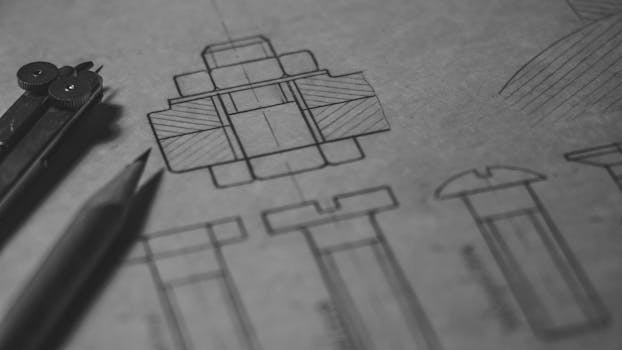
Imagine you have an idea for a new bridge, a faster car, or even a clever new gadget. An Engineering Design Technician is someone who helps turn those big ideas into detailed plans and drawings that engineers and builders can use. You'd spend a lot of time using special computer software, called CAD (Computer Aided Design), to create precise 2D and 3D models. It's a bit like being a digital sculptor, but instead of clay, you're shaping virtual parts and systems. You'd work closely with engineers, taking their concepts and making sure all the measurements, materials, and parts fit together perfectly. You might also help test designs, make changes, and prepare all the technical documents needed to manufacture or build things. This role is really important because without clear, accurate designs, it would be impossible to build anything safely or efficiently. You could be working on anything from the tiny components inside a mobile phone to the huge structures of an airport. It requires a keen eye for detail, good problem-solving skills, and a love for making things work. It's a fantastic way to be involved in engineering without necessarily needing a university degree, as many technicians start with college courses or apprenticeships.

Engineering Design Technician

Flag Media

Please select a reason for flagging this content.

📊 Statistics

Average Starting Salary

For someone just starting out as an Engineering Design Technician in the UK, you might expect to earn around 20,000 to 25,000 pounds per year. This can grow with experience!

Experienced Salary

With a few years of experience, a skilled Engineering Design Technician in the UK could earn between 30,000 and 45,000 pounds annually. Very experienced technicians in specialised fields could earn even more.

Job Outlook

The engineering sector in the UK is always looking for talented people. There are thousands of jobs across different types of engineering, and design technicians play a vital role in bringing ideas to life for new projects, from buildings to bridges and new products.

🚀 Careers in this path

Flag Media

Please select a reason for flagging this content.

CAD Technician

Imagine you're building a new car or a big building. A CAD Technician uses special computer programs to draw really detailed plans and designs in 3D, like an expert digital artist for engineers. They make sure everything fits together perfectly before it's even built!

Flag Media

Please select a reason for flagging this content.

Product Design Assistant

Have you ever thought about how new toys, phones, or gadgets are made? A Product Design Assistant helps designers come up with ideas for new products and makes models or prototypes to see how they look and feel. They help create things people use every day.

Flag Media

Please select a reason for flagging this content.

Architectural Technologist

If you love buildings and drawing, an Architectural Technologist is like a detective for building plans. They focus on the technical details of how buildings are put together, making sure they are safe, strong, and meet all the rules. They often work closely with architects to turn exciting ideas into real structures.

Build Your Foundations

Master Maths and Science

Focus on your Maths and Science subjects at school as they are super important for understanding how things work and for problem-solving in engineering.

Maths helps you with measurements, calculations, and understanding forces, while Science (especially Physics) teaches you about materials, energy, and motion. These subjects are the building blocks for any engineering career, including design. Try to pay extra attention in these classes and ask questions if you don't understand something.

Get Creative with Design & Technology

If your school offers Design & Technology (DT) or Art classes, these can be great for developing your creative and problem-solving skills.

DT can introduce you to different materials, tools, and the design process, which is very similar to what an Engineering Design Technician does. Even Art classes can help you develop spatial awareness and attention to detail, which are valuable when creating precise drawings and models. Think about how you can combine creativity with practical skills.

Explore CAD Software

Start to learn about Computer-Aided Design (CAD) software, which is what technicians use to create their designs. There are free versions you can try.

CAD software like Tinkercad, SketchUp Free, or even FreeCAD can give you a taste of what it's like to design in 3D. Watching tutorials on YouTube can be a great way to learn the basics. Understanding how to use these tools early will give you a big advantage and help you see if this career is right for you.

Gain Qualifications

Achieve Good GCSEs

Aim for good grades in your GCSEs, especially in Maths, Science, and subjects like Design & Technology or IT, as these will be helpful for your next steps.

Your GCSE results are important because they show colleges and employers that you have a strong foundation in key subjects. They are often a requirement for moving on to further education like A-Levels or vocational courses. Work hard and consider revising using past papers.

Consider A-Levels or a BTEC

After GCSEs, you could study A-Levels in subjects like Maths, Physics, or Design Technology, or take a vocational BTEC in Engineering.

A-Levels provide a deeper academic understanding, while a BTEC (Business and Technology Education Council) is a more practical, work-related qualification. A BTEC in Engineering is often a direct pathway into apprenticeships or university courses in engineering, giving you hands-on experience and industry knowledge. Think about which style of learning suits you best.

Look into Apprenticeships or Higher Education

You can go for an engineering apprenticeship, which combines work and study, or a HNC/HND (Higher National Certificate/Diploma) or a degree at university.

Apprenticeships are fantastic because you earn money while you learn and gain real-world experience. A HNC/HND is a vocational qualification often taken at a college, providing a strong practical foundation. A university degree in engineering will give you a more theoretical and in-depth understanding. Research all options to see which path excites you most.

Start Your Career

Seek Entry-Level Roles or Junior Positions

Once qualified, start looking for junior or entry-level Engineering Design Technician roles at engineering companies.

Many companies offer positions specifically for people new to the industry, sometimes called 'Junior Design Technician' or 'Trainee CAD Technician'. These roles are designed to help you gain more experience under the guidance of senior team members. Be prepared to learn on the job and ask lots of questions. Look at job boards online and company websites.

Build Your Portfolio

Create a portfolio of your design projects, including any work from your studies or personal projects you've done with CAD software.

A portfolio is like a show-and-tell of your skills. It demonstrates what you can do and gives potential employers a visual example of your capabilities. Include any designs, drawings, or models you've created, even if they were just for fun. Make sure it's clear and easy to understand. You can create a digital portfolio or a physical one.

Continue Learning and Specialise

The engineering world is always changing, so keep learning new software, techniques, and specialise in an area you enjoy, like civil, mechanical, or aerospace design.

After you've started working, there will always be new software updates or design techniques to learn. Many companies offer training, or you might find online courses. Deciding to specialise, for example in designing parts for cars (mechanical) or bridges (civil), can help you become an expert in a particular field and open up more advanced career opportunities. Stay curious and keep improving your skills!

🎬 Useful Videos

🎯 View Apprenticeships

Explore relevant apprenticeships that can help you kickstart your career in Engineering Design Technician. Apprenticeships offer hands-on experience and training while earning a wage.

Career Progressions

This page showcases various career options and the pathways to reach them. Each career listed here shares transferable skills and knowledge, making it easier for individuals to transition between them.

Your current career is highlighted to help you see how it fits into the broader landscape of potential career choices. By clicking on any career, you can learn more about it, including the training and education required to pursue it.

Remember, progressing in your career often involves further learning and training. This page provides insights into future career options as well as those that can lead up to your current one.

These career progression decisions are informed by comparing the skills and knowledge needed for different occupations, along with data on how people move between them. Explore the possibilities and discover the exciting journey ahead in your career!

Sample Qualifications

An Engineering Design Technician frequently works on designing infrastructure and structural components, which aligns closely with the typical duties of a Civil Engineering Technician who assists civil engineers with design, planning, and construction projects.

How to become

You can get into this job through:

  • a university course
  • a college course
  • an apprenticeship

University

You could do a foundation degree or higher national diploma in civil engineering.

Entry requirements

You'll usually need:

  • 4 or 5 GCSEs at grades 9 to 4 (A* to C), or equivalent, including English, maths and science
  • 1 or 2 A levels, or equivalent, for a foundation degree or higher national diploma

More Information

College

You could do a college course that would teach you some of the skills needed to become a civil engineering technician.

Relevant courses include:

  • civil engineering
  • construction and the built environment
  • T Level in Design, Surveying and Planning for Construction

It might be useful to have some knowledge of computer-aided design (CAD) software like AutoCAD, PDS or Civil 3D. However, you'll usually learn how to use CAD software during your course.

Entry requirements

Entry requirements for these courses vary.

  • 4 or 5 GCSEs at grades 9 to 4 (A* to C), or equivalent, including English and maths for a T Level

More Information

Apprenticeship

You could apply for an apprenticeship, such as:

  • Civil Engineering Technician Level 3 Advanced Apprenticeship
  • Civil Engineering Senior Technician Level 4 Higher Apprenticeship

These usually take 3 years to complete as a mix of learning at work and study.

Entry requirements

You'll usually need:

  • 5 GCSEs at grades 9 to 4 (A* to C), or equivalent, including English and maths, for an advanced apprenticeship
  • 4 or 5 GCSEs at grades 9 to 4 (A* to C) and A levels, or equivalent, for a higher or degree apprenticeship

More Information

More Information

Registration

Professional and industry bodies

You can join the Institution of Civil Engineers (ICE) for professional development opportunities.

Further information

You can find more advice about careers in civil engineering from the Institution of Civil Engineers (ICE).

Interested in More Career Paths?

Explore other careers or use our AI to discover personalised paths based on your interests.

Stay connected

Join our newsletter to stay up to date on features and releases

Address
Developing Experts Limited
Exchange Street Buildings
35-37 Exchange Street
Norwich
NR2 1DP
UK

Phone
01603 273515

Email
[email protected]

Copyright 2026 Developing Experts, All rights reserved.