
Creating Career Path...

Finding Further Careers...

Welding and Fabrication Technician

View this career for different education levels:

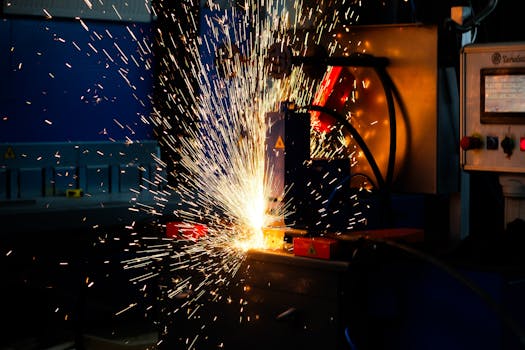
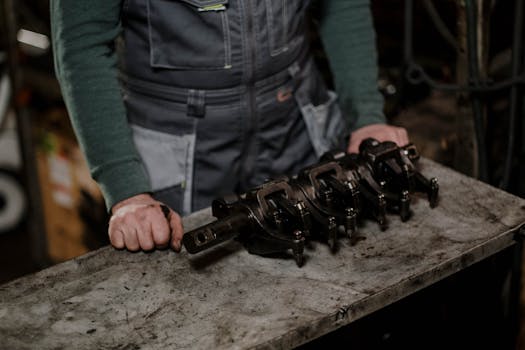
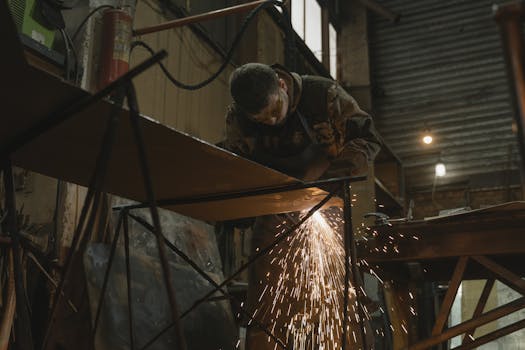
A Welding and Fabrication Technician is a highly skilled tradesperson responsible for joining metal components and constructing metal structures or products. This role involves interpreting technical drawings and blueprints to understand the specifications of the item to be built or repaired. Technicians select appropriate welding methods, such as MIG, TIG, or MMA welding, based on the material type and project requirements. They prepare materials by cutting, shaping, and grinding metal, then meticulously join them using heat and filler materials. Quality control is paramount, involving inspecting welds for defects and ensuring the finished product meets precise standards for strength, durability, and appearance. They might work on a vast array of projects, from structural steelwork for buildings, intricate pipework for industrial plants, components for vehicles or aircraft, to bespoke artistic metalwork. The role demands a strong understanding of metallurgy, excellent hand-eye coordination, precision, and an unwavering commitment to safety protocols. Fabricators often operate machinery like press brakes, guillotines, and plasma cutters, transforming raw metal into finished products. The job can be physically demanding and often takes place in workshops, factories, or on construction sites, requiring technicians to wear appropriate personal protective equipment (PPE) at all times. Continuous learning and skill development are crucial, as new technologies and materials emerge in the industry.

Welding and Fabrication Technician

Flag Media

Please select a reason for flagging this content.

📊 Statistics

Average Salary Range

In the UK, a Welding and Fabrication Technician can expect a starting salary typically around £20,000 to £25,000. Experienced technicians with specialist skills or certifications can earn £30,000 to £40,000 annually, with highly skilled or supervisory roles potentially exceeding £45,000. These figures can vary based on location, industry (e.g., oil and gas, aerospace, construction) and specific company.

Number of Positions and Demand

The UK consistently has a demand for skilled welders and fabricators across various sectors. While precise real-time numbers fluctuate, job boards frequently list thousands of vacancies. Industries such as construction, manufacturing, aerospace, marine, energy (including renewables and oil & gas), and automotive all rely heavily on these skills. There's often a reported skills gap in this area, indicating good job prospects for qualified individuals.

Typical Work Hours

Most Welding and Fabrication Technicians work standard full-time hours, typically 37-40 hours per week, Monday to Friday. However, depending on the industry and project deadlines, overtime, shift work, or weekend work may be required. For example, in manufacturing or construction, project-based work might necessitate more flexible hours.

🚀 Careers in this path

Flag Media

Please select a reason for flagging this content.

Structural Welder

Specialises in welding components for large structures like bridges, buildings, or offshore platforms. This often involves working with various materials and adhering to strict engineering specifications, offering a focus on precision and structural integrity.

Flag Media

Please select a reason for flagging this content.

Pipeline Welder

Focuses on welding and joining sections of pipelines, which transport oil, gas, or water. This role often involves working outdoors in various environments and requires high levels of skill in specific welding techniques such as TIG and Stick welding for critical infrastructure.

Flag Media

Please select a reason for flagging this content.

Aerospace Fabricator

Works with high-performance metals and alloys to create components for aircraft and spacecraft. This role demands exceptional precision, attention to detail, and often involves advanced welding processes like TIG welding for critical, lightweight, and high-stress parts.

Build Your Foundational Skills

Gain Relevant Qualifications

Start by completing GCSEs, particularly in subjects like Maths, English, Science, and Design & Technology, which provide a strong academic base for technical work.

Many employers and apprenticeship schemes will look for a solid set of GCSEs, typically grades 9-4 (A*-C). Maths and Science are particularly important for understanding measurements, material properties, and technical calculations in welding. Design & Technology can introduce you to basic engineering principles and workshop practices, which are highly relevant. If you're currently studying, focus on achieving good grades in these subjects to open up more opportunities.

Explore Vocational Courses

Consider taking a Level 2 or 3 vocational qualification in fabrication and welding, such as a BTEC or NVQ, which provides practical skills and industry knowledge.

Vocational courses offer hands-on experience and a deeper dive into welding processes like MIG, TIG, and MMA, as well as fabrication techniques. Colleges across the UK offer these programmes, which are often highly regarded by employers. Look for courses accredited by awarding bodies like City & Guilds or EAL, as these demonstrate a recognised standard of competence. These courses can also cover health and safety, blueprint reading, and material science, all crucial for the role.

Undertake an Apprenticeship

An apprenticeship is an excellent way to learn on the job, gaining practical experience and a recognised qualification while earning a wage.

Welding and fabrication apprenticeships combine on-the-job training with classroom learning, leading to a Level 2 or Level 3 NVQ/Diploma. You'll work alongside experienced technicians, learning various welding techniques, how to interpret engineering drawings, and safe workshop practices. Many companies, from small workshops to large engineering firms, offer apprenticeships. Search on government apprenticeship websites or company careers pages. This route is often preferred by employers as it demonstrates practical, industry-specific experience.

Develop Specialised Skills

Gain Industry Certifications

Obtain specific welding certifications, such as those from the American Welding Society (AWS) or British Standards (BS EN ISO), to demonstrate expertise in particular welding processes or materials.

Industry certifications are critical for proving your proficiency to potential employers, especially for roles requiring high precision or working with specific materials (e.g., stainless steel, aluminium) or techniques (e.g., TIG for thin materials). These certifications often involve practical tests to assess your welding ability under specific conditions. Look into certifications relevant to the industries you're interested in, such as pipe welding for oil and gas, or structural welding for construction. These can significantly enhance your employability and potential earnings.

Master Advanced Techniques

Focus on developing proficiency in a variety of welding processes, including advanced techniques like TIG welding for precision work, and familiarise yourself with automated welding systems.

While basic MIG welding is common, mastering TIG (Gas Tungsten Arc Welding) can open doors to highly skilled roles in aerospace, medical equipment, and other precision industries due to its clean and precise welds. Additionally, as technology advances, understanding and potentially operating robotic or automated welding systems can be a significant advantage. Seek opportunities for further training, perhaps through employer-sponsored courses or specialist welding schools, to broaden your skillset and stay competitive.

Understand Fabrication Principles

Deepen your understanding of fabrication processes, including cutting (plasma, laser), bending, forming, and assembly, as well as interpreting complex engineering drawings.

A Welding and Fabrication Technician isn't just about joining metal; it's also about preparing and assembling it. Learning to operate various fabrication machinery, understanding how different metals behave under stress, and developing strong blueprint reading skills are crucial. This involves not only understanding 2D drawings but also potentially 3D CAD models. Practical experience in a fabrication workshop, perhaps through an internship or on-the-job training, will be invaluable here, allowing you to see how raw materials are transformed into finished products.

Career Advancement & Professional Growth

Seek Lead or Supervisory Roles

With experience, aim for roles such as Lead Welder, Foreman, or Workshop Supervisor, taking on greater responsibility for projects and junior team members.

As you gain experience and demonstrate leadership qualities, opportunities will arise to manage teams, oversee projects, and ensure quality control. This often involves delegating tasks, training new apprentices, problem-solving, and communicating effectively with management and clients. Developing strong organisational and interpersonal skills alongside your technical expertise will be key to succeeding in these roles. Look for internal training programmes in leadership or project management that your employer might offer.

Explore Specialised Industries

Consider moving into highly specialised fields like aerospace, nuclear, offshore oil and gas, or bespoke artistic metalwork, which often demand unique skills and offer higher remuneration.

Different industries have distinct requirements and standards for welding and fabrication. For example, aerospace requires exceptionally high precision and strict adherence to safety protocols, while offshore work might involve challenging environments and specialised materials. Research these sectors to understand their specific needs and the additional certifications or training required. This specialisation can lead to more challenging, rewarding, and often better-paid opportunities as an expert in a niche area.

Consider Further Education or Training

Pursue higher education, such as a Higher National Certificate (HNC) or Diploma (HND) in Engineering, or advanced professional development courses to move into design, inspection, or engineering roles.

If you aspire to move beyond hands-on welding into roles like Welding Engineer, Quality Control Inspector, or Design Engineer, further academic qualifications can be beneficial. An HNC or HND provides a deeper theoretical understanding of engineering principles, material science, and design. You could also explore specific courses in welding inspection (e.g., CSWIP certification) or non-destructive testing (NDT) to specialise in quality assurance. These pathways offer opportunities to apply your practical knowledge in a more analytical or managerial capacity.

🎯 View Apprenticeships

Explore relevant apprenticeships that can help you kickstart your career in Welding and Fabrication Technician. Apprenticeships offer hands-on experience and training while earning a wage.

Career Progressions

This page showcases various career options and the pathways to reach them. Each career listed here shares transferable skills and knowledge, making it easier for individuals to transition between them.

Your current career is highlighted to help you see how it fits into the broader landscape of potential career choices. By clicking on any career, you can learn more about it, including the training and education required to pursue it.

Remember, progressing in your career often involves further learning and training. This page provides insights into future career options as well as those that can lead up to your current one.

These career progression decisions are informed by comparing the skills and knowledge needed for different occupations, along with data on how people move between them. Explore the possibilities and discover the exciting journey ahead in your career!

Sample Qualifications

A Welding and Fabrication Technician's core skills involve cutting, shaping, and joining metals, which are directly applicable to the fabrication processes required for manufacturing windows, often involving metal frames.

How to become

You can get into this job through:

  • an apprenticeship
  • working towards this role
  • applying directly

Apprenticeship

You could apply to do an apprenticeship with a manufacturing company, such as:

  • Engineering and Manufacturing Level 2 Foundation Apprenticeship
  • Fenestration Fabricator Level 2 Intermediate Apprenticeship

Foundation apprenticeship

You can apply for a foundation apprenticeship if you're aged 16 to 21.

If you're aged 22 to 24, you can apply if you:

Entry requirements

You'll usually need:

  • no specific qualifications or experience to apply for a foundation apprenticeship
  • some GCSEs, usually including English and maths, or equivalent, for an intermediate apprenticeship


More Information

Work

You could begin work as a general production worker or labourer with a window manufacturer and work your way up. There are courses you can do while working to help you get into more skilled fabrication jobs.

You could also start as a window fitter and move into fabrication work.

Direct Application

You can apply directly for jobs. Employers set their own entry requirements, though you'll need maths skills for taking measurements along with good practical skills.

Experience of general manufacturing and trades like window fitting or joinery may also be useful.

Further Information

You can get more details about careers in window fabrication from Building Our Skills.

Interested in More Career Paths?

Explore other careers or use our AI to discover personalised paths based on your interests.

Stay connected

Join our newsletter to stay up to date on features and releases

Address
Developing Experts Limited
Exchange Street Buildings
35-37 Exchange Street
Norwich
NR2 1DP
UK

Phone
01603 273515

Email
[email protected]

Copyright 2026 Developing Experts, All rights reserved.