
Creating Career Path...

Finding Further Careers...

Welding and Fabrication Technician

View this career for different education levels:

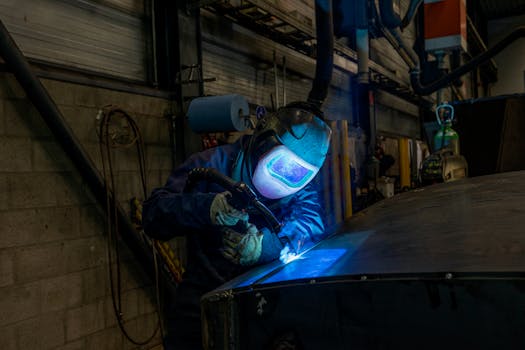
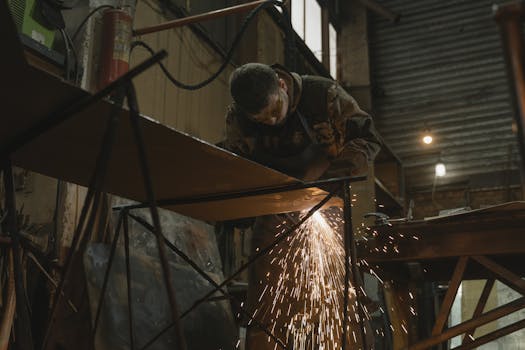
A Welding and Fabrication Technician is someone who works with metal to build or repair structures and products. Imagine building a bridge, a ship, a car chassis, or even parts for a rollercoaster! You would use special tools to cut, shape, and join pieces of metal together. This often involves welding, which is like using a super-hot torch to melt and fuse metal parts, making them incredibly strong. You also get to read technical drawings and plans to make sure everything is built exactly right, and then you fabricate, which means putting all the pieces together. This job isn't just about strength; it also requires a lot of skill, precision, and attention to detail. You need to understand different types of metals and how they react to heat, and safety is super important because you're working with powerful equipment. You could be working indoors in a workshop, outdoors on a construction site, or even in factories helping to create all sorts of useful things.

Welding and Fabrication Technician

Flag Media

Please select a reason for flagging this content.

📊 Statistics

Average UK Salary

A Welding and Fabrication Technician in the UK can expect to earn an average salary of around 28,000 to 35,000 pounds per year. However, experienced or specialist welders can earn much more, sometimes over 40,000 pounds annually.

Entry Level Salary

When you are just starting out as an apprentice or a trainee, your salary might be closer to 18,000 to 23,000 pounds per year, increasing as you gain more skills and experience.

Job Growth

The UK manufacturing and construction sectors regularly need skilled welders and fabricators, meaning there's a steady demand for these roles. Apprenticeships are a popular route to enter this career.

🚀 Careers in this path

Flag Media

Please select a reason for flagging this content.

Fabricator Welder

You could specialise in making things from metal, like gates, railings, or even parts for cars and buildings. You'd follow plans to cut, shape, and join metal pieces using different welding techniques.

Flag Media

Please select a reason for flagging this content.

Pipe Welder

This is a really important job where you'd focus on welding pipes for places like factories, power stations, or even for transporting water and gas. It needs very precise welding to make sure there are no leaks.

Flag Media

Please select a reason for flagging this content.

Sheet Metal Worker

You could work with thinner sheets of metal to create things like air conditioning ducts, kitchen equipment, or even parts of aeroplanes. You'd learn to cut, bend, and shape metal, often using special machines, and then join them together.

Learn the Basics

Explore Metalwork at School

Look for design and technology classes or after-school clubs at your school that involve working with materials like wood or metal. This can help you understand tools and how things are built.

Many schools offer 'Design and Technology' (DT) or 'Resistant Materials' subjects. These lessons are a great way to get hands-on experience with tools, materials, and design principles. You might get to make small projects and learn about different types of metal and how they are used. Even if it's not exactly welding, learning to measure, cut, and assemble things is a really useful start.

Research What Welders Do

Find out more about what a Welding and Fabrication Technician's day looks like. Watch videos and read articles to understand the different types of welding and projects they work on.

Use the internet to search for 'what does a welder do UK' or 'fabrication technician jobs'. You'll discover that welders work in many different places, like shipyards, car factories, construction sites, or even in art studios. There are also different types of welding, like MIG, TIG, and Stick welding, which use different tools and techniques. Understanding these will help you see which areas might interest you most.

Talk to Professionals

If you know anyone who works in a trade or manufacturing, ask them about their job. They might even be able to tell you about local workshops or places to visit.

Networking can be very helpful. Ask your parents, teachers, or family friends if they know anyone who works with metal or in manufacturing. A short chat with someone in the industry can give you real-world insights into the job, the skills needed, and the different career paths available. They might also offer advice on what courses or experiences are most valuable.

Gain Skills and Qualifications

Consider a College Course or Apprenticeship

After your GCSEs, look into further education options like BTECs or NVQs in welding and fabrication, or explore apprenticeships where you learn on the job.

Many colleges across the UK offer Level 2 and Level 3 courses in Fabrication and Welding. These courses will teach you practical skills like different welding techniques, metal cutting, and health and safety, alongside the theory. A welding apprenticeship is another fantastic route, allowing you to earn a wage while learning from experienced professionals and gaining recognised qualifications at the same time. You can search for apprenticeships on the government's 'Find an Apprenticeship' website.

Practise Hands-On Skills

The more you practise, the better you'll become. Whether through college workshops, an apprenticeship, or even small projects at home (under supervision!), hands-on experience is key.

Welding and fabrication are very practical skills. Your college course or apprenticeship will provide structured practice, but you can also look for opportunities to do extra practice. This could involve volunteering at a local community workshop (if available), helping out with projects, or even just spending extra time in college workshops perfecting your techniques. Always prioritise safety and ensure you are supervised when working with tools and machinery.

Develop Maths and Science Skills

Good maths helps with measurements and calculations, while understanding materials science helps you know which metals to use and how they behave.

Maths is really important for a Welding and Fabrication Technician. You'll need it for precise measurements, calculating angles, and understanding blueprints. Science, especially physics and chemistry, helps you understand the properties of different metals, how heat affects them, and why certain welding techniques work best for specific materials. Focusing on these subjects at school, even at GCSE level, will give you a strong foundation for your future career.

Start Your Career

Build a Portfolio of Your Work

Keep examples of your best welding and fabrication projects to show future employers what you can do.

As you complete projects during your college course or apprenticeship, take clear photos of your finished work, especially highlighting different welding joints or intricate fabrication pieces. If you've worked on any unique projects or repairs, include those too. This portfolio acts as a visual CV, demonstrating your practical skills and attention to detail to potential employers. You can keep it digitally or as a physical album.

Look for Entry-Level Jobs

Apply for jobs as a Junior Welder, Fabrication Assistant, or similar roles to get your foot in the door and gain more experience.

Start by searching on job websites, college careers services, and through your apprenticeship provider for entry-level positions. Many companies are looking for enthusiastic, newly qualified technicians to join their teams. Don't be afraid to apply for roles that might seem like a stepping stone; every job provides valuable experience and a chance to learn more and develop new skills in a real-world setting. Your qualifications and portfolio will be key here.

Keep Learning and Specialising

The world of metalwork is always changing. Keep up-to-date with new techniques and consider specialising in an area that interests you, like aerospace or bespoke fabrication.

Once you're working, you can continue to develop your skills. This might involve taking advanced welding courses to become certified in specific types of welding (like coded welding for high-pressure pipes), or learning about new materials and technologies. Specialising in areas like aerospace welding, structural steelwork, custom vehicle fabrication, or even artistic metalwork can open up exciting and challenging opportunities and help you become a highly sought-after expert in your field.

🎬 Useful Videos

🎯 View Apprenticeships

Explore relevant apprenticeships that can help you kickstart your career in Welding and Fabrication Technician. Apprenticeships offer hands-on experience and training while earning a wage.

Career Progressions

This page showcases various career options and the pathways to reach them. Each career listed here shares transferable skills and knowledge, making it easier for individuals to transition between them.

Your current career is highlighted to help you see how it fits into the broader landscape of potential career choices. By clicking on any career, you can learn more about it, including the training and education required to pursue it.

Remember, progressing in your career often involves further learning and training. This page provides insights into future career options as well as those that can lead up to your current one.

These career progression decisions are informed by comparing the skills and knowledge needed for different occupations, along with data on how people move between them. Explore the possibilities and discover the exciting journey ahead in your career!

Sample Qualifications

A Welding and Fabrication Technician's core duties involve cutting, shaping, and joining metal components, which directly aligns with the fabrication aspect of a Window Fabricator, particularly if the windows involve metal frames or structures. While 'Window fabricator' isn't a perfect match, it's the only option that directly involves 'fabrication' and working with materials like metal, unlike the other technician roles which are discipline-specific.

How to become

You can get into this job through:

  • an apprenticeship
  • working towards this role
  • applying directly

Apprenticeship

You could apply to do an apprenticeship with a manufacturing company, such as:

  • Engineering and Manufacturing Level 2 Foundation Apprenticeship
  • Fenestration Fabricator Level 2 Intermediate Apprenticeship

Foundation apprenticeship

You can apply for a foundation apprenticeship if you're aged 16 to 21.

If you're aged 22 to 24, you can apply if you:

Entry requirements

You'll usually need:

  • no specific qualifications or experience to apply for a foundation apprenticeship
  • some GCSEs, usually including English and maths, or equivalent, for an intermediate apprenticeship


More Information

Work

You could begin work as a general production worker or labourer with a window manufacturer and work your way up. There are courses you can do while working to help you get into more skilled fabrication jobs.

You could also start as a window fitter and move into fabrication work.

Direct Application

You can apply directly for jobs. Employers set their own entry requirements, though you'll need maths skills for taking measurements along with good practical skills.

Experience of general manufacturing and trades like window fitting or joinery may also be useful.

Further Information

You can get more details about careers in window fabrication from Building Our Skills.

Interested in More Career Paths?

Explore other careers or use our AI to discover personalised paths based on your interests.

Stay connected

Join our newsletter to stay up to date on features and releases

Address
Developing Experts Limited
Exchange Street Buildings
35-37 Exchange Street
Norwich
NR2 1DP
UK

Phone
01603 273515

Email
[email protected]

Copyright 2026 Developing Experts, All rights reserved.