
Creating Career Path...

Finding Further Careers...

Welding and Fabrication Technician

View this career for different education levels:

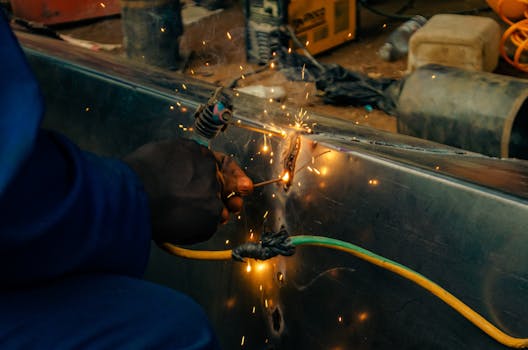
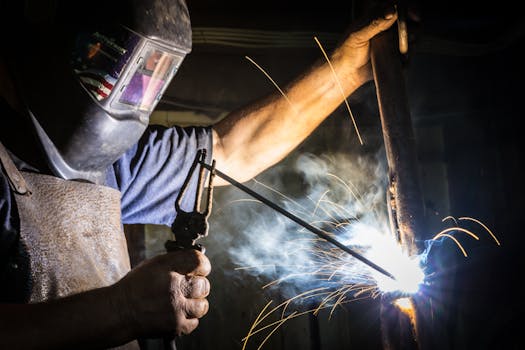
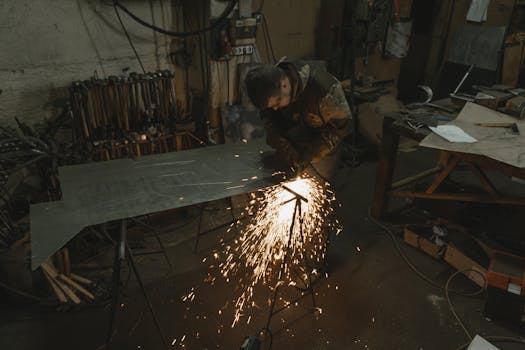
Imagine you have big pieces of metal and you need to join them together to make something strong, like a bridge, a car chassis, or even parts of a rollercoaster! That's what a Welding and Fabrication Technician does. They are like super builders who work with metal. They use special tools that make very hot sparks to melt metal and stick it together, a bit like super glue, but much stronger and with metal. They also cut and shape metal pieces to make sure everything fits perfectly before they weld it. It's a very hands-on job where you get to create amazing things. This job needs people who are good at following instructions, very careful and precise, and can work safely with tools. You'll learn how to read special drawings called blueprints to know exactly where to cut and weld. It's a bit like following a treasure map to build something. You could be making parts for planes, fixing pipelines underground, or even helping to build new ships. It's a really important job because so many things around us are made from metal joined together by welders.

Welding and Fabrication Technician

Flag Media

Please select a reason for flagging this content.

📊 Statistics

Average UK Salary

A Welding and Fabrication Technician in the UK can expect to earn between 25,000 to 35,000 pounds a year once they have some experience. For someone just starting, it might be a bit less, and for someone with lots of skill, it could be much more!

Number of Jobs in the UK

There are thousands of welding and fabrication jobs across the UK. It's an important job for many industries, like making cars, building ships, and putting up new buildings. It's a skill that is always needed!

Work Hours

Most Welding and Fabrication Technicians work around 37 to 40 hours a week, usually during the daytime, Monday to Friday. Sometimes, if there's a big project, they might work a bit extra.

🚀 Careers in this path

Flag Media

Please select a reason for flagging this content.

Metal Sculpture Artist

Imagine building amazing statues and art pieces out of metal, just like a sculptor but using welding to join the parts together. You could make a metal robot, an animal, or even a spaceship for a garden.

Flag Media

Please select a reason for flagging this content.

Custom Bike Builder

Have you ever thought about designing and building your very own bicycle frame or even a go-kart? You'd use your skills to cut, shape, and join metal pieces to make super cool, unique bikes or vehicles that no one else has.

Flag Media

Please select a reason for flagging this content.

Stage Set Designer and Builder

When you go to a play or a concert, have you seen the amazing backdrops and props? Sometimes these are made with metal frames to make them strong. You could help design and build the metal structures for theatrical sets, making them look fantastic and safe for actors.

Learning the Basics

Be a Curious Kid

Start by being really interested in how things are built and made. Ask questions about metal objects you see around you.

When you're young, it's great to be curious! Look at bikes, fences, or playground equipment. How do you think these metal pieces are joined together? Learning to notice details and wonder how things work is a brilliant first step for anyone interested in building and making.

Get Creative with Building

Play with building toys like LEGO or construction kits. This helps you understand how different parts fit together.

Building toys aren't just for fun, they're super helpful for learning! When you click LEGO bricks together or use construction kits, you're practising important skills like following instructions, planning how pieces connect, and making sure everything is stable. These are all things a Welding and Fabrication Technician does with metal!

Learn About Tools Safely

Ask grown-ups about tools they use for fixing things around the house and always remember to be safe.

Tools are very important in welding and fabrication, but they must always be used carefully. You can start by learning about simple tools like screwdrivers or hammers from a grown-up. They can show you what each tool does and why safety is the most important rule when using any kind of tool. Never touch tools without an adult's permission and supervision.

Growing Your Skills

Do Well in School

Try your best in subjects like maths and science, as they help you understand how materials work and how to measure accurately.

Maths is super important for measuring and making sure pieces of metal are the right size and shape. Science helps you understand why different metals behave in certain ways when you heat them or join them. Doing well in these subjects now will make learning about welding and fabrication much easier later on.

Try Design and Technology

When you get to secondary school, choose Design and Technology (D&T) to learn how to design and make things.

D&T lessons are fantastic for budding technicians! You'll get to use different materials, learn about tools, and design your own projects. Sometimes you might even get to work with small pieces of metal or use machinery. It's a great way to see if you enjoy the hands-on work involved in making things.

Visit Workshops or Factories

If you can, ask a grown-up to take you to a local workshop or factory where things are made with metal.

Seeing real welders and fabricators at work can be very exciting and inspiring! You might see big machines, sparks flying (from a safe distance, of course!), and amazing metal creations taking shape. It helps you understand what the job is really like and what kind of cool things you could build one day.

Becoming a Professional

Study Welding and Fabrication

After school, you'll need to go to a college or training centre to learn all the special techniques for welding and fabrication.

This is where you'll learn from experts! You'll discover different types of welding, how to read blueprints (special plans for building), and how to use all the safety equipment. You can do this through courses like a BTEC, NVQ, or T-Levels, which are designed to teach you practical job skills. These qualifications are key to becoming a professional.

Do an Apprenticeship

An apprenticeship is a great way to learn on the job, working alongside experienced welders and fabricators.

Imagine learning by doing, and getting paid at the same time! With an apprenticeship, you spend most of your time working in a real workshop or factory, putting your college learning into practice. An experienced technician will teach you tricks of the trade, and you'll gain valuable real-world experience, which employers love.

Get Qualified and Certified

You'll earn special certificates that show you are skilled and safe to do welding and fabrication work.

To be a professional Welding and Fabrication Technician, you need to prove you're good at what you do. These certificates are like your badges of honour! They show you've passed important tests and know how to weld different types of metal safely and to a high standard. This means you can work on all sorts of exciting projects.

🎬 Useful Videos

🎯 View Apprenticeships

Explore relevant apprenticeships that can help you kickstart your career in Welding and Fabrication Technician. Apprenticeships offer hands-on experience and training while earning a wage.

Career Progressions

This page showcases various career options and the pathways to reach them. Each career listed here shares transferable skills and knowledge, making it easier for individuals to transition between them.

Your current career is highlighted to help you see how it fits into the broader landscape of potential career choices. By clicking on any career, you can learn more about it, including the training and education required to pursue it.

Remember, progressing in your career often involves further learning and training. This page provides insights into future career options as well as those that can lead up to your current one.

These career progression decisions are informed by comparing the skills and knowledge needed for different occupations, along with data on how people move between them. Explore the possibilities and discover the exciting journey ahead in your career!

Sample Qualifications

A Welding and Fabrication Technician's core skills involve shaping and joining materials, which directly aligns with the duties of a Window Fabricator who manufactures and assembles window frames, often using welding and similar fabrication techniques, making it the closest fit among the given options.

How to become

You can get into this job through:

  • an apprenticeship
  • working towards this role
  • applying directly

Apprenticeship

You could apply to do an apprenticeship with a manufacturing company, such as:

  • Engineering and Manufacturing Level 2 Foundation Apprenticeship
  • Fenestration Fabricator Level 2 Intermediate Apprenticeship

Foundation apprenticeship

You can apply for a foundation apprenticeship if you're aged 16 to 21.

If you're aged 22 to 24, you can apply if you:

Entry requirements

You'll usually need:

  • no specific qualifications or experience to apply for a foundation apprenticeship
  • some GCSEs, usually including English and maths, or equivalent, for an intermediate apprenticeship


More Information

Work

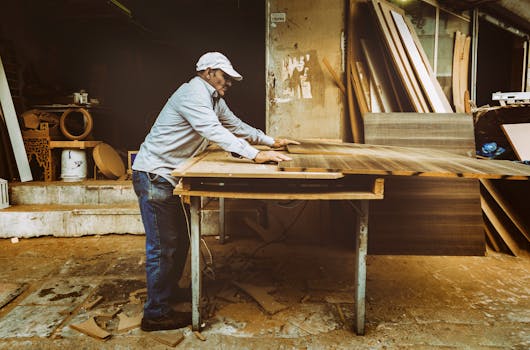
You could begin work as a general production worker or labourer with a window manufacturer and work your way up. There are courses you can do while working to help you get into more skilled fabrication jobs.

You could also start as a window fitter and move into fabrication work.

Direct Application

You can apply directly for jobs. Employers set their own entry requirements, though you'll need maths skills for taking measurements along with good practical skills.

Experience of general manufacturing and trades like window fitting or joinery may also be useful.

Further Information

You can get more details about careers in window fabrication from Building Our Skills.

Interested in More Career Paths?

Explore other careers or use our AI to discover personalised paths based on your interests.

Stay connected

Join our newsletter to stay up to date on features and releases

Address
Developing Experts Limited
Exchange Street Buildings
35-37 Exchange Street
Norwich
NR2 1DP
UK

Phone
01603 273515

Email
[email protected]

Copyright 2026 Developing Experts, All rights reserved.