



Creating Career Path...

Finding Further Careers...

Ventilation Installer

View this career for different education levels:

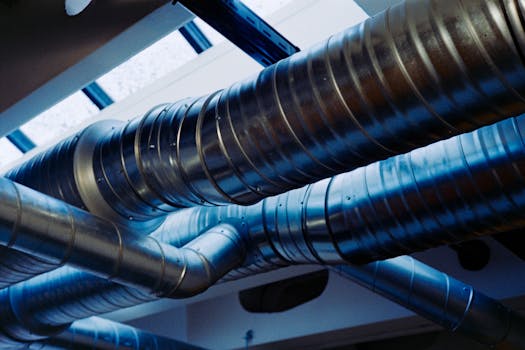
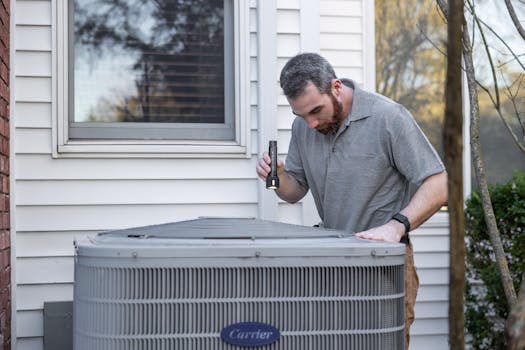
As a Ventilation Installer in the UK, your primary role involves fitting, maintaining, and repairing ventilation systems in a variety of settings, including commercial buildings, industrial sites, and sometimes residential properties. This work is crucial for ensuring good indoor air quality, temperature control, and compliance with health and safety regulations. You'll typically work from blueprints and technical drawings, measuring, cutting, and installing ductwork, fans, filters, and control systems. The job requires a good understanding of mechanics, basic electrical knowledge for connecting components, and the ability to work safely at heights and in confined spaces. Precision and attention to detail are vital to ensure systems are airtight and efficient. You might specialise in specific types of systems, such as heat recovery ventilation (HRV) or air conditioning units, or work across a broad range of installations. Day-to-day tasks can vary significantly but often include loading and unloading equipment, fabricating ductwork sections on-site or in a workshop, connecting components using various fixing methods, testing systems for leaks and performance, and ensuring all installations meet relevant British Standards and building codes. Collaboration with other trades, such as electricians and plumbers, is common on larger projects. Training typically involves apprenticeships or vocational qualifications like NVQs in Heating and Ventilation or Building Services Engineering, which combine practical experience with theoretical knowledge, leading to a recognised qualification that enhances career prospects.

Ventilation Installer

Flag Media

Please select a reason for flagging this content.

📊 Statistics

Average Salary Range

For Ventilation Installers in the UK, entry-level salaries typically start around 22,000 to 25,000 pounds per year. Experienced installers can earn between 30,000 and 40,000 pounds annually, with highly skilled or supervisory roles potentially exceeding 45,000 pounds, especially in London and the South East.

Job Outlook and Demand

The demand for skilled Ventilation Installers remains steady across the UK, driven by new construction projects, building regulations requiring improved indoor air quality, and the refurbishment of older buildings. While precise national figures for 'Ventilation Installers' specifically can be integrated into broader HVAC or M&E roles, there are consistently hundreds of job postings for related roles on major UK job boards at any given time, indicating a healthy market.

Working Hours

Most Ventilation Installers work a standard full-time week, typically around 37-40 hours. However, project-based work can sometimes involve early starts, late finishes, or occasional weekend work to meet deadlines. Overtime pay is often available for these situations.

🚀 Careers in this path

Flag Media

Please select a reason for flagging this content.

HVAC Engineer

Designs, installs, and maintains heating, ventilation, and air conditioning systems. This involves a deeper understanding of system mechanics, energy efficiency, and building regulations beyond just installation.

Flag Media

Please select a reason for flagging this content.

Air Conditioning Specialist

Focuses specifically on the installation, maintenance, and repair of air conditioning units and systems. This is a more specialised role within the broader HVAC field, often requiring specific F Gas certifications.

Flag Media

Please select a reason for flagging this content.

Ductwork Fabricator and Installer

Specialises in the precise fabrication, assembly, and installation of ductwork systems, which are crucial components of ventilation systems. This role often involves working with sheet metal and technical drawings.

Build Your Foundation

Achieve Relevant Qualifications

Gain foundational knowledge and practical skills through formal education relevant to construction and mechanical engineering.

Consider pursuing a Level 2 or Level 3 NVQ Diploma in Heating and Ventilating (Ductwork Installation) or a similar qualification. Colleges across the UK offer these courses, which cover health and safety, interpreting technical drawings, using hand and power tools, and the principles of ductwork installation. Look for programmes that include practical workshop experience.

Secure a Trainee or Apprenticeship Role

Start gaining hands-on experience by joining a company as a trainee or apprentice.

An apprenticeship is an excellent pathway. You'll work for an employer, earn a salary, and receive formal training, often leading to an NVQ Level 2 or 3. Search for 'Ventilation Installer Apprenticeships' or 'Ductwork Installer Apprenticeships' on government apprenticeship sites (e.g., gov.uk/apply-apprenticeship) or through industry bodies like BESA (Building Engineering Services Association). This provides real-world experience under supervision.

Focus on Health and Safety

Understand and adhere to all relevant health and safety regulations in construction.

Health and safety is paramount in construction. You'll need to obtain a CSCS (Construction Skills Certification Scheme) card, typically at the Skilled Worker level. This requires passing the CITB Health, Safety and Environment test. Many apprenticeships will include this training, but it's crucial to actively learn and apply safety protocols for working at heights, using tools, and manual handling.

Develop Your Expertise

Master Installation Techniques

Become proficient in the core skills required for installing various types of ventilation systems.

This includes learning how to measure, cut, fabricate (if required), and assemble different ductwork components, such as rectangular, spiral, and flexible ducts. You'll also learn to seal joints, install hangers and supports, and work with insulation materials. Pay attention to precision and compliance with specifications and building regulations. Seek opportunities to work on diverse projects to broaden your experience.

Enhance Your Technical Reading Skills

Improve your ability to interpret blueprints, schematics, and technical drawings accurately.

Ventilation installers constantly work with engineering drawings to understand the layout, dimensions, and specifications of ductwork and system components. Practise reading and understanding symbols, scales, and elevation details. Being able to visualise the final installation from a drawing is a critical skill for efficient and correct work, minimising errors and rework on site.

Gain Knowledge of System Components

Understand the function and installation requirements of ancillary ventilation system components.

Beyond ductwork, ventilation systems include components like fans, grilles, diffusers, dampers, and filters. Learn how these parts integrate into the system, their installation methods, and how they contribute to overall system performance. A solid understanding of these components will make you a more versatile and valuable installer, able to troubleshoot minor issues and contribute to commissioning.

Career Progression & Specialisation

Consider Advanced Qualifications

Pursue higher-level qualifications to open doors to supervisory or specialised roles.

After gaining significant experience, you might consider an NVQ Level 3 or even a HNC/HND in Building Services Engineering. These qualifications can lead to roles such as Site Supervisor, Project Manager, or Estimator. Specialised courses in areas like fire damper installation, fan coil unit installation, or cleanroom ventilation can also enhance your career prospects and earning potential.

Develop Leadership and Management Skills

Take on more responsibility and cultivate skills necessary for leading a team.

Once you have extensive practical experience, opportunities may arise to supervise junior installers or manage smaller projects. Focus on developing communication, problem-solving, and team-leading abilities. This could involve mentoring apprentices, organising workloads, ensuring project deadlines are met, and maintaining quality control on site. Strong leadership is key for career advancement.

Explore Specialised Niches

Focus on specific types of ventilation systems or environments to become an expert.

The ventilation industry has various specialisms. You could focus on installing systems for data centres, hospitals (with strict air quality requirements), cleanrooms, or industrial extraction systems. Each niche requires specific knowledge and techniques. Gaining expertise in a particular area can make you highly sought after and provide opportunities for higher-paying, more complex projects.

🎬 Useful Videos

🎯 View Apprenticeships

Explore relevant apprenticeships that can help you kickstart your career in Ventilation Installer. Apprenticeships offer hands-on experience and training while earning a wage.

Career Progressions

This page showcases various career options and the pathways to reach them. Each career listed here shares transferable skills and knowledge, making it easier for individuals to transition between them.

Your current career is highlighted to help you see how it fits into the broader landscape of potential career choices. By clicking on any career, you can learn more about it, including the training and education required to pursue it.

Remember, progressing in your career often involves further learning and training. This page provides insights into future career options as well as those that can lead up to your current one.

These career progression decisions are informed by comparing the skills and knowledge needed for different occupations, along with data on how people move between them. Explore the possibilities and discover the exciting journey ahead in your career!

Sample Qualifications

A Ventilation Installer's primary role involves installing ventilation systems, which directly aligns with the duties of a Heating and ventilation engineer, encompassing the installation and maintenance of such systems.

How to become

You can get into this job through:

  • a college course
  • an apprenticeship
  • applying directly

College

You can take a college course to learn some of the skills needed to get a trainee engineer job. 

Courses include:

  • plumbing and heating
  • building services engineering
  • T Level in Building Services Engineering for Construction

Entry requirements

Entry requirements for these courses vary.

  • 4 or 5 GCSEs at grades 9 to 4 (A* to C), or equivalent, including English and maths for a T Level

More Information

Apprenticeship

You can get into this job by applying to do an apprenticeship. Examples include:

  • Building Services Engineering Level 2 Foundation Apprenticeship
  • Building Services Engineering Installer Level 2 Intermediate Apprenticeship
  • Building Services Engineering Craftsperson Level 3 Advanced Apprenticeship

Foundation apprenticeship

You can apply for a foundation apprenticeship if you're aged 16 to 21.

If you're aged 22 to 24, you can apply if you:

Entry requirements

You'll usually need:

  • no specific qualifications or experience to apply for a foundation apprenticeship
  • some GCSEs, usually including English and maths, or equivalent, for an intermediate apprenticeship
  • 5 GCSEs at grades 9 to 4 (A* to C), or equivalent, including English and maths, for an advanced apprenticeship

More Information

Direct Application

You may be able to apply directly for jobs if you have qualifications and experience in building services engineering or plumbing.

More Information

Professional and industry bodies

You can join the Chartered Institute of Plumbing and Heating Engineering for professional development training and industry news.

Further information

You can get more advice about careers in heating and ventilation engineering from:

Interested in More Career Paths?

Explore other careers or use our AI to discover personalised paths based on your interests.

Stay connected

Join our newsletter to stay up to date on features and releases

Address
Developing Experts Limited
Exchange Street Buildings
35-37 Exchange Street
Norwich
NR2 1DP
UK

Phone
01603 273515

Email
[email protected]

Copyright 2026 Developing Experts, All rights reserved.