




Creating Career Path...

Finding Further Careers...

Electronics Engineer

View this career for different education levels:

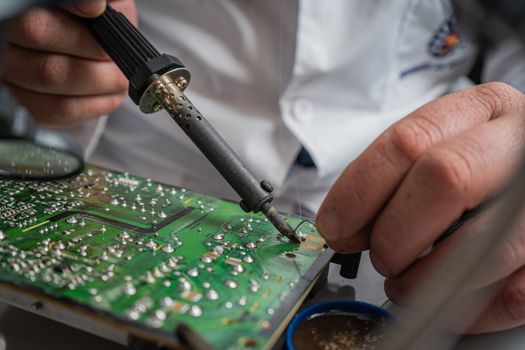
An Electronics Engineer is like a brilliant detective and inventor who works with electricity to make all sorts of cool things happen! Imagine all the electronic gadgets you use every day: your smartphone, games console, TV, and even the traffic lights on the street. Electronics Engineers are the clever people who design, develop, and test the electronic parts inside these devices. They figure out how tiny electronic components like circuits, microchips, and sensors can work together to perform specific tasks. This might involve creating the systems that make a robot move, designing the intricate boards inside a computer, or even developing new ways to generate clean energy. They are always solving problems and thinking about how to make technology better, smaller, and more efficient. Their work involves a lot of maths and science, especially physics, but it's also very creative. They might spend time in a lab designing new circuits on a computer, building prototypes to test their ideas, or working with manufacturing teams to make sure their designs can be produced. They play a huge role in developing the technology that shapes our modern world, from healthcare equipment and communication systems to entertainment devices and space exploration gear. If you love tinkering with gadgets, understanding how things work, and have a curious mind, then a career as an Electronics Engineer could be incredibly rewarding and exciting.

Electronics Engineer

Flag Media

Please select a reason for flagging this content.

📊 Statistics

Average Starting Salary

For new Electronics Engineers in the UK, typical starting salaries can range from 25,000 to 30,000 pounds per year, though this can vary depending on location and company.

Experienced Salary Range

With a few years of experience, a skilled Electronics Engineer in the UK can expect to earn between 35,000 and 60,000 pounds annually. Very experienced engineers in senior roles or specialist areas can earn even more, sometimes over 70,000 pounds.

Number of Job Openings

There are consistently thousands of job openings for engineers in the UK each year, including many for Electronics Engineers. For example, over 2,000 active job postings for 'Electronics Engineer' or similar roles can often be found at any given time on major UK job sites.

🚀 Careers in this path

Flag Media

Please select a reason for flagging this content.

Robotics Engineer

Imagine building and programming robots that can do all sorts of cool things, from exploring space to helping out in factories! You'd design their electronic brains and mechanical bodies.

Flag Media

Please select a reason for flagging this content.

Audio Engineer

If you love music and sound, this could be for you! You'd design and build equipment for recording studios, live concerts, or even make the speakers in your phone sound amazing.

Flag Media

Please select a reason for flagging this content.

Game Console Designer

Love playing video games? How about helping to design the actual consoles and controllers themselves? You'd work on the electronics inside to make them powerful and fun to use.

Build Your Foundation

Excel in STEM Subjects

Focus on Maths, Physics, and Design & Technology at school. These subjects will give you a strong understanding of how things work and the principles behind electronics.

Understanding algebra, geometry, and calculus from Maths is crucial for solving engineering problems. Physics will teach you about electricity, magnetism, and forces, which are the building blocks of electronics. Design & Technology will help you understand practical applications and problem-solving.

Explore Hobbies and Projects

Get hands-on! Try building simple circuits, taking apart old electronics to see how they work, or experimenting with coding platforms like Raspberry Pi or Arduino.

Starting with simple circuit kits, like those found in hobby shops, can be a great way to learn about components like resistors, LEDs, and batteries. Websites and online communities often have free tutorials for beginner projects with Arduino or Raspberry Pi, which combine electronics with basic programming.

Join Science Clubs

Look for after-school science, robotics, or engineering clubs. These clubs often offer fun projects and competitions that can spark your interest and teach you new skills.

Clubs provide a fantastic opportunity to work with others who share your interests. You might get to build robots, design simple gadgets, or learn about coding in a fun, collaborative environment, often with guidance from teachers or mentors.

Further Your Education

Choose A-Levels Wisely

For A-Levels (or equivalent qualifications like BTEC), continue with Maths and Physics. Consider subjects like Further Maths, Computer Science, or Design & Technology to strengthen your application for university.

Universities offering Electronics Engineering degrees typically require strong grades in Maths and Physics A-Levels. Computer Science can be very beneficial as modern electronics often involve programming. A BTEC in Engineering can also be a good alternative, providing a more vocational route with practical experience.

Go to University

The most common path is to study for an undergraduate degree in Electronic Engineering, Electrical and Electronic Engineering, or a related subject at university.

A Bachelor of Engineering (BEng) or Master of Engineering (MEng) degree is highly recommended. An MEng is a four-year integrated master's degree often preferred by employers as it provides a deeper level of knowledge and can lead to Chartered Engineer status more easily later on. Research different universities and their specific course content.

Consider an Apprenticeship

Some companies offer Higher Apprenticeships in engineering. This allows you to work, earn a salary, and study for a degree at the same time, gaining valuable real-world experience.

Higher Apprenticeships in engineering are a great alternative to the traditional university route. You'll combine on-the-job training with part-time study, often leading to a degree qualification. This path provides practical experience and a head start in your career while avoiding student debt.

Start Your Career

Gain Work Experience

During your studies, look for internships, placements, or summer jobs in engineering companies. This experience is incredibly valuable for your CV and helps you understand the industry.

Many universities offer 'sandwich' courses with a year in industry, or you can proactively seek out summer internships. Even a week or two shadowing an engineer can provide valuable insight. This practical experience not only boosts your resume but also helps you network and discover what areas of electronics engineering you enjoy most.

Apply for Entry-Level Jobs

Once you've finished your degree or apprenticeship, start applying for 'Junior Electronics Engineer' or 'Graduate Engineer' positions. Many large companies have dedicated graduate schemes.

Graduate schemes are structured programmes designed for new graduates, offering training, mentorship, and rotations through different departments. They are an excellent way to start your career and gain broad experience. Also, look at smaller specialist firms as they can offer more hands-on responsibility from day one.

Continue Learning and Developing

The field of electronics changes constantly. Stay updated with new technologies, tools, and software by attending workshops, reading industry publications, and pursuing further professional development.

Lifelong learning is crucial in engineering. Join professional bodies like the Institution of Engineering and Technology (IET) for networking and continuous professional development (CPD) opportunities. Consider pursuing Chartered Engineer (CEng) status once you have sufficient experience, as it's a recognised mark of excellence and competence in the industry.

🎬 Useful Videos

🎯 View Apprenticeships

Explore relevant apprenticeships that can help you kickstart your career in Electronics Engineer. Apprenticeships offer hands-on experience and training while earning a wage.

Career Progressions

This page showcases various career options and the pathways to reach them. Each career listed here shares transferable skills and knowledge, making it easier for individuals to transition between them.

Your current career is highlighted to help you see how it fits into the broader landscape of potential career choices. By clicking on any career, you can learn more about it, including the training and education required to pursue it.

Remember, progressing in your career often involves further learning and training. This page provides insights into future career options as well as those that can lead up to your current one.

These career progression decisions are informed by comparing the skills and knowledge needed for different occupations, along with data on how people move between them. Explore the possibilities and discover the exciting journey ahead in your career!

Sample Qualifications

The user's input 'Electronics Engineer' is an exact match for the official job title 'Electronics engineer' in the provided list. Both terms refer to the same profession involving the design, development, and testing of electronic systems and components.

How to become

You can get into this job through:

  • a university course
  • a college course
  • an apprenticeship
  • working towards this role

University

You could do a foundation degree, higher national diploma or degree in electronic engineering.

Employers may also accept related subjects combined with electronics, for example:

  • electronic and electrical engineering
  • aerospace engineering
  • physics and applied physics
  • computer science
  • nanotechnology
  • maths

Entry requirements

You'll usually need:

  • 1 or 2 A levels, or equivalent, for a foundation degree or higher national diploma
  • 2 to 3 A levels, or equivalent, for a degree

More Information

College

You could do electronic engineering or electronic systems engineering at college before applying for a trainee job.

Entry requirements

Entry requirements for these courses vary.

More Information

Apprenticeship

You can apply to do a Level 6 Degree Apprenticeship in electronic engineering, such as:

  • Electrical or Electronic Technical Support Engineer
  • Embedded Electronic Systems Design and Development Engineer

These take between 3 and 5 years to complete. You'll do on-the-job training and spend time with a college or training provider.

Entry requirements

You'll usually need:

  • 4 or 5 GCSEs at grades 9 to 4 (A* to C) and A levels, or equivalent, for a degree apprenticeship

More Information

Work

You could start as an electronics engineering technician and do further training on the job to qualify as an engineer.

More Information

Career tips

Electronics are a fundamental part of everyday day life and there are opportunities to work in many different areas. Examples include:

  • audio equipment
  • telecommunications
  • aerospace
  • vehicle manufacturing
  • medical equipment and assistive technology
  • robotics

Further information

You can find more details about careers and training from The Institution of Engineering and Technology and Electrical Careers.

Interested in More Career Paths?

Explore other careers or use our AI to discover personalised paths based on your interests.

Stay connected

Join our newsletter to stay up to date on features and releases

Address
Developing Experts Limited
Exchange Street Buildings
35-37 Exchange Street
Norwich
NR2 1DP
UK

Phone
01603 273515

Email
[email protected]

Copyright 2026 Developing Experts, All rights reserved.