
Creating Career Path...

Finding Further Careers...

Marine Geographer

View this career for different education levels:

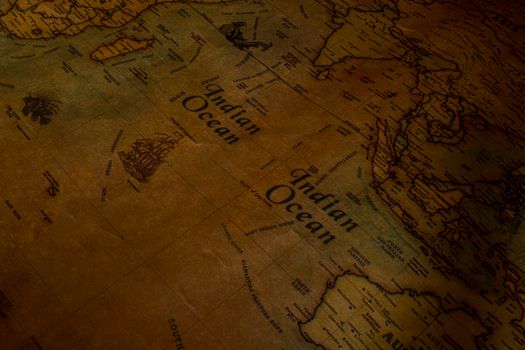
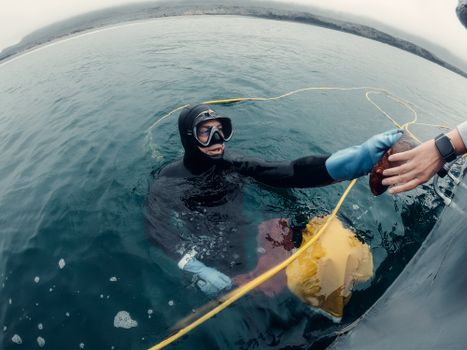
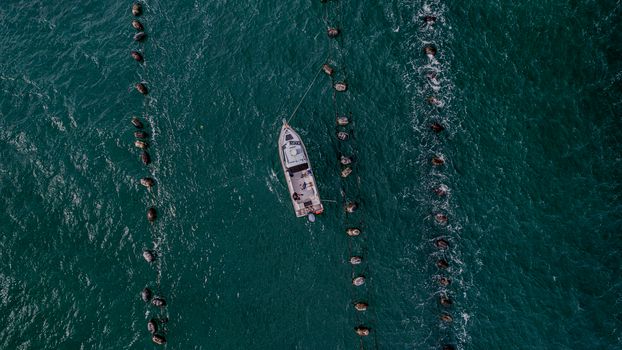
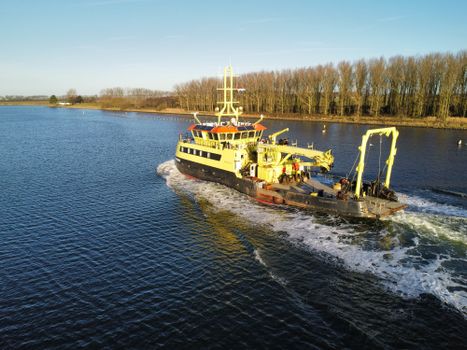
A Marine Geographer is like a detective for the ocean floor and the areas where land meets the sea. They study everything from the shape of the seabed and coastlines to how currents move sand and sediment around. Imagine exploring sunken shipwrecks, mapping out safe routes for ships, or understanding how climate change might affect our beaches and coastal towns. They use special tools like sonar (which uses sound to 'see' underwater) and satellite images to gather information. This information helps us protect marine life, plan offshore wind farms, and manage our precious coastal environments. It is a really important job because our oceans are vital for our planet and everyone on it. Working as a Marine Geographer often involves a mix of office work, analysing data on computers, and fieldwork. Fieldwork could mean spending time on research ships, deploying sensors, or taking samples from the seabed or coastline. You might work for government agencies, universities, environmental charities, or private companies involved in things like offshore energy or marine construction. It is a brilliant career if you love the ocean, are curious about how our planet works, and enjoy using science and technology to solve real-world problems.

Marine Geographer

Flag Media

Please select a reason for flagging this content.

📊 Statistics

Starting Salary

For new graduates, salaries typically start around 20,000 to 25,000 pounds per year.

Experienced Salary

With more experience, marine geographers can earn between 30,000 and 50,000 pounds, and senior roles can exceed 60,000 pounds annually in the UK.

Job Outlook

While specific numbers for Marine Geographers are hard to pinpoint, the broader field of marine science and environmental consultancy is seeing steady demand, with opportunities arising in coastal management, renewable energy, and environmental protection projects across the UK.

🚀 Careers in this path

Flag Media

Please select a reason for flagging this content.

Oceanographer

An Oceanographer studies everything about the ocean, like the sea creatures, the water itself, and even the seabed. They might explore marine life, ocean currents, or how climate change affects the sea.

Flag Media

Please select a reason for flagging this content.

Coastal Scientist

A Coastal Scientist looks at the areas where the land meets the sea. They might study how beaches change, how to protect coastlines from storms, or the wildlife that lives in estuaries and tidal zones.

Flag Media

Please select a reason for flagging this content.

Hydrographic Surveyor

A Hydrographic Surveyor maps the bottom of the sea, rivers, and lakes. They use special equipment to create detailed maps that are used for navigation, building offshore structures, or even finding shipwrecks.

Build Your Foundation

Excel in Science and Maths

Focus on your science subjects like Geography, Biology, Chemistry, and Physics, as well as Maths, during your secondary school years (GCSEs and A-Levels).

These subjects are the building blocks for understanding how the Earth and its oceans work. Geography will teach you about landscapes and human interaction with the environment, while sciences will cover the natural processes and maths will be essential for data analysis and calculations in later studies. Aim for strong grades as they are crucial for university applications.

Explore the Marine World

Get involved in activities that spark your interest in the ocean, like visiting aquariums, museums, or watching documentaries about marine life and geography.

Learning more about the ocean through personal exploration helps you decide if this is truly the career for you. Look for opportunities to visit coastal areas, learn about tides, waves, and coastal erosion. Reading books or magazines about marine science and geography can also deepen your understanding and passion.

Join Related Clubs

If your school has science, geography, or environmental clubs, join them! They often offer extra activities and learning opportunities.

Being part of a club is a great way to meet like-minded students and teachers who can share their knowledge and enthusiasm. You might get to do practical experiments, go on field trips, or participate in competitions that boost your skills and understanding in relevant areas.

Higher Education & Specialisation

Choose a Relevant Degree

Apply for a university degree in subjects like Marine Geography, Oceanography, Physical Geography, Earth Sciences, or Environmental Science with a marine focus.

A Bachelor's degree (BSc) is usually the starting point. Look for programmes that offer modules in marine geology, coastal processes, ocean dynamics, geographical information systems (GIS), and remote sensing. These will provide you with the specific knowledge and skills needed for a career as a marine geographer. Research different universities to find the best fit for you.

Gain Practical Experience

Look for summer internships, volunteer opportunities, or field trips offered by your university or other organisations that involve marine or coastal research.

Hands-on experience is incredibly valuable. It could involve working with scientists on research vessels, participating in coastal clean-ups that teach you about environmental impact, or helping with data collection on beach erosion. This experience will not only help you understand the job better but also look great on your CV when applying for jobs after university.

Consider Further Study

For many research-focused roles, a Master's (MSc) or even a PhD degree can be very beneficial or required.

A Master's degree allows you to specialise further in a particular area of marine geography, such as coastal management or marine geophysics. A PhD is a research-intensive degree that usually involves conducting original research and contributing new knowledge to the field, often opening doors to academic or advanced research positions.

Start Your Career Journey

Look for Entry-Level Roles

Search for jobs with titles like Assistant Marine Geologist, Coastal Analyst, Environmental Consultant, or Oceanographic Surveyor with relevant organisations.

These roles can be found in a variety of places, including government agencies (like the Environment Agency or Natural England), marine research institutes, environmental consultancies, offshore energy companies, or even specialist surveying companies. Entry-level positions are great for gaining practical experience and applying what you've learned in your degree.

Network with Professionals

Attend conferences, workshops, and industry events to meet people already working in marine geography and related fields.

Networking is about building connections. Meeting professionals can open doors to job opportunities you might not find otherwise, give you insights into the industry, and even lead to mentorship. LinkedIn is also a useful platform for connecting with people in your desired field.

Keep Learning and Developing

The field of marine geography is always evolving, so continue to learn new skills and keep up-to-date with new technologies and research.

This could mean taking short courses in advanced GIS software, learning new data analysis techniques, or attending seminars on cutting-edge marine research. Staying curious and continuously developing your skills will make you a valuable asset throughout your career and help you adapt to new challenges and opportunities.

🎬 Useful Videos

🎯 View Apprenticeships

Explore relevant apprenticeships that can help you kickstart your career in Marine Geographer. Apprenticeships offer hands-on experience and training while earning a wage.

Career Progressions

This page showcases various career options and the pathways to reach them. Each career listed here shares transferable skills and knowledge, making it easier for individuals to transition between them.

Your current career is highlighted to help you see how it fits into the broader landscape of potential career choices. By clicking on any career, you can learn more about it, including the training and education required to pursue it.

Remember, progressing in your career often involves further learning and training. This page provides insights into future career options as well as those that can lead up to your current one.

These career progression decisions are informed by comparing the skills and knowledge needed for different occupations, along with data on how people move between them. Explore the possibilities and discover the exciting journey ahead in your career!

Sample Qualifications

A Marine Geographer specialises in the study of the seafloor, ocean currents, and coastal processes, which directly aligns with the broader scientific study of oceans encompassed by an Oceanographer, rather than a purely technical, engineering, or military role.

How to become

You can get into this job through a university course.

University

You can study for a degree in oceanography or a related subject, like:

  • ocean science
  • geology
  • physics
  • marine science
  • biology or chemistry
  • environmental science

Employers often look for students with postgraduate qualifications, like a master's degree or PhD. They also value experience of working in marine science, engineering or oceanographic research.

You can get experience by choosing a course that includes work placements or internships with a marine company or research centre.

You can find marine companies and research organisations through the Society for Underwater Technology.

Entry requirements

You'll usually need:

  • 5 GCSEs at grades 9 to 4 (A* to C), or equivalent, including English, maths and science
  • 3 A levels, or equivalent, including at least 1 science
  • a degree in a relevant subject for postgraduate study

More Information

More Information

Career tips

You could contact marine companies to see if you could work with them on a project as part of your university dissertation or postgraduate research. This would allow you to build up contacts in the industry, who may be able to help you find work once you complete your studies.

Further information

You can find out more about becoming an oceanographer from the:

Interested in More Career Paths?

Explore other careers or use our AI to discover personalised paths based on your interests.

Stay connected

Join our newsletter to stay up to date on features and releases

Address
Developing Experts Limited
Exchange Street Buildings
35-37 Exchange Street
Norwich
NR2 1DP
UK

Phone
01603 273515

Email
[email protected]

Copyright 2026 Developing Experts, All rights reserved.