
Creating Career Path...

Finding Further Careers...

Nuclear Technician

View this career for different education levels:

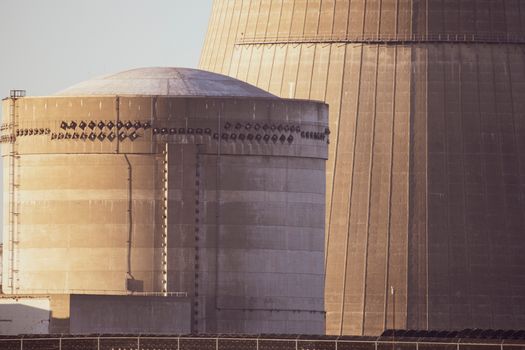
Imagine working at the cutting edge of energy production, helping to make sure everything runs smoothly and safely. A Nuclear Technician plays a really important role in the nuclear industry, which is all about using nuclear energy to create electricity. You could be involved in building new power stations, operating them day-to-day, or carefully taking apart older ones (this is called decommissioning). Your job might involve looking after complex machinery, performing regular checks, and making sure all safety rules are followed perfectly. It's a job that requires a lot of attention to detail and a commitment to keeping everyone safe. Being a Nuclear Technician means you could be working in various places, from actual nuclear power plants to research facilities or even in places that process nuclear materials. You will often work as part of a team, using special tools and equipment to maintain and repair systems. This career is crucial for providing reliable, low-carbon electricity for homes and businesses across the UK. It is a demanding but very rewarding field for those who are good at problem-solving and enjoy practical, hands-on work with a strong focus on safety and precision.

Nuclear Technician

Flag Media

Please select a reason for flagging this content.

📊 Statistics

Average Starting Salary

For someone just starting out as a Nuclear Technician, you could expect to earn around 25,000 to 35,000 pounds per year in the UK. This can go up significantly with experience and specialist skills.

Experienced Salary

With several years of experience, a Nuclear Technician in the UK can earn between 40,000 and 60,000 pounds annually, and even more for highly specialised roles or management positions.

Job Outlook

The UK nuclear industry is expected to grow, particularly with new power station projects and decommissioning existing sites. This means there will be a steady demand for skilled Nuclear Technicians in the coming years.

🚀 Careers in this path

Flag Media

Please select a reason for flagging this content.

Radiation Protection Technician

Imagine being a safety hero. You'd use special gadgets to check for radiation in the air and on equipment, making sure everyone stays safe and healthy when working with nuclear energy. You'd also help people understand safety rules.

Nuclear Decommissioning Technician

Think of it like being a super-careful builder, but in reverse. When a nuclear power station finishes its job, you'd help to take it apart safely, making sure everything is removed properly and responsibly. It's all about making old sites safe again.

Nuclear Waste Management Operative

This role is about looking after special materials that have been used in nuclear power. You'd learn how to safely store and transport this material, making sure it's kept secure for a very long time and doesn't harm anyone or the environment.

Build Your Foundations

Excel in Science and Maths

Focus on your Science and Maths subjects in school. These are the building blocks for understanding how nuclear technology works.

Doing well in subjects like Physics, Chemistry, and Mathematics is really important. They will help you grasp the complicated ideas behind nuclear energy and the tools used in this field. Try to understand the 'why' behind what you're learning, not just memorise facts.

Explore STEM Clubs

Join any Science, Technology, Engineering, and Maths (STEM) clubs at school or in your local area. They offer fun ways to learn more.

STEM clubs are brilliant for practical learning. You might get to build models, do experiments, or even visit science museums. These activities can help you see how your school subjects apply to real-world jobs like being a nuclear technician and spark your interest even more.

Research Nuclear Energy

Learn about nuclear power and its role in generating electricity. Understand the benefits and safety aspects involved.

Spend some time researching nuclear power plants in the UK, like Sizewell B or Hinkley Point C. Look up how they work, the types of jobs available, and how safely they operate. Websites like the Nuclear Industry Association or the Office for Nuclear Regulation can provide great information for you to start with.

Gain Qualifications

Achieve Good GCSEs

Aim for strong grades in your GCSEs, especially in Maths, Science (Physics is particularly useful), and English.

Good GCSE grades, particularly in STEM subjects, are essential for progressing to further education or apprenticeships. They show that you have a solid understanding of key concepts and can apply yourself to your studies. English is also important for clear communication, which is vital in any technical role.

Consider A-Levels or BTECs

After GCSEs, you could study A-Levels in subjects like Physics, Maths, or Engineering, or a BTEC in Engineering.

A-Levels provide a deeper academic understanding, while BTECs offer a more vocational, practical approach to learning. Both can be excellent pathways. An Engineering BTEC, for example, often includes practical skills and knowledge directly relevant to technician roles, preparing you well for further training or an apprenticeship.

Explore Apprenticeships

Look into apprenticeships in nuclear or engineering fields. This is a great way to learn on the job and earn money.

Nuclear technician apprenticeships combine working for a company with studying at college. You'll gain hands-on experience, receive training from experts, and work towards a recognised qualification, often a Higher National Certificate (HNC) or Higher National Diploma (HND) in a relevant engineering discipline. Many major nuclear companies offer these programmes.

Specialise and Progress

Undergo Specific Training

Once employed, you'll receive specialised training on nuclear systems, safety protocols, and equipment.

Every nuclear facility has its own specific procedures and equipment. Your employer will provide extensive on-the-job training and possibly send you on dedicated courses to become an expert in your specific role. This training will cover everything from radiation protection to operating complex machinery and emergency procedures, ensuring you are fully competent and safe.

Gain Professional Certification

Work towards professional certification or registration with engineering bodies as you gain experience.

As you build experience, you might aim for professional registration as an Engineering Technician (EngTech) with an organisation like the Institution of Engineering and Technology (IET) or the Institution of Mechanical Engineers (IMechE). This demonstrates your competence and commitment to professional standards in the engineering sector, enhancing your career prospects.

Continuous Learning

The nuclear industry is always evolving. Keep learning new technologies and updating your skills throughout your career.

Staying up-to-date with the latest advancements in nuclear technology, safety regulations, and operational best practices is crucial. This could involve attending workshops, taking advanced courses, or participating in internal training programmes. Continuous professional development ensures you remain an effective and valuable member of the nuclear team.

🎬 Useful Videos

🎯 View Apprenticeships

Explore relevant apprenticeships that can help you kickstart your career in Nuclear Technician. Apprenticeships offer hands-on experience and training while earning a wage.

Career Progressions

This page showcases various career options and the pathways to reach them. Each career listed here shares transferable skills and knowledge, making it easier for individuals to transition between them.

Your current career is highlighted to help you see how it fits into the broader landscape of potential career choices. By clicking on any career, you can learn more about it, including the training and education required to pursue it.

Remember, progressing in your career often involves further learning and training. This page provides insights into future career options as well as those that can lead up to your current one.

These career progression decisions are informed by comparing the skills and knowledge needed for different occupations, along with data on how people move between them. Explore the possibilities and discover the exciting journey ahead in your career!

Sample Qualifications

The user's input, 'Nuclear Technician', directly matches an available official job title. This indicates the role involves working with nuclear systems, which is precisely what the title implies.

How to become

You can get into this job through:

  • a university course
  • a college course
  • an apprenticeship

University

You can do a foundation degree, higher national diploma or degree in:

  • nuclear engineering
  • electrical or electronic engineering
  • mechanical engineering
  • physics

Entry requirements

You'll usually need:

  • 1 or 2 A levels, or equivalent, for a foundation degree or higher national diploma
  • 2 to 3 A levels, or equivalent, for a degree

More Information

College

You can do a college course to learn some of the skills you'll need to become a nuclear technician. 

Courses include:

  • physics and maths
  • mechanical or electrical engineering
  • nuclear engineering and science
  • engineering maintenance

Entry requirements

Entry requirements for these courses vary.

More Information

Apprenticeship

To become a nuclear technician, you could apply for a place on a Nuclear Technician Level 5 Higher Apprenticeship.

You can also start a Maintenance and Operations Engineering Level 3 Advanced Apprenticeship then get further training on the job to work in nuclear facilities.

Entry requirements

You'll usually need:

  • 4 or 5 GCSEs at grades 9 to 4 (A* to C), or equivalent, including English, maths and science
  • 4 or 5 GCSEs at grades 9 to 4 (A* to C) and A levels, or equivalent, for a higher or degree apprenticeship

More Information

More Information

Career tips

You can find employers in each part of the country on the Nuclear Industry Association jobs map.

Further information

You can get details about working in the the nuclear industry through:

Interested in More Career Paths?

Explore other careers or use our AI to discover personalised paths based on your interests.

Stay connected

Join our newsletter to stay up to date on features and releases

Address
Developing Experts Limited
Exchange Street Buildings
35-37 Exchange Street
Norwich
NR2 1DP
UK

Phone
01603 273515

Email
[email protected]

Copyright 2026 Developing Experts, All rights reserved.