
Creating Career Path...

Finding Further Careers...

Offshore Wind Turbine Technician

View this career for different education levels:

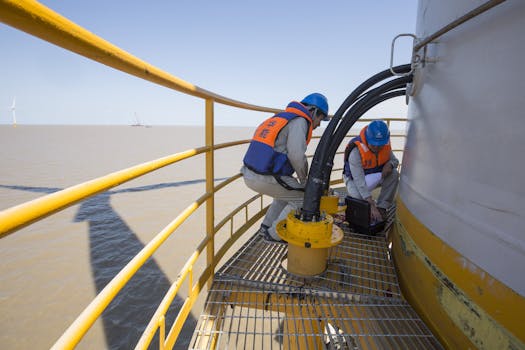
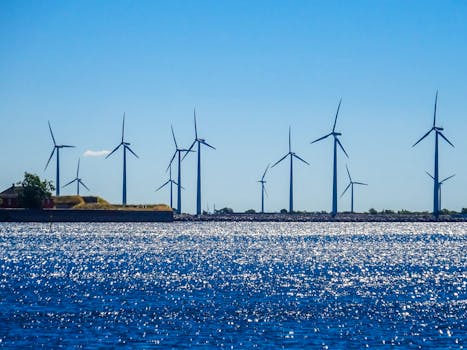
Imagine giant windmills, but out at sea! An Offshore Wind Turbine Technician is a bit like a superhero for these massive structures. Their main job is to make sure these huge wind turbines are always working perfectly, so they can turn the wind into clean electricity for our homes and schools. They travel by boat or helicopter to reach the wind farms, which can be many miles from the coast. Once there, they climb up inside the turbines, which are very tall, to check on all the important parts like the blades, gears, and computers. It's a job that needs bravery, good problem solving skills, and a head for heights! Technicians spend their days doing lots of different things. Sometimes they are fixing things that are broken, like replacing a faulty sensor or tightening a loose bolt. Other times, they are doing routine checks, making sure everything is clean, lubricated, and running smoothly so that no problems appear in the future. They use special tools and wear safety gear to keep them safe high up in the air or out at sea. It's a really important job because offshore wind power is a big part of how the UK is helping to protect our planet and provide energy for everyone.

Offshore Wind Turbine Technician

Flag Media

Please select a reason for flagging this content.

📊 Statistics

Starting Salary

When you first start as an Offshore Wind Turbine Technician in the UK, you might expect to earn around 28,000 to 35,000 pounds a year. That's a good amount for someone just beginning their journey in this exciting field.

Experienced Salary

For technicians with lots of experience and special skills, salaries can go up quite a bit. They might earn between 40,000 to 55,000 pounds a year, and sometimes even more, especially with overtime pay for working offshore.

Job Growth

The number of jobs for people who build and look after wind turbines in the UK is growing very quickly. Experts think that by 2030, there could be thousands of new jobs in this area, making it a great career choice for the future!

🚀 Careers in this path

Flag Media

Please select a reason for flagging this content.

Wind Farm Helper

Imagine being a super helper on a big wind farm! You'd help the grown-ups check on the wind turbines, making sure all the parts are clean and working well. Maybe you'd help count the birds to make sure they're safe, or look at maps to see the best spots for new turbines.

Flag Media

Please select a reason for flagging this content.

Ocean Power Explorer

You'd be an explorer of the ocean's power! You could imagine inventing new ways to get electricity from the waves, like a giant toy boat that bobs up and down to make power. You'd draw your ideas and think about how they could help power our homes.

Green Energy Storyteller

As a Green Energy Storyteller, you'd tell exciting stories about how wind and ocean power help our planet! You could draw colourful pictures of wind turbines and waves making electricity, or write little books to teach other kids how important clean energy is.

Learning About Wind Power

Be Curious About How Things Work

Start by being super curious about how machines work and where our electricity comes from. Ask lots of questions!

At primary school, pay attention in science classes, especially when you learn about electricity, magnets, and simple machines. Try building things with LEGO or other construction toys to understand how parts fit together and move. You could even visit a science museum or watch documentaries about renewable energy to spark your interest.

Learn About Wind Energy

Find out how wind can be turned into electricity. It's a really clever process!

Look up 'how wind turbines work for kids' online with a grown-up, or read books about renewable energy. You might even find videos showing wind farms and how they capture the wind's power. Understanding the basics now will make learning more advanced topics easier later on.

Stay Safe and Strong

This job needs you to be strong and good at following safety rules, so start practising now!

Staying active by playing sports or just running around helps build strength and coordination. Always listen to your teachers and parents about safety rules at school or at home. Learning to follow instructions carefully is a very important skill for a technician who needs to work safely at heights and around powerful machinery.

Getting Ready for Secondary School

Do Well in Maths and Science

Maths helps you measure things, and science helps you understand electricity and how machines operate. These are super important!

When you get to secondary school, really focus on your maths and science lessons. These subjects will give you the building blocks for understanding engineering principles, which are key for a wind turbine technician. Understanding basic physics like forces, motion, and energy will be very helpful. Don't be afraid to ask your teachers for help if you find something tricky.

Learn About Engineering and Technology

Try to join clubs or do projects that let you build or fix things, like a STEM club.

Look for opportunities to get hands-on experience, even if it's just building models or experimenting with electronics kits. Some schools offer Design & Technology lessons where you can learn to work with different materials and tools. These practical experiences will help you develop problem-solving skills and an interest in how things are made and maintained.

Learn About Staying Safe at Work

Safety is always the number one rule when working with big machines, especially high up!

While you are still at school, learn about general safety practices, such as wearing protective gear for certain activities, understanding warning signs, and following instructions carefully. Later, you'll learn about specific safety training needed for working at heights and offshore, but starting with a strong safety mindset is crucial for this career.

Training to Be a Technician

Choose the Right College Course or Apprenticeship

After secondary school, you'll need special training. You could go to college or start an apprenticeship.

After your GCSEs, you could consider an engineering qualification like a BTEC in Engineering at a college. Another great option is an apprenticeship in wind turbine operations or a related engineering field. Apprenticeships let you learn on the job with experienced technicians while also studying for qualifications. This way, you earn money while you train!

Get Special Certificates

To work offshore, you'll need special certificates for safety and climbing.

Once you're training, you'll need to complete specific safety courses, such as Global Wind Organisation (GWO) basic safety training. This includes things like working at heights, first aid, manual handling, and sea survival. These certificates show you know how to be safe in the unique environment of an offshore wind farm.

Start Your First Job

After your training, you can start your exciting career as a wind turbine technician!

Your first role might be as a trainee or junior technician, where you'll work alongside experienced colleagues to gain more practical skills. You'll continue to learn and develop your expertise in maintaining, troubleshooting, and repairing wind turbines, both onshore and eventually offshore. This is where all your hard work and learning really come to life!

🎯 View Apprenticeships

Explore relevant apprenticeships that can help you kickstart your career in Offshore Wind Turbine Technician. Apprenticeships offer hands-on experience and training while earning a wage.

Career Progressions

This page showcases various career options and the pathways to reach them. Each career listed here shares transferable skills and knowledge, making it easier for individuals to transition between them.

Your current career is highlighted to help you see how it fits into the broader landscape of potential career choices. By clicking on any career, you can learn more about it, including the training and education required to pursue it.

Remember, progressing in your career often involves further learning and training. This page provides insights into future career options as well as those that can lead up to your current one.

These career progression decisions are informed by comparing the skills and knowledge needed for different occupations, along with data on how people move between them. Explore the possibilities and discover the exciting journey ahead in your career!

Sample Qualifications

An Offshore Wind Turbine Technician is a specialised type of wind turbine technician, focusing on the installation, maintenance, and repair of wind turbines in an offshore environment. The core function aligns directly with the 'Wind turbine technician' role, with the 'offshore' aspect indicating the working environment rather than a fundamentally different technical discipline.

How to become

You can get into this job through:

  • a university course
  • a college course
  • an apprenticeship
  • applying directly

University

You could do a foundation degree, higher national diploma or degree in:

  • renewable energy engineering
  • electrical or mechanical engineering
  • electrical power engineering

It might give you an advantage if your course includes the opportunity to get work experience through summer internships or a year in industry.

Entry requirements

You'll usually need:

  • 1 or 2 A levels, or equivalent, for a foundation degree or higher national diploma
  • 2 to 3 A levels, or equivalent, for a degree

More Information

College

You could do a college course, which could help you to get a trainee job with a wind turbine engineering company.

Courses include:

  • electrical and electronic engineering
  • mechanical engineering technology
  • T Level in Maintenance, Installation and Repair for Engineering and Manufacturing

Entry requirements

Entry requirements for these courses vary.

  • 4 or 5 GCSEs at grades 9 to 4 (A* to C), or equivalent, including English and maths for a T Level

More Information

Apprenticeship

You could apply to do a Level 3 Advanced Apprenticeship, such as:

  • Maintenance Operations Engineering Technician
  • Engineering Technician
  • Engineering Maintenance Technician

These can take between 3 and 4 years to complete.

Entry requirements

You'll usually need:

  • 5 GCSEs at grades 9 to 4 (A* to C), or equivalent, including English and maths, for an advanced apprenticeship

More Information

Direct Application

You can apply directly for jobs if you've got qualifications and experience in electrical or mechanical engineering from another industry, or from the armed forces.

More Information

Career tips

Companies are predicted to need more wind turbine technicians in the future as industries move towards using renewable energy sources.

Further information

You can find out more about working in the renewable energy industry from RenewableUK and Energy & Utilities Careers & Jobs.

Interested in More Career Paths?

Explore other careers or use our AI to discover personalised paths based on your interests.

Stay connected

Join our newsletter to stay up to date on features and releases

Address
Developing Experts Limited
Exchange Street Buildings
35-37 Exchange Street
Norwich
NR2 1DP
UK

Phone
01603 273515

Email
[email protected]

Copyright 2026 Developing Experts, All rights reserved.