
Creating Career Path...

Finding Further Careers...

Offshore Wind Turbine Technician

View this career for different education levels:

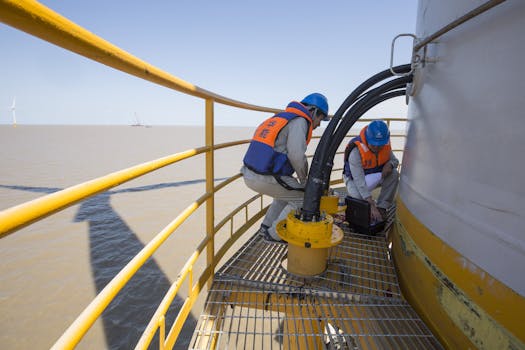
Imagine working out at sea, high up on giant wind turbines that help power our homes with clean energy! That's what an Offshore Wind Turbine Technician does. Your main job is to keep these enormous machines running smoothly. This means you'll be doing a lot of maintenance, checking parts, fixing anything that breaks, and making sure all the safety systems are working perfectly. You'll often travel by boat or helicopter to get to the wind farms, which are usually many miles off the coast. It's a very hands-on job that requires you to be good at solving problems, comfortable working at heights, and able to understand how complex machinery works. You'll also need to be very safety conscious, as you'll be working in a challenging environment. Working as an Offshore Wind Turbine Technician is exciting and varied. One day you might be diagnosing an electrical fault, the next you could be replacing a mechanical part, or even helping with the installation of new equipment. You'll work as part of a team, often staying on a special vessel or platform for several days or weeks at a time before returning to shore for your time off. This career is really important for the UK's future, as it helps us produce more renewable energy, which is much better for the planet than burning fossil fuels. It's a great choice if you love technology, the outdoors, and want a job that makes a real difference.

Offshore Wind Turbine Technician

Flag Media

Please select a reason for flagging this content.

📊 Statistics

Average Starting Salary

An entry-level Offshore Wind Turbine Technician in the UK can expect to earn around 25,000 to 35,000 pounds per year. As you gain experience, this can rise significantly.

Experienced Salary Range

With a few years of experience, a skilled Offshore Wind Turbine Technician in the UK could earn between 40,000 and 60,000 pounds annually, and even more for specialist roles or supervisory positions.

Job Growth in the UK

The offshore wind industry in the UK is growing very quickly. It's predicted that thousands of new jobs will be created in this sector over the next decade as more wind farms are built and maintained.

🚀 Careers in this path

Rope Access Technician Wind Turbines

Imagine climbing up wind turbines using special ropes to do checks and fixes high up in the air. You'd be like a wind turbine spider person, making sure everything is safe and working well without needing big cranes.

Wind Turbine Blade Repair Specialist

Have you ever seen a scratch or crack on something and wanted to fix it perfectly? As a blade repair specialist, you'd be an expert at fixing the giant blades of wind turbines, making sure they're smooth and strong enough to catch the wind.

Underwater Remotely Operated Vehicle ROV Pilot

Some parts of offshore wind turbines are under the sea! You could control a super cool underwater robot from a boat to inspect the turbine's foundations and cables, like playing an advanced video game but for real-life engineering.

Build Your Foundations

Focus on STEM Subjects

In secondary school, pay extra attention to subjects like Maths, Physics, and Design & Technology. These subjects will give you a strong understanding of how things work and the science behind renewable energy.

Maths helps you with calculations for repairs and measurements, Physics teaches you about electricity and mechanics, and Design & Technology can give you practical skills. Aim for good grades in your GCSEs in these subjects as they are often a requirement for further education or apprenticeships in engineering fields. Don't be afraid to ask your teachers for extra help if you find a topic tricky.

Explore Practical Skills

Look for opportunities to get hands-on experience, even if it's just building models, fixing things around the house, or joining a practical club at school. Developing practical skills is really important for this job.

Consider joining school clubs like engineering clubs or robotics. You could also look into basic workshops or courses during school holidays, perhaps on electronics or mechanics. Learning how to safely use tools and understanding how different components fit together will be a huge advantage. Even simple tasks like assembling flat-pack furniture carefully can help develop your precision and practical thinking.

Research the Industry

Learn more about offshore wind farms and renewable energy. Understand what the job involves, the types of equipment used, and the importance of safety.

Watch documentaries about wind energy, read articles, or look at websites from companies that build and maintain wind farms. Understanding the day-to-day life of an Offshore Wind Turbine Technician, including the challenges and rewards, will help you decide if it's the right path for you. Pay attention to safety regulations and the environmental aspects of renewable energy, as these are key parts of the role.

Gain Qualifications

Choose a Relevant College Course

After your GCSEs, you'll need to study a qualification like a BTEC Level 3 in Engineering or an A-Level in Physics or Maths. These courses will give you the technical knowledge required.

A BTEC National Diploma or Extended Diploma in Engineering (e.g., Electrical, Mechanical, or Renewable Energy) is often a direct pathway. Alternatively, strong A-Levels in subjects like Maths and Physics can lead to higher education or more advanced apprenticeships. These qualifications provide the theoretical grounding in engineering principles, electronics, and mechanics that are crucial for working on complex wind turbines. Research different college prospectus to see which course best suits your interests and local opportunities.

Consider an Apprenticeship

An apprenticeship is a brilliant way to learn on the job and get paid at the same time. You'll work for a company while also studying for a qualification.

Look for engineering apprenticeships, particularly those focused on electrical, mechanical, or renewable energy. Some companies offer specific wind turbine technician apprenticeships. These programmes combine practical work experience with classroom learning, leading to a recognised qualification. You'll gain hands-on skills directly from experienced professionals and often have a job waiting for you at the end of your training. Apprenticeships are highly valued in this industry.

Specialised Training

Once you have your core qualifications, you'll need specific training for offshore work, including safety certificates and first aid.

This includes certifications like Global Wind Organisation (GWO) Basic Safety Training, which covers First Aid, Manual Handling, Fire Awareness, Working at Heights, and Sea Survival. These are mandatory for anyone working offshore. You might also need specific electrical or mechanical certifications depending on the turbine types you'll be working with. Your employer will usually arrange and cover the cost of these essential training courses, but it's good to know what to expect.

Launch Your Career

Apply for Entry-Level Roles

Look for job openings for Trainee or Junior Offshore Wind Turbine Technicians. Your apprenticeship or college course will make you a great candidate.

Check job boards, company websites of major wind farm operators (like Ørsted, Vattenfall, ScottishPower Renewables), and specialist renewable energy recruitment agencies. Highlight any practical experience, projects, or relevant skills you've gained during your studies or apprenticeship in your applications. Be prepared for interviews that might test your technical knowledge and problem-solving skills, as well as your understanding of safety procedures.

Gain Offshore Experience

Your first roles will help you build practical experience working on real turbines, often under the supervision of more experienced technicians.

Initially, you might start with onshore work or less complex tasks, gradually progressing to more challenging offshore assignments as your skills and confidence grow. You'll learn the routines, the specific tools and diagnostic equipment used, and how to operate safely in an offshore environment. This period is crucial for consolidating your theoretical knowledge with practical, on-the-job expertise. Always ask questions and be eager to learn from your senior colleagues.

Continuous Learning & Development

The wind energy industry is always changing, so you'll need to keep updating your skills and knowledge throughout your career.

This could involve further training in new turbine technologies, advanced diagnostic techniques, or specialised safety procedures. Companies often provide opportunities for professional development. Staying current with industry advancements will not only make you a more effective technician but also open up possibilities for career progression into senior technician roles, supervisory positions, or even specialisms like turbine commissioning or fault analysis. Lifelong learning is key in this dynamic field.

🎬 Useful Videos

🎯 View Apprenticeships

Explore relevant apprenticeships that can help you kickstart your career in Offshore Wind Turbine Technician. Apprenticeships offer hands-on experience and training while earning a wage.

Career Progressions

This page showcases various career options and the pathways to reach them. Each career listed here shares transferable skills and knowledge, making it easier for individuals to transition between them.

Your current career is highlighted to help you see how it fits into the broader landscape of potential career choices. By clicking on any career, you can learn more about it, including the training and education required to pursue it.

Remember, progressing in your career often involves further learning and training. This page provides insights into future career options as well as those that can lead up to your current one.

These career progression decisions are informed by comparing the skills and knowledge needed for different occupations, along with data on how people move between them. Explore the possibilities and discover the exciting journey ahead in your career!

Sample Qualifications

An Offshore Wind Turbine Technician is a specialised type of Wind Turbine Technician. Their core duties involve the installation, maintenance, and repair of wind turbines, aligning perfectly with the general 'Wind turbine technician' role, with the 'offshore' aspect defining the work environment rather than a fundamentally different technical discipline.

How to become

You can get into this job through:

  • a university course
  • a college course
  • an apprenticeship
  • applying directly

University

You could do a foundation degree, higher national diploma or degree in:

  • renewable energy engineering
  • electrical or mechanical engineering
  • electrical power engineering

It might give you an advantage if your course includes the opportunity to get work experience through summer internships or a year in industry.

Entry requirements

You'll usually need:

  • 1 or 2 A levels, or equivalent, for a foundation degree or higher national diploma
  • 2 to 3 A levels, or equivalent, for a degree

More Information

College

You could do a college course, which could help you to get a trainee job with a wind turbine engineering company.

Courses include:

  • electrical and electronic engineering
  • mechanical engineering technology
  • T Level in Maintenance, Installation and Repair for Engineering and Manufacturing

Entry requirements

Entry requirements for these courses vary.

  • 4 or 5 GCSEs at grades 9 to 4 (A* to C), or equivalent, including English and maths for a T Level

More Information

Apprenticeship

You could apply to do a Level 3 Advanced Apprenticeship, such as:

  • Maintenance Operations Engineering Technician
  • Engineering Technician
  • Engineering Maintenance Technician

These can take between 3 and 4 years to complete.

Entry requirements

You'll usually need:

  • 5 GCSEs at grades 9 to 4 (A* to C), or equivalent, including English and maths, for an advanced apprenticeship

More Information

Direct Application

You can apply directly for jobs if you've got qualifications and experience in electrical or mechanical engineering from another industry, or from the armed forces.

More Information

Career tips

Companies are predicted to need more wind turbine technicians in the future as industries move towards using renewable energy sources.

Further information

You can find out more about working in the renewable energy industry from RenewableUK and Energy & Utilities Careers & Jobs.

Interested in More Career Paths?

Explore other careers or use our AI to discover personalised paths based on your interests.

Stay connected

Join our newsletter to stay up to date on features and releases

Address
Developing Experts Limited
Exchange Street Buildings
35-37 Exchange Street
Norwich
NR2 1DP
UK

Phone
01603 273515

Email
[email protected]

Copyright 2026 Developing Experts, All rights reserved.