
You can do a foundation degree or higher national diploma in electrical and electronic engineering.
Entry requirements
You'll usually need:
- 1 or 2 A levels, or equivalent, for a foundation degree or higher national diploma
An Electrical Fitter is a skilled person who puts together, installs, and maintains electrical equipment and systems. Imagine all the machines and systems that need electricity to work – from a big factory production line to the lighting and power in a building, or even the electrical parts of trains and aircraft. An Electrical Fitter makes sure all the wires are connected correctly, the components are installed safely, and everything works as it should. They read technical drawings and diagrams to understand how to build and connect complex electrical systems. This job is really important for making sure things run smoothly and safely, as any mistakes with electricity can be dangerous. They dont just build things; they also fix them. If an electrical system breaks down, an Electrical Fitter will be called in to find the problem, replace faulty parts, and get it working again. This often involves using special tools to test circuits and diagnose issues. They might work in a workshop, on a construction site, in a factory, or even outdoors on different projects. It's a hands-on job that requires a good understanding of how electricity works, strong problem-solving skills, and a commitment to safety.
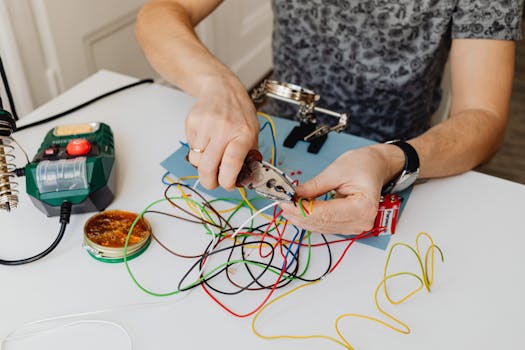
An Electrical Fitter in the UK can expect to earn between 25,000 and 38,000 pounds per year, depending on experience, location, and the specific industry. More experienced or specialised fitters might earn more.
While exact real-time figures vary, there are thousands of job opportunities for Electrical Fitters across the UK in various sectors like manufacturing, construction, and transport. It's a role with consistent demand.
Most Electrical Fitters work around 37-40 hours a week, usually Monday to Friday. However, some roles might involve shift work, weekends, or being on call for emergencies, especially in industries that operate 24/7.
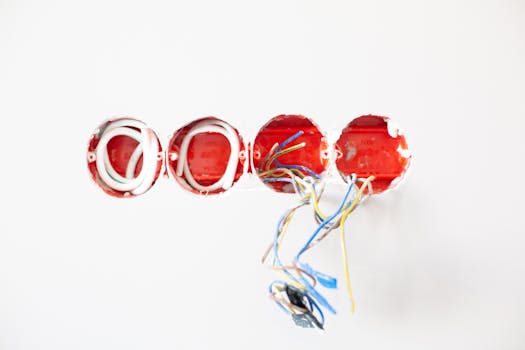
This is a hands-on job where you learn all about electricity, how to wire buildings, install sockets, and fix things that use power. You'd work with experienced electricians to get really good at it, maybe even working on new homes or big offices.
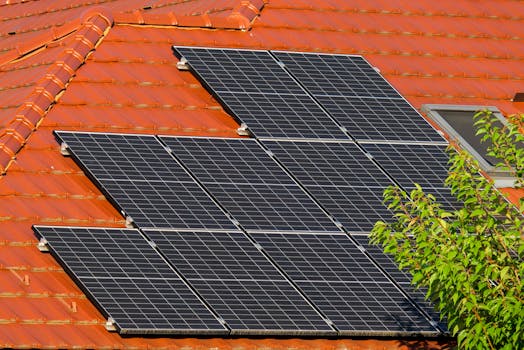
Imagine helping the planet by working with things like solar panels or wind turbines. You would help install, maintain, and fix these systems that create clean electricity for homes and businesses. It's a really important job for the future!
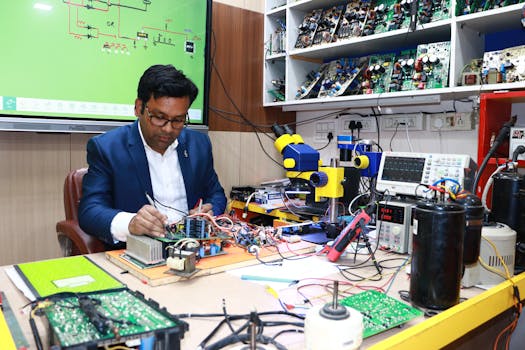
Do you enjoy figuring out how things work and fixing them when they break? This job is all about repairing electronic gadgets, like computers, TVs, or even complicated medical equipment. You'd use special tools to find faults and replace broken parts.
Focus on your Science, Technology, Engineering, and Maths (STEM) subjects at school. These are super important for understanding how electrical things work.
Achieving good grades in subjects like Physics, Maths, and Design & Technology will give you a strong base. If your school offers it, consider taking an Electronics or Engineering-related course. Understanding basic electrical principles, circuits, and safety is key.
Try out hobbies that involve building or fixing things, especially electrical gadgets. This helps you get hands-on experience and see if you enjoy it.
Activities like building model kits, repairing small electronics (under adult supervision), or even joining a school robotics club can be really beneficial. These hobbies help you develop problem-solving skills, dexterity, and an understanding of how components fit together, which are all vital for an Electrical Fitter.
Find out more about what an Electrical Fitter actually does day-to-day. Watch videos, read articles, and talk to people if you can.
Look up 'Electrical Fitter UK' online to find job descriptions and interviews with people in the role. Understand the different industries where Electrical Fitters work, such as manufacturing, transportation, or energy. This will help you decide if it's the right career path for you and what kind of work you might prefer.
An apprenticeship is a brilliant way to learn on the job and get paid at the same time. You'll work with experienced fitters and study for qualifications.
Look for Level 2 or Level 3 Electrical Installation or Engineering apprenticeships after finishing your GCSEs. Companies often advertise these through government apprenticeship websites or their own career pages. An apprenticeship will teach you practical skills, safety procedures, and provide formal qualifications like an NVQ or City & Guilds diploma, which are highly valued in the industry.
If an apprenticeship isn't immediately available, you can study full-time courses at college that lead to an electrical fitting career.
Courses like a BTEC Level 2 or 3 in Electrical and Electronic Engineering or an Electrotechnical Technology diploma will provide you with the theoretical knowledge and practical skills needed. These qualifications can then help you secure an apprenticeship or an entry-level position as an electrical operative or assistant, allowing you to gain experience.
Try to get some work experience, even if it's just for a week or two, in an electrical or engineering setting. It looks great on your CV.
Contact local engineering firms, manufacturing companies, or even smaller electrical contractors to see if they offer work experience placements. This will give you a real taste of the working environment, help you network with professionals, and show potential employers that you are keen and committed to the field.
The electrical world is always changing, so keep learning new techniques, technologies, and safety rules throughout your career.
Once qualified, you might take specialist courses in areas like programmable logic controllers (PLCs), industrial automation, or renewable energy systems. Attending workshops, industry seminars, and reading trade publications will keep your knowledge current. This continuous professional development makes you more valuable and opens up opportunities for more complex and higher-paying roles.
Look into certifications that can help you specialise in particular areas of electrical fitting, making you an expert.
Depending on the industry you choose, there might be specific certifications required or highly valued, for example, working with high-voltage systems, specific machinery, or safety certifications for hazardous environments. These certifications demonstrate your expertise and commitment to working safely and efficiently in particular niches within the electrical fitting field.
With experience, you can move up to more senior roles, supervising others or managing projects.
After several years of experience as an Electrical Fitter, you could aim for roles such as Senior Electrical Fitter, Team Leader, Supervisor, or even move into maintenance management or project management. Some fitters also transition into design, testing, or training roles. Continuous hard work, reliability, and leadership skills will help you achieve these career advancements.
An Electrician primarily installs, maintains, and repairs electrical power, communications, lighting, and control systems in homes, businesses, and factories. While similar, an Electrician often focuses more on building wiring and general electrical infrastructure, whereas a Fitter might specialise in specific machinery or equipment.
An Electrical Engineer designs and develops new electrical systems and components. They work more on the planning and conceptual side of things, creating the blueprints and specifications that an Electrical Fitter then uses to build and install. It's a more office-based role but requires a deeper theoretical understanding.

A Maintenance Technician looks after and repairs a range of machinery and equipment, which often includes electrical systems, but also mechanical, hydraulic, or pneumatic parts. An Electrical Fitter could move into this role, focusing specifically on keeping complex equipment running well.
Explore relevant apprenticeships that can help you kickstart your career in Electrical Fitter. Apprenticeships offer hands-on experience and training while earning a wage.
This page showcases various career options and the pathways to reach them. Each career listed here shares transferable skills and knowledge, making it easier for individuals to transition between them.
Your current career is highlighted to help you see how it fits into the broader landscape of potential career choices. By clicking on any career, you can learn more about it, including the training and education required to pursue it.
Remember, progressing in your career often involves further learning and training. This page provides insights into future career options as well as those that can lead up to your current one.
These career progression decisions are informed by comparing the skills and knowledge needed for different occupations, along with data on how people move between them. Explore the possibilities and discover the exciting journey ahead in your career!
An Electrical Fitter's role involves assembling, installing, testing, and maintaining electrical equipment, often working with blueprints and schematics, which aligns closely with the practical, hands-on application and technical support duties of an Electrical Engineering Technician rather than the broader design responsibilities of an Electrical Engineer or the more general wiring duties of an Electrician.
You can get into this job through:
You can do a foundation degree or higher national diploma in electrical and electronic engineering.
You'll usually need:
You can take a college course, which would teach you some of the skills needed for the job and may help you to find a trainee position with a company.
Relevant courses include:
Entry requirements for these courses vary.
4 or 5 GCSEs at grades 9 to 4 (A* to C), or equivalent, including English and maths for a T Level
You can apply to do an Engineering and Manufacturing Level 2 Foundation Apprenticeship.
You can also do a Level 3 Advanced Apprenticeship, such as:
You'll usually need:
You can apply directly for jobs if you have relevant experience and qualifications. For example, from electrical, electronic, power or building services engineering.
You can find out more about careers in electrical engineering through Tomorrow's Engineers and The Institution of Engineering and Technology.
Explore other careers or use our AI to discover personalised paths based on your interests.
Address
Developing Experts Limited
Exchange Street Buildings
35-37 Exchange Street
Norwich
NR2 1DP
UK
Phone
01603 273515
Email
[email protected]
Copyright 2026 Developing Experts, All rights reserved.

Unlock expert-designed lessons, resources, and assessments tailored for educators. No credit card required.
Claim Your Free Trial →