




Creating Career Path...

Finding Further Careers...

CAD Technician

View this career for different education levels:

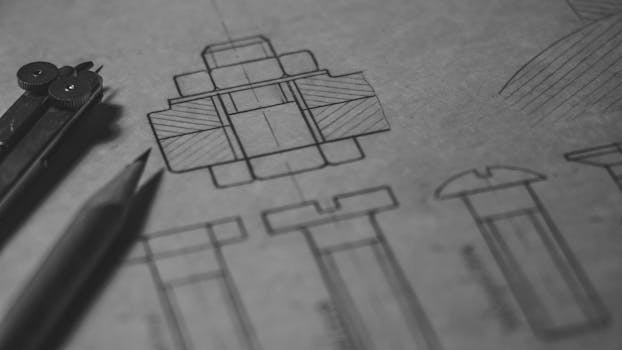
A CAD Technician is someone who uses special computer software, called CAD (Computer Aided Design), to create detailed drawings and plans. Imagine building a house or designing a new car. Before anything is actually built, someone needs to draw out exactly what it will look like and how all the pieces fit together. That's where a CAD Technician comes in! They turn ideas and sketches from engineers or architects into precise digital drawings that others can follow. Your day might involve working on a computer all day, using CAD software to create 2D (flat) or 3D (like a model) designs. You could be drawing up plans for a new school, designing parts for a machine, or even planning the layout of pipes for a plumbing system. You'll need to be very accurate, good at understanding instructions, and enjoy working with computers. It's a really important job because without these detailed plans, it would be much harder to build anything complex safely and correctly.

CAD Technician

Flag Media

Please select a reason for flagging this content.

📊 Statistics

Average Starting Salary

For a new CAD Technician in the UK, you might expect to earn between 18,000 and 24,000 pounds per year, depending on your location and the company.

Experienced Salary Range

With a few years of experience, a CAD Technician in the UK can often earn between 28,000 and 40,000 pounds annually. Highly skilled or specialist technicians in certain fields can earn more.

Job Market Growth

The demand for skilled CAD technicians remains steady in the UK, particularly in sectors like construction, manufacturing, and engineering. There are often thousands of job openings across the country at any given time.

🚀 Careers in this path

Flag Media

Please select a reason for flagging this content.

Architectural Technician

If you enjoy drawing buildings on a computer, you could specialise in helping architects bring their designs to life. You'd use CAD software to create detailed plans for houses, schools, and other buildings, making sure they can actually be built.

Flag Media

Please select a reason for flagging this content.

Civil Engineering Technician

For those who like big projects like bridges, roads, or railway lines, a Civil Engineering Technician uses CAD to design the layout and components of these structures. You'd help make sure everything from tunnels to water pipes is planned out perfectly.

Flag Media

Please select a reason for flagging this content.

Product Design Technician

If you're more interested in creating new objects like cool gadgets, furniture, or car parts, you could be a Product Design Technician. You'd use CAD to draw 3D models of new products, helping designers figure out how they will look and work before they're even made.

Exploring Your Interests

Get Creative with Design

Start exploring your interest in design and how things are put together. This is a great time to experiment!

Think about things you like to build or design, even if it's just with LEGOs, Minecraft, or drawing. CAD Technicians need to have a good eye for detail and understand how different parts fit together. Try creating models or detailed drawings of objects around your house or from your imagination. This helps you develop spatial awareness and problem-solving skills, which are key in CAD.

Boost Your Maths and IT Skills

Focus on subjects like Maths and Design & Technology at school. These are super helpful for a CAD career.

Maths is crucial because CAD involves precise measurements, calculations, and understanding geometry. IT skills are essential as you'll be using computer software all day! Pay attention in your IT classes and try to learn how to use different software programmes. Learning to use a computer well and understanding how to solve problems with it will give you a big head start.

Research CAD Technician Roles

Learn more about what a CAD Technician actually does day-to-day. What kind of projects do they work on?

Look up videos online or read articles about CAD Technicians. You might find that they work in many different areas like architecture (designing buildings), mechanical engineering (designing machines), or even product design. Understanding the variety of roles can help you decide if it's the right path for you and what specific areas you might enjoy most. See if you can find interviews with people in these jobs.

Building Your Skills and Knowledge

Choose Relevant Subjects at School

When you choose your GCSEs and A-Levels, pick subjects that will support a career in CAD.

For GCSEs, good choices include Design & Technology, Maths, Physics, and IT/Computer Science. For A-Levels, Maths, Physics, Product Design, or Engineering would be excellent choices. These subjects will give you the foundational knowledge in design principles, measurements, and computer skills that are essential for using CAD software effectively.

Explore Further Education Options

Consider different routes after school, like university, college, or apprenticeships.

You could go to university to study an HNC, HND, or a degree in Engineering, Architectural Technology, or Product Design. Another great option is to complete a college course, such as a BTEC Level 3 National Diploma in Engineering or Construction. Apprenticeships are also fantastic, as you learn on the job while getting paid and working towards a qualification, like a Level 3 or 4 Engineering Technician apprenticeship.

Start Learning CAD Software Basics

Even before formal training, you can begin to familiarise yourself with CAD software.

There are often free or student versions of CAD software available, such as AutoCAD, SketchUp, or Fusion 360. Look for online tutorials on YouTube or free beginner courses. Practising with these programmes will not only build your skills but also show potential employers or course providers that you're genuinely interested and motivated.

Gaining Experience and Entering the Workforce

Build a Portfolio of Your Work

Start collecting examples of your CAD designs and drawings to show off your skills.

Even if they're just practice projects from home or school, having a portfolio (a collection of your best work) is really important. It shows potential employers what you can do. You can create digital designs, 3D models, or even technical drawings of objects. This demonstrates your ability to use CAD software and your understanding of design principles.

Seek Work Experience or Internships

Try to get some real-world experience in an engineering or design company.

This could be a summer internship, a part-time job, or even just shadowing someone for a few days. Work experience is invaluable because it gives you a taste of what the job is really like, helps you build connections, and looks great on your CV. You might learn about industry-specific software or practices not covered in your studies.

Apply for Junior CAD Technician Roles or Apprenticeships

Once you have your qualifications and some experience, start applying for jobs!

Look for entry-level positions like 'Junior CAD Technician', 'CAD Trainee', or 'Draftsperson'. Many companies offer apprenticeships that allow you to continue learning while working. Tailor your CV and cover letter to each job application, highlighting your CAD skills, relevant projects, and any work experience you've gained.

🎬 Useful Videos

🎯 View Apprenticeships

Explore relevant apprenticeships that can help you kickstart your career in CAD Technician. Apprenticeships offer hands-on experience and training while earning a wage.

Career Progressions

This page showcases various career options and the pathways to reach them. Each career listed here shares transferable skills and knowledge, making it easier for individuals to transition between them.

Your current career is highlighted to help you see how it fits into the broader landscape of potential career choices. By clicking on any career, you can learn more about it, including the training and education required to pursue it.

Remember, progressing in your career often involves further learning and training. This page provides insights into future career options as well as those that can lead up to your current one.

These career progression decisions are informed by comparing the skills and knowledge needed for different occupations, along with data on how people move between them. Explore the possibilities and discover the exciting journey ahead in your career!

Sample Qualifications

The user's input career 'CAD Technician' is an exact match for one of the provided official job titles. The qualifications and duties are identical.

How to become

You can get into this job through:

  • a university course
  • a college course
  • an apprenticeship

University

You could study for a higher national diploma or degree that includes computer-aided design work, such as:

  • construction
  • architectural technology
  • product design
  • design engineering
  • production or manufacturing engineering

Courses that include a year in industry or a summer internship will give you an opportunity to develop contacts and gain relevant work experience.

Entry requirements

You'll usually need:

  • 1 or 2 A levels, or equivalent, for a foundation degree or higher national diploma
  • 2 to 3 A levels, or equivalent, for a degree

More Information

College

You could train in computer-aided design by taking a college course like:

  • engineering technology
  • 2D computer-aided design
  • design and technology
  • T Level in Design, Surveying and Planning for Construction
  • T level in Design and Development for Engineering and Manufacturing

Entry requirements

Entry requirements for these courses vary.

  • 4 or 5 GCSEs at grades 9 to 4 (A* to C), or equivalent, including English and maths for a T Level

More Information

Apprenticeship

You could apply to do an apprenticeship that includes training in CAD design skills. These can be found in many industries, including engineering, manufacturing and construction.

Examples include:

  • Engineering and Manufacturing Support Technician Level 3 Advanced Apprenticeship
  • Engineering Design and Draughtsperson Level 3 Advanced Apprenticeship
  • Civil Engineering Senior Technician Level 4 Higher Apprenticeship
  • Construction Design and Build Technician Level 4 Higher Apprenticeship

Entry requirements

You'll usually need:

  • 5 GCSEs at grades 9 to 4 (A* to C), or equivalent, including English and maths, for an advanced apprenticeship
  • 4 or 5 GCSEs at grades 9 to 4 (A* to C) and A levels, or equivalent, for a higher or degree apprenticeship

More Information

More Information

Career tips

It can be useful to check job adverts to see which design software skills employers are looking for. Some software companies offer student packages or free trials that allow you to practise using them.

In construction design, it's helpful to have an understanding of Building Information Modelling (BIM).

Further information

You can find more about working and training in computer-aided design through Go Construct and the Institution of Engineering Designers.

Interested in More Career Paths?

Explore other careers or use our AI to discover personalised paths based on your interests.

Stay connected

Join our newsletter to stay up to date on features and releases

Address
Developing Experts Limited
Exchange Street Buildings
35-37 Exchange Street
Norwich
NR2 1DP
UK

Phone
01603 273515

Email
[email protected]

Copyright 2026 Developing Experts, All rights reserved.