
You can do a foundation degree or higher national diploma in electrical and electronic engineering.
Entry requirements
You'll usually need:
- 1 or 2 A levels, or equivalent, for a foundation degree or higher national diploma
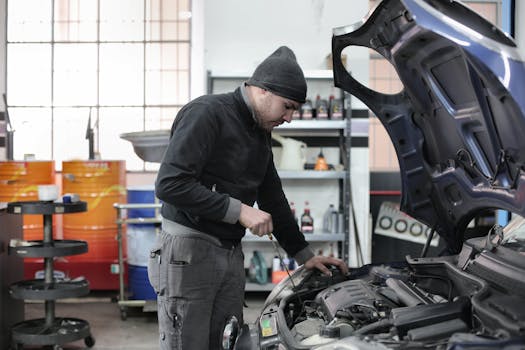
Imagine you love building things with LEGO, fixing your bike, or understanding how machines work. That is a bit like what an Engineering Technician does. These clever people work with engineers to help design, build, test, and fix all sorts of amazing things. They might work in a factory making cars, a laboratory testing new gadgets, or even outdoors maintaining big machines like wind turbines or railway tracks. They use tools and special equipment, follow instructions carefully, and solve problems to make sure everything works perfectly and safely. They are the hands-on people who bring engineering ideas to life and keep things running smoothly. They are very important in making sure the world around us works properly, from your phone to the bridge you cross every day. Being an Engineering Technician means you get to be part of exciting projects. You could be helping to build robots, create new types of aeroplanes, or even work on systems that provide clean water and electricity to homes. It is a job where you are always learning new things and using your brain to solve puzzles. You might spend your day reading technical drawings, assembling parts, checking machines for problems, or making sure everything is built to a high standard. It is a great career for someone who is curious, likes working with their hands, and enjoys seeing the results of their hard work.
An Engineering Technician in the UK can expect to earn between 20,000 and 35,000 pounds a year, depending on their experience and the type of engineering they do. Some senior technicians can earn even more!
There are lots of jobs for Engineering Technicians in the UK. Websites like Indeed and LinkedIn often show thousands of available roles, as many different industries need these skilled workers.
The engineering sector in the UK is growing, meaning there will likely be even more exciting opportunities for Engineering Technicians in the future, helping to build new things and solve problems.

Imagine you get to build all sorts of amazing things with Lego, just like a real engineer! You could design new cars, houses, or even robots using colourful bricks and make sure they work perfectly.

Do you love playing with toys and thinking of new ones? A toy designer gets to invent brand new toys for other children to enjoy. You'd draw pictures of your ideas, choose colours, and even help build prototypes.
Imagine designing and building super fun rollercoasters for a theme park! You'd think about how fast they go, how many loops they have, and make sure they are super safe and exciting for everyone to ride.
Start by looking closely at how everyday things work. Why does a toy car move? How does a light switch turn on a light? Ask lots of 'how' and 'why' questions!
When you're curious, you start to notice the different parts inside machines and how they connect. You can take apart old, broken toys (with an adult's help!) to see their gears, wires, and batteries. This helps you understand simple mechanisms and circuits. Watching videos about how things are made can also be a fun way to learn.
Building with LEGO, K'nex, or even simple construction toys helps you learn how to put things together and follow instructions.
These kits are great because they teach you about structure, balance, and following steps. As you get better, you can try to design your own creations! This helps develop your problem-solving skills and your ability to visualise how different parts fit to make a whole. Building things from scratch helps you think like an engineer.
Pay attention in your science and maths classes, as these subjects are super important for understanding engineering.
Science helps you understand materials and forces, like why some things are strong and others break easily. Maths helps you measure, calculate, and solve problems, which is key for designing and building. Even simple sums and learning about shapes are the building blocks for bigger engineering challenges later on. Doing well in these subjects now will make future learning much easier.
With an adult's help, try fixing small things around the house or building simple models using basic tools.
Learning to use a screwdriver, a wrench, or even just measuring tape safely and correctly is a great start. Maybe you can help assemble flat-pack furniture, or repair a wobbly chair. These activities teach you about practical skills and how different tools are used for different jobs. Always remember to ask an adult to supervise and help you with any tools.
See if your school or a local community centre has a club where you can do science, technology, engineering, and maths activities.
STEM clubs are brilliant because they often have fun projects like building robots, making simple circuits, or designing bridges. You get to work with other children who are also interested in these things and learn from adults who know a lot about engineering. It's a great way to try out different types of engineering and see what you enjoy most.
Go to places like science museums or engineering exhibitions to see amazing machines and learn how they work.
These places often have interactive displays where you can push buttons, turn levers, and see engineering in action. You might see giant engines, old planes, or even futuristic robots. It's a fantastic way to get inspired and understand the huge variety of things engineering technicians can work on. Ask lots of questions to the staff there!
When you're older, choose subjects like Design and Technology, Physics, and Maths at secondary school.
These subjects will give you a strong foundation for a career in engineering. Design and Technology (DT) teaches you how to design and build things, often using different materials and tools. Physics explains the rules of how the world works, which is essential for engineering. And maths, as always, is crucial for problem-solving and calculations. Your teachers can help you pick the best subjects.
After school, you could go to college to study engineering or do an apprenticeship, where you learn on the job.
A college course, like a BTEC in Engineering, teaches you the theory and practical skills you'll need. Apprenticeships are also a brilliant way to learn, as you get to work for a company, earn money, and learn from experienced engineers at the same time. You'll gain hands-on experience and a qualification. Both paths lead to exciting careers as an Engineering Technician.
Engineering is always changing, so keep learning new things and improving your skills throughout your career.
Once you become an Engineering Technician, there will always be new technologies and tools to learn about. Companies often provide training for their employees to keep their skills up to date. Being curious and keen to learn will help you grow in your job and maybe even become a senior technician or an engineer yourself one day! The world of engineering is full of new discoveries.

An electrician installs and fixes electrical systems in homes, schools, and offices, making sure the lights work and everything has power.

A plumber puts in and repairs pipes for water and heating systems, making sure we have warm baths and clean drinking water.

A builder helps construct houses, schools, and other buildings, using lots of different skills to put them together safely.
Explore relevant apprenticeships that can help you kickstart your career in Engineering Technician. Apprenticeships offer hands-on experience and training while earning a wage.
This page showcases various career options and the pathways to reach them. Each career listed here shares transferable skills and knowledge, making it easier for individuals to transition between them.
Your current career is highlighted to help you see how it fits into the broader landscape of potential career choices. By clicking on any career, you can learn more about it, including the training and education required to pursue it.
Remember, progressing in your career often involves further learning and training. This page provides insights into future career options as well as those that can lead up to your current one.
These career progression decisions are informed by comparing the skills and knowledge needed for different occupations, along with data on how people move between them. Explore the possibilities and discover the exciting journey ahead in your career!
An 'Engineering Technician' is a broad role. Given the commonality and foundational nature of electrical engineering across many sectors, and without further specialisation specified, 'Electrical engineering technician' represents a strong general fit for a core engineering discipline.
You can get into this job through:
You can do a foundation degree or higher national diploma in electrical and electronic engineering.
You'll usually need:
You can take a college course, which would teach you some of the skills needed for the job and may help you to find a trainee position with a company.
Relevant courses include:
Entry requirements for these courses vary.
4 or 5 GCSEs at grades 9 to 4 (A* to C), or equivalent, including English and maths for a T Level
You can apply to do an Engineering and Manufacturing Level 2 Foundation Apprenticeship.
You can also do a Level 3 Advanced Apprenticeship, such as:
You'll usually need:
You can apply directly for jobs if you have relevant experience and qualifications. For example, from electrical, electronic, power or building services engineering.
You can find out more about careers in electrical engineering through Tomorrow's Engineers and The Institution of Engineering and Technology.
Explore other careers or use our AI to discover personalised paths based on your interests.
Address
Developing Experts Limited
Exchange Street Buildings
35-37 Exchange Street
Norwich
NR2 1DP
UK
Phone
01603 273515
Email
[email protected]
Copyright 2026 Developing Experts, All rights reserved.

Unlock expert-designed lessons, resources, and assessments tailored for educators. No credit card required.
Claim Your Free Trial →