
You could take a college course in construction skills or construction operations.
Courses like these may help you when applying for jobs.
Entry requirements
Entry requirements for these courses vary.
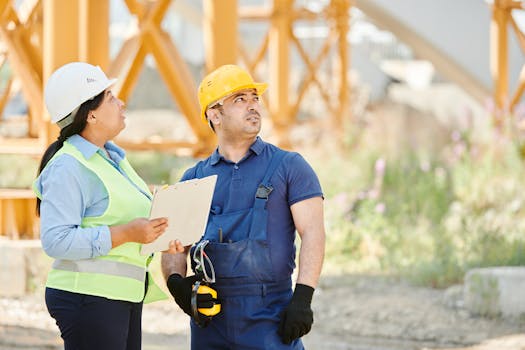
Imagine a big team building a fantastic new school, a comfy new home, or even a super cool bridge! A General Construction Operative is one of the important people on that team. They help with lots of different jobs to make sure the building work gets done safely and well. This could mean helping to clear the ground, moving materials like bricks or wood, making sure the building site is tidy, or even helping skilled builders with their tasks. It is a job where you get to work outdoors a lot, use your hands, and be part of creating something amazing that everyone can see and use. Being a General Construction Operative means you need to be strong, enjoy working with others, and always listen carefully to instructions to keep everyone safe. You might learn how to use different tools and machines too, always under the watchful eye of a supervisor. It is a job that helps build the places where we live, learn, and play, and it is a great way to start if you love the idea of creating things from the ground up!
A new General Construction Operative in the UK might start by earning around 19,000 to 22,000 pounds a year. As you get more experience, this can grow!
With a few years of experience, a General Construction Operative can earn between 25,000 to 35,000 pounds a year. Some highly skilled operatives can earn even more.
There are many jobs for General Construction Operatives all over the UK. The construction industry is always building new things, so there are thousands of opportunities each year.

A bricklayer is like a master builder who puts bricks and blocks together with special cement to make strong walls for houses, schools, and other buildings. They need to be very precise to make sure everything is straight and sturdy.

A plumber is a clever person who works with all the pipes that bring water into buildings and take it away. They install taps, toilets, and sinks, and fix any leaks to make sure everyone has clean water and working drains.
An electrician is someone who works with electricity to make sure lights turn on, computers work, and everything powered by electricity in a building is safe. They install wires, sockets, and light switches, and fix anything that is not working right.
Start by looking at buildings around you and wondering how they are made. Ask grown-ups about tools and materials they use.
When you walk around, pay attention to different buildings. Are they made of bricks, wood, or glass? How do you think they got so tall? You can ask your parents or teachers about different building materials and what they are used for. Watch programmes about how buildings are constructed, like 'Mega Builders' or documentaries about famous landmarks. This helps you understand the different parts of a building and how they fit together.
Use building blocks, LEGO, or even sand to build your own structures. This helps you understand how things fit together.
Playing with building toys is a super fun way to practice being a builder! Whether it's LEGO, wooden blocks, or even making castles in the sand, you learn about balance, strength, and how different shapes can fit to make something new. You can try to build the tallest tower or a really strong bridge. This kind of play helps your brain think like a builder, planning how to make things stable and look good. You'll also learn to follow instructions if you're building a LEGO kit, which is a great skill for a construction operative.
Learn why safety is so important when working on a building site, like wearing a hard hat or bright clothes.
Construction sites can be busy places with big machines and lots of tools, so safety is super important. Think about why you might wear a helmet when riding your bike – it's to protect your head. On a building site, people wear hard hats for the same reason, and bright vests so everyone can see them easily. Learning about safety means understanding why rules are there to keep everyone safe from accidents. You can talk to grown-ups about what makes a place safe or unsafe, and why it's important to follow instructions to stay out of harm's way.
Help grown-ups with little fix-it jobs at home, like tidying up or holding tools. This gets you used to helping with practical tasks.
You can start by being a helpful assistant to grown-ups when they're doing jobs around the house. Maybe they're putting together flat-pack furniture, fixing a leaky tap, or doing some gardening. You could help by passing them tools (when it's safe to do so), holding things steady, or tidying up afterwards. This teaches you about different tools and how to use them carefully, as well as the importance of teamwork and keeping a workspace clean and organised. These are all useful skills for a future construction operative.
Learn the names of different tools like hammers, screwdrivers, and tape measures, and what they are used for.
There are so many cool tools that builders use! Start by learning the names of common tools you might see around the house or in a toolbox. What does a hammer do? How about a screwdriver? What's a tape measure used for? You can ask grown-ups to show you these tools and explain what they are for. Maybe you can even draw pictures of them! Understanding tools is like learning the alphabet for a builder – it helps you understand how to 'read' a construction project and know what you're doing. Always remember that real tools are for grown-ups, but you can learn lots by observing and asking questions.
Playing active games and running around helps you stay strong and healthy, which is important for a job that involves lots of moving.
Being a General Construction Operative means you'll be on your feet a lot, lifting things, and moving around the building site. So, staying fit and strong is really important! Playing outside, running, jumping, and doing sports are all great ways to build your strength and stamina. It's like training for a big adventure! Eating healthy foods and getting enough sleep also helps your body grow strong and gives you lots of energy. All these good habits will help you be ready for a job where you need to be active and have lots of energy every day.
Pay attention in subjects like maths for measuring and design technology for understanding how things are made.
Doing well in school is a super important step for any career, including construction! Maths helps you with measuring, calculating how much material you need, and understanding angles for building. Design and Technology (DT) lessons are great for learning about different materials, how to use tools safely, and how to plan and build things. Even English is important for understanding instructions and communicating with your team. By trying your best in all your subjects, you're building a strong foundation of knowledge and skills that will help you when you're older and ready to start learning the specific skills needed for construction.
When you're older, you can learn more about construction at a college or by doing an apprenticeship where you learn on the job.
Once you're older and have finished school, there are a couple of great paths to becoming a General Construction Operative. One way is to go to a college where they teach you all about construction, from different building techniques to safety rules and using machines. Another fantastic way is to do an apprenticeship. This means you work for a construction company, and they teach you everything on the job while you also study a little bit. It's like getting paid to learn! You'll work with experienced builders who can show you the ropes and help you become really good at the job. Both options help you get the qualifications and hands-on experience you need to be a professional builder.
After your training, you can look for your first job on a building site, helping to build real projects.
Once you've got your training and qualifications, you'll be ready to look for your very first job as a General Construction Operative! You might start by helping out with lots of different tasks on a building site, like moving materials, preparing areas for building, or assisting more experienced builders. This is where all your hard work and learning pay off, as you get to be part of a team making real buildings come to life. Every day will be an adventure, learning new things and seeing projects grow from the ground up. You'll keep learning and getting better at your job, perhaps even specialising in different areas like bricklaying or carpentry as you gain more experience.
A Bricklayer carefully places bricks and blocks with mortar to build walls and other structures for houses and buildings.

A Carpenter works with wood to build and repair things like roofs, doors, window frames, and furniture inside buildings.

A Painter and Decorator makes buildings look beautiful by preparing surfaces and applying paint, wallpaper, and other finishes.
Explore relevant apprenticeships that can help you kickstart your career in General Construction Operative. Apprenticeships offer hands-on experience and training while earning a wage.
This page showcases various career options and the pathways to reach them. Each career listed here shares transferable skills and knowledge, making it easier for individuals to transition between them.
Your current career is highlighted to help you see how it fits into the broader landscape of potential career choices. By clicking on any career, you can learn more about it, including the training and education required to pursue it.
Remember, progressing in your career often involves further learning and training. This page provides insights into future career options as well as those that can lead up to your current one.
These career progression decisions are informed by comparing the skills and knowledge needed for different occupations, along with data on how people move between them. Explore the possibilities and discover the exciting journey ahead in your career!
A General Construction Operative performs fundamental tasks on a construction site, often involving manual labour and assisting skilled trades. This aligns perfectly with the duties of a Construction labourer, who carries out general duties to help construction projects, such as clearing sites, moving materials, and basic digging.
You can get into this job through:
You could take a college course in construction skills or construction operations.
Courses like these may help you when applying for jobs.
Entry requirements for these courses vary.
You could apply to do a Level 2 Intermediate Apprenticeship with a construction firm.
Apprenticeship examples include:
You'll usually need:
You can apply directly for jobs. There are no set requirements but it may help if you have:
You may need your own safety boots, hard hat and hi-viz top, though some employers will supply these.
You can find out more about working in construction from:
Explore other careers or use our AI to discover personalised paths based on your interests.
Address
Developing Experts Limited
Exchange Street Buildings
35-37 Exchange Street
Norwich
NR2 1DP
UK
Phone
01603 273515
Email
[email protected]
Copyright 2026 Developing Experts, All rights reserved.

Unlock expert-designed lessons, resources, and assessments tailored for educators. No credit card required.
Claim Your Free Trial →