


Creating Career Path...

Finding Further Careers...

Solar Panel Installer

View this career for different education levels:

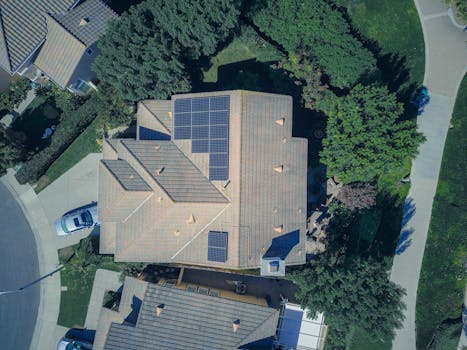
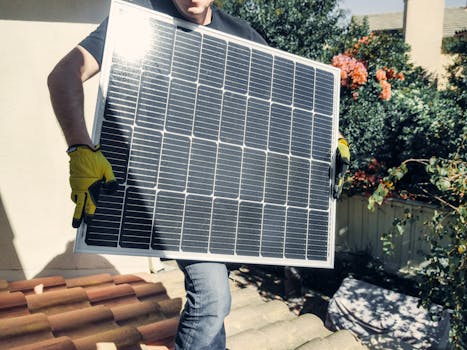
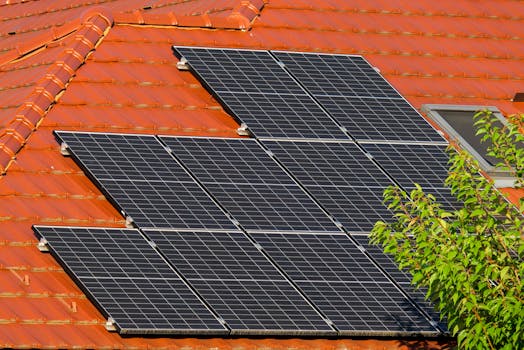
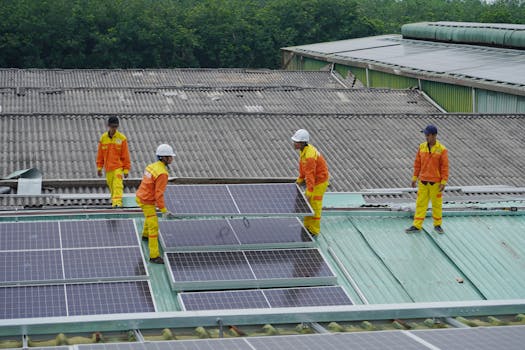
A Solar Panel Installer is a fantastic job for someone who likes working outdoors, enjoys practical tasks, and wants to help the environment! Your main job is to put solar panels onto the roofs of homes, businesses, and sometimes even in large fields. This involves carefully planning where the panels will go, building special frames to hold them, and then securely attaching the panels. You also connect all the wires and make sure the panels are working properly to turn sunlight into electricity. It is a job that requires you to be good with your hands, comfortable working at heights, and able to follow safety rules very carefully. You will often work in a team, and it is really satisfying to see the finished installation helping people save money and the planet! You will learn about different types of roofs, electrical systems, and the best ways to make sure the solar panels are installed safely and efficiently.

Solar Panel Installer

Flag Media

Please select a reason for flagging this content.

📊 Statistics

Average Starting Salary

For a new Solar Panel Installer in the UK, you could expect to earn around 20,000 to 25,000 pounds per year. This usually increases as you gain more experience.

Experienced Salary Range

With a few years of experience, a skilled Solar Panel Installer in the UK can typically earn between 28,000 and 38,000 pounds annually. Very experienced or specialised installers might earn more.

Job Outlook

The demand for solar panel installers in the UK is growing quickly. The UK government is pushing for more renewable energy, which means lots of new jobs are expected in this area over the next decade.

🚀 Careers in this path

Flag Media

Please select a reason for flagging this content.

Rooftop Solar Technician

This involves installing solar panels specifically on the roofs of homes and businesses. You'd learn about different roof types and how to safely work at heights.

Flag Media

Please select a reason for flagging this content.

Ground Mount Solar Specialist

Instead of roofs, this job focuses on installing large solar panel arrays on the ground, often in fields or open spaces. You'd learn about ground preparation and larger scale installations.

Flag Media

Please select a reason for flagging this content.

Solar PV Maintenance Engineer

Once solar panels are installed, someone needs to make sure they're always working perfectly. This role involves checking, cleaning, and repairing solar systems to keep them efficient.

Build a Strong Foundation

Excel in School Subjects

Focus on subjects like Maths, Design & Technology (DT), and Science. These will give you important skills for understanding how solar panels work and how to install them.

Understanding basic physics concepts like electricity and circuits is really helpful. Maths will assist you with measurements and calculations needed for panel placement and wiring. Design & Technology will help you get comfortable with tools and practical problem-solving. These subjects build a strong foundation for technical skills.

Develop Practical Skills

Get hands-on experience by helping with DIY projects at home, joining a school club that involves building, or even taking a workshop on basic carpentry or electronics.

Any activity that involves using tools, following instructions, or understanding how things fit together will be beneficial. This could be helping to build a shed, fixing something around the house, or even participating in a STEM club that focuses on practical applications. These experiences help you become comfortable with manual work and problem-solving.

Explore Renewable Energy

Learn about solar power and other renewable energy sources. Watch documentaries, read articles, or visit science museums to understand how green energy helps the planet.

The more you know about the renewable energy industry and why it's important, the more passionate you'll be about your job. Understanding the benefits of solar energy, like reducing carbon emissions and saving money on electricity bills, will motivate you and help you explain your work to others. Look for resources about climate change and sustainable living.

Gain Relevant Qualifications

Complete GCSEs

Aim for good grades in your GCSEs, especially in Maths, English, and Science. These are essential for further education and apprenticeships.

Most apprenticeship programmes and college courses require a certain number of GCSEs at grades 4-9 (or A*-C under the old system). Strong grades show you can learn and apply yourself, which is crucial for the technical aspects of solar installation. English is important for understanding instructions and communicating safely on site.

Consider a College Course

Look for BTEC or NVQ courses in electrical installation, construction, or renewable energy technologies after your GCSEs. These provide specific skills and knowledge.

These vocational courses are a great way to gain practical skills and theoretical knowledge directly relevant to the job. For example, an electrical installation course will teach you about wiring and safety, which is vital for connecting solar panels. Renewable energy courses might cover specific solar photovoltaic (PV) systems in detail. Many colleges offer these programmes across the UK.

Find an Apprenticeship

An apprenticeship is a fantastic way to learn on the job. You'll work with experienced installers, get paid, and gain qualifications at the same time.

Solar panel installation apprenticeships are available and allow you to gain hands-on experience under the guidance of skilled professionals. You'll learn everything from safety procedures and how to mount panels, to wiring and testing the systems. You'll also typically attend college one day a week to get a formal qualification, such as an NVQ Level 2 or 3 in Solar Photovoltaic Installation. Check websites like 'Find an apprenticeship' on GOV.UK.

Start Your Career and Grow

Secure Your First Job

Apply for entry-level positions or full-time roles with solar installation companies. Your apprenticeship or college qualification will be a big advantage.

When applying, highlight any practical experience, qualifications, and your enthusiasm for renewable energy. Companies look for reliable individuals who are keen to learn and can work safely as part of a team. Your CV should clearly list your relevant skills and qualifications, and be prepared to talk about your understanding of health and safety.

Gain Experience and Specialise

Work hard, learn from your colleagues, and build your experience. You might even choose to specialise in certain types of solar systems or commercial installations.

The more installations you complete, the more proficient you'll become. You could specialise in domestic solar PV, commercial projects, or even battery storage systems that work with solar. Continuous learning, such as staying updated on new technologies and regulations (like MCS standards), is key to progressing in this field. Attend workshops or short courses offered by industry bodies.

Advance Your Career

With experience, you could become a team leader, a project manager, or even start your own solar installation business.

As you gain more years of experience and develop leadership skills, opportunities will open up. You could manage a team of installers, oversee entire projects from start to finish, or move into a role focused on surveying properties and designing solar systems. Some experienced installers choose to become self-employed and set up their own company, taking on their own clients and projects.

🎬 Useful Videos

🎯 View Apprenticeships

Explore relevant apprenticeships that can help you kickstart your career in Solar Panel Installer. Apprenticeships offer hands-on experience and training while earning a wage.

Career Progressions

This page showcases various career options and the pathways to reach them. Each career listed here shares transferable skills and knowledge, making it easier for individuals to transition between them.

Your current career is highlighted to help you see how it fits into the broader landscape of potential career choices. By clicking on any career, you can learn more about it, including the training and education required to pursue it.

Remember, progressing in your career often involves further learning and training. This page provides insights into future career options as well as those that can lead up to your current one.

These career progression decisions are informed by comparing the skills and knowledge needed for different occupations, along with data on how people move between them. Explore the possibilities and discover the exciting journey ahead in your career!

Sample Qualifications

The user's input career 'Solar Panel Installer' directly corresponds to the official job title 'Solar panel installer' in the provided list. Both terms describe the same specialised occupation involved in the installation of photovoltaic systems.

How to become

You can get into this job through:

  • a college course
  • an apprenticeship
  • working towards this role
  • applying directly

College

You’ll usually need an electrical qualification to work as an installer.

You could do a college course to get some of the technical knowledge and skills that may help you get onto an apprenticeship, or to find a trainee installer position with a company.

Courses include:

  • electrical installation
  • electronic and electrical engineering
  • electrical wiring regulations (18th edition)
  • T Level in Building Services Engineering for Construction

You may also need to complete a short course on the installation and maintenance of solar photovoltaic (PV) systems, depending on your experience and any existing qualifications you hold.

Entry requirements

Entry requirements for these courses vary.

More Information

Apprenticeship

You could apply to do an apprenticeship with an installation or construction company, such as:

  • Building Services Engineering Level 2 Foundation Apprenticeship
  • Installation and Maintenance Electrician Level 3 Advanced Apprenticeship

Foundation apprenticeship

You can apply for a foundation apprenticeship if you're aged 16 to 21.

If you're aged 22 to 24, you can apply if you:

Entry requirements

You'll usually need:

  • no specific qualifications or experience to apply for a foundation apprenticeship
  • 5 GCSEs at grades 9 to 4 (A* to C), or equivalent, including English and maths, for an advanced apprenticeship

More Information

Work

You could start as an installation labourer, working with qualified installers, and do training on the job with the support of your employer.

If you’re a qualified electrician you could take a short training course in the installation and maintenance of small solar photovoltaic (PV) systems. This would allow you to fit solar panels and connect them to a building's electrical mains network.

You could take solar PV training to fit solar panels to buildings if you’re a qualified roofer. You'll still need to work with an electrician to connect the panels to a building’s power system.

Check with training providers to find out about the courses they offer and which might be best for you.

Direct Application

You could apply directly for jobs if you have experience and qualifications in electrical installation and maintenance.

More Information

Registration

Career tips

You can demonstrate that you work to industry quality standards by applying to have your installation skills recognised through the Microgeneration Certification Scheme (MCS).

You can also extend this to other renewable technologies, like solar heating, battery storage and heat pumps, if you work in those areas.

Further information

You can find out more about how to become a solar panel installer from:

Interested in More Career Paths?

Explore other careers or use our AI to discover personalised paths based on your interests.

Stay connected

Join our newsletter to stay up to date on features and releases

Address
Developing Experts Limited
Exchange Street Buildings
35-37 Exchange Street
Norwich
NR2 1DP
UK

Phone
01603 273515

Email
[email protected]

Copyright 2026 Developing Experts, All rights reserved.