


Creating Career Path...

Finding Further Careers...

Weather Forecaster For TV

View this career for different education levels:

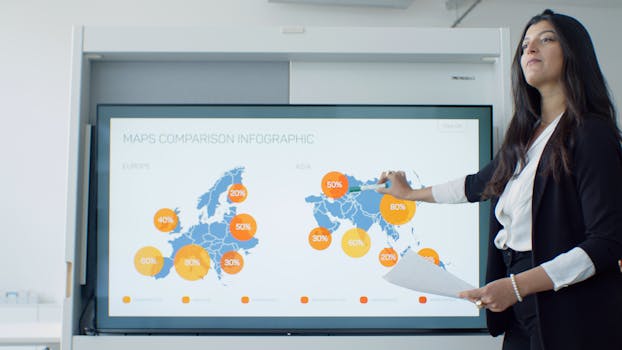
A Weather Forecaster for TV in the UK is responsible for interpreting complex meteorological data and translating it into an understandable and engaging weather report for television audiences. This involves much more than just reading a script; it requires a deep understanding of atmospheric science, weather patterns, and the ability to clearly explain these phenomena, often under live broadcast conditions. You would typically use graphical representations, maps, and other visual aids to illustrate forecasts, explaining elements like temperature, rainfall, wind speed, and severe weather warnings. The role demands strong communication skills, an engaging on-screen presence, and the ability to think quickly and adapt to changing weather conditions or broadcast demands. Many TV weather presenters begin their careers as meteorologists, gaining experience with organisations like the Met Office before transitioning into broadcasting, combining scientific expertise with media skills. The work can involve irregular hours, including early mornings, evenings, and weekends, particularly for national broadcasters covering 24/7 news cycles.

Weather Forecaster For TV

Flag Media

Please select a reason for flagging this content.

📊 Statistics

Starting Salary Range (UK)

For an entry-level Weather Forecaster, particularly in local or regional broadcasting, salaries typically range from 25,000 to 35,000 GBP per year. This can increase significantly with experience and prominence.

Experienced Salary Range (UK)

Experienced Weather Forecasters, especially those working for major national broadcasters, can earn between 40,000 and 70,000 GBP annually, with highly recognised presenters potentially earning more.

Number of Opportunities (UK Market)

The number of dedicated TV Weather Forecaster roles is relatively niche. While specific figures are hard to pinpoint, the market is competitive, with fewer than a few hundred roles across all major and regional broadcasters. Many forecasters also work for the Met Office or private companies before moving into TV.

🚀 Careers in this path

Flag Media

Please select a reason for flagging this content.

Broadcast Meteorologist

Works for a TV or radio station, presenting weather forecasts live on air or recording them for broadcast. They interpret meteorological data and communicate complex information clearly and engagingly to the public.

Flag Media

Please select a reason for flagging this content.

Climate Change Communicator

Focuses on explaining the science and impacts of climate change to various audiences, often through media, public speaking, or educational materials. This role combines scientific understanding with strong communication skills.

Flag Media

Please select a reason for flagging this content.

Environmental Journalist

Researches, writes, and reports on environmental issues, including weather patterns, climate change, conservation, and pollution, for news outlets, magazines, or digital platforms. This role requires investigative skills and scientific literacy.

Academic Foundation & Core Skills

Achieve Strong A-Levels

Focus on achieving excellent grades in A-Levels, particularly in STEM subjects, which are crucial for a career in meteorology.

To lay a solid academic foundation, aim for high grades (ideally A*-B) in subjects like Mathematics, Physics, and Geography. Chemistry or Computer Science can also be beneficial. These subjects will provide the necessary analytical and scientific reasoning skills required for a meteorology degree. Research specific university entry requirements early on to ensure your subject choices align.

Pursue a Relevant University Degree

Enrol in an undergraduate degree programme in meteorology, atmospheric science, or a closely related scientific field.

A Bachelor's degree in Meteorology, Atmospheric Science, or a joint honours programme with Physics is often a prerequisite. Universities like Reading and Leeds are renowned for their meteorology programmes in the UK. Some forecasters may come from a Physics, Mathematics, or Environmental Science background, supplementing their knowledge with postgraduate study or specialised training. Look for programmes accredited or recognised by the Royal Meteorological Society (RMetS).

Develop Communication & Presentation Skills

Actively seek opportunities to enhance your public speaking, presentation, and on-camera skills during your studies.

While your degree focuses on the science, being a TV weather forecaster requires exceptional communication. Join university societies like drama clubs, debating teams, or student radio/TV. Volunteer for presentations, workshops, or even try creating your own weather 'forecasts' to camera using a smartphone. Enrolling in short courses on public speaking or broadcast journalism can also be invaluable for refining your delivery, clarity, and confidence.

Specialised Training & Experience

Gain Practical Forecasting Experience

Seek internships or entry-level roles that provide hands-on experience in meteorological forecasting.

Practical experience is vital. Look for internships with organisations like the Met Office, meteorological consultancies, or even regional news stations if they have a weather department. Roles as a trainee meteorologist or weather observer can provide invaluable insights into data interpretation, model analysis, and creating forecasts. This experience will solidify your scientific understanding and introduce you to the operational aspects of weather forecasting.

Attain Professional Accreditation

Work towards achieving professional accreditation, such as Chartered Meteorologist status with the Royal Meteorological Society.

Professional recognition demonstrates your expertise and commitment. The Royal Meteorological Society (RMetS) offers various levels of membership and accreditation, including Chartered Meteorologist (CMet). This typically requires a relevant degree, significant professional experience, and ongoing professional development. Holding such an accreditation can significantly boost your credibility and career prospects within the meteorological community.

Build a Showreel & Network

Start creating a professional showreel demonstrating your presenting abilities and network within the media and meteorological industries.

A showreel is essential for TV roles. Practice presenting weather segments to camera, perhaps using publicly available weather data, and record yourself. Aim for clear, engaging, and professional delivery. Include examples of different types of forecasts (e.g., daily, severe weather). Simultaneously, attend industry events, conferences, and utilise LinkedIn to connect with broadcast meteorologists, producers, and recruiters in the media sector. Networking can open doors to opportunities.

Broadcast Career & Development

Secure a Junior Broadcast Role

Apply for entry-level or junior weather presenter positions, often with regional broadcasters or smaller channels.

Your first broadcast role might be with a regional BBC station, ITV regional news, or a local radio station. These roles are excellent for gaining live broadcasting experience, honing your presenting style, and working under pressure. Be prepared for early morning shifts or weekend work. Emphasise your scientific background combined with your polished communication skills during interviews, and tailor your showreel to the specific style of the broadcaster.

Continuously Develop Media Skills

Actively seek feedback and training to refine your on-air presence, ad-libbing, and understanding of broadcast production.

The world of broadcasting is dynamic. Work with producers and directors to improve your camera angles, pacing, and overall presentation. Learn to ad-lib effectively, especially during live segments or unexpected technical issues. Understand the technical aspects of broadcasting, such as autocue operation, green screen techniques, and graphics integration. Consider further short courses in broadcast journalism or media presentation to stay sharp and versatile.

Advance & Specialise

Progress to more prominent national roles or specialise in areas like climate communication or severe weather reporting.

With experience, you can aim for national roles with major broadcasters like BBC Weather or ITV National News. You might also choose to specialise in certain areas, becoming a leading voice in climate change communication, environmental reporting, or expert analysis of severe weather events. Opportunities also exist in producing weather content for digital platforms or managing weather teams. Continuing your professional development in meteorology and media will be key to long-term career growth.

🎯 View Apprenticeships

Explore relevant apprenticeships that can help you kickstart your career in Weather Forecaster For TV. Apprenticeships offer hands-on experience and training while earning a wage.

Career Progressions

This page showcases various career options and the pathways to reach them. Each career listed here shares transferable skills and knowledge, making it easier for individuals to transition between them.

Your current career is highlighted to help you see how it fits into the broader landscape of potential career choices. By clicking on any career, you can learn more about it, including the training and education required to pursue it.

Remember, progressing in your career often involves further learning and training. This page provides insights into future career options as well as those that can lead up to your current one.

These career progression decisions are informed by comparing the skills and knowledge needed for different occupations, along with data on how people move between them. Explore the possibilities and discover the exciting journey ahead in your career!

Sample Qualifications

A Weather Forecaster For TV is primarily a meteorologist who specialises in presenting weather information to the public via television. Their core qualification and duties revolve around understanding and interpreting meteorological data, even if their public-facing role is presentation.

How to become

You can get into this job through:

  • a university course
  • training with a professional body

University

You'll usually need a degree in meteorology or a related subject like:

  • physical sciences
  • maths
  • geography
  • computer science
  • environmental science

You might need a postgraduate qualification in meteorology or climatology if you want to do research.

You can find out more about relevant degree subjects from the Royal Meteorological Society.

Getting experience of computer modelling during your degree or postgraduate course can be useful in this role.

Entry requirements

You'll usually need:

  • 4 or 5 GCSEs at grades 9 to 4 (A* to C), or equivalent, including English, maths and science
  • 2 or 3 A levels, or equivalent, including a science, for a degree
  • a degree in a relevant subject for postgraduate study

More Information

Volunteering

You can get  experience with the Met Office 10 week summer internship schemes. There are schemes for different groups, including graduates and A level students who are thinking about meteorology as a career.

Other Routes

You can apply to the Met Office for a place as a trainee on their forecasting and observations course.

You'll need a degree or equivalent qualification in science, maths or a related subject like geography. Other subjects may be accepted if you have the right qualities.

More Information

Career tips

You can do a short work placement to find out more about meteorology as a career, if you're aged between 13 and 18.

Further information

You can learn more about becoming a meteorologist from the Met Office and the Royal Meteorological Society.

Interested in More Career Paths?

Explore other careers or use our AI to discover personalised paths based on your interests.

Stay connected

Join our newsletter to stay up to date on features and releases

Address
Developing Experts Limited
Exchange Street Buildings
35-37 Exchange Street
Norwich
NR2 1DP
UK

Phone
01603 273515

Email
[email protected]

Copyright 2026 Developing Experts, All rights reserved.