

Creating Career Path...

Finding Further Careers...

Weather Forecaster For TV

View this career for different education levels:

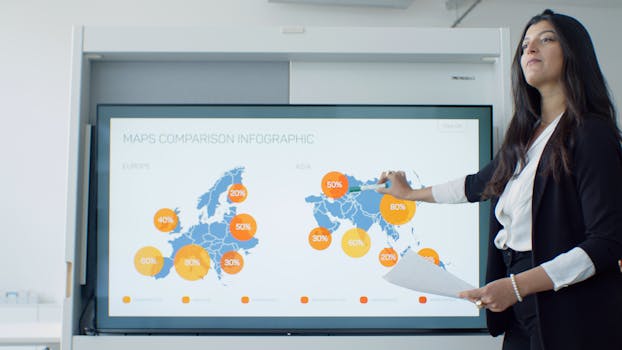
Imagine waking up every day and being one of the first people to know what the weather will be like across the UK. That's what a TV Weather Forecaster does! They take all the complex information from weather maps, satellite images, and computer models and turn it into an easy-to-understand forecast for everyone watching at home. It's not just about sunshine and rain; they also explain why the weather is happening, like how a big storm formed or why one part of the country is colder than another. They need to be good at science, especially geography and physics, to understand the weather, but also fantastic communicators to explain it clearly and engagingly on television. Their job involves a lot more than just standing in front of a green screen. Before going on air, they spend hours analysing data from meteorologists (the scientists who study weather). They then create their own graphics and scripts, making sure everything is accurate and easy to follow. They also need to be prepared for live television, which means thinking on their feet if there are technical issues or if the weather changes suddenly. It's a dynamic role where you get to combine a love for science with the excitement of broadcasting.

Weather Forecaster For TV

Flag Media

Please select a reason for flagging this content.

📊 Statistics

Typical Salary Range

A starting salary for a weather forecaster in the UK can be around £20,000 to £25,000 per year. With more experience, this can go up to £40,000 or even £60,000+ for senior or well-known presenters on national TV.

Number of Positions

While there are many meteorologists in the UK working behind the scenes, the number of actual TV weather presenters is quite small. It's a competitive field, with perhaps a few hundred roles across national and regional TV channels in the UK.

Working Hours

TV weather forecasters often work irregular hours, including early mornings, late evenings, weekends, and public holidays, to ensure the weather is always covered for news programmes.

🚀 Careers in this path

Flag Media

Please select a reason for flagging this content.

Broadcast Meteorologist

This is a scientist who has studied the weather and then shares their knowledge on TV, radio, or online. They use special maps and computer models to explain what the weather will be like and why.

Flag Media

Please select a reason for flagging this content.

Climate Change Communicator

This person helps explain important information about our planet's climate and how it's changing. They might work for a science museum, a charity, or a government organisation, using different ways to share their message.

Flag Media

Please select a reason for flagging this content.

Environmental Journalist

An environmental journalist researches and writes stories about the environment, nature, and science for newspapers, magazines, websites, or TV news. They help people understand important issues affecting our world.

Build Your Foundation

Ace Your Science & Maths

Focus on science subjects like Physics and Geography, and make sure your maths skills are strong. These subjects are really important for understanding how weather works.

Understanding the science behind weather, like how clouds form or why it rains, is key. Physics helps you grasp atmospheric processes, and Geography teaches you about different climates and landscapes. Strong maths skills are vital for interpreting data and models that meteorologists use. Aim for good grades in GCSEs and A-Levels in these subjects.

Get Into University

After school, you'll need to study a relevant degree at university, such as Meteorology, Atmospheric Science, or Physics.

Many universities in the UK offer degrees in Meteorology or related scientific fields. These courses will teach you in-depth about weather systems, climate change, and how to predict forecasts using advanced technology. Some universities might even have links to weather organisations or offer work placements, which can be a great way to gain experience.

Learn About Broadcasting

Alongside your science studies, start to learn about how TV works and practice your communication skills. Watch how TV presenters speak and explain things clearly.

While science is crucial, being able to present information clearly and engagingly is equally important for a TV Weather Presenter. Join a school drama club, debate society, or a local youth theatre group to build your confidence speaking in front of people. Pay attention to how TV presenters use their voice, body language, and visual aids to explain complex topics simply. You could even try making your own 'weather forecast' videos at home!

Gain Experience

Work as a Meteorologist

Many TV Weather Presenters start their careers as meteorologists, working behind the scenes to analyse weather data and create forecasts.

After your university degree, you'll likely work as a qualified meteorologist for an organisation like the Met Office, or a private weather company. In this role, you'll be responsible for studying weather patterns, running computer models, and accurately predicting weather conditions. This hands-on experience is invaluable for deeply understanding the science you'll eventually present on TV.

Develop Presentation Skills

While you're a meteorologist, look for opportunities to practice speaking and presenting weather information to different audiences.

Volunteer to give presentations to colleagues, local schools, or community groups about weather. This helps you hone your ability to explain scientific concepts in an easy-to-understand way. Seek feedback on your clarity, confidence, and how well you engage your audience. You could also take short courses in public speaking or broadcast journalism.

Build a Showreel

Create a short video (a 'showreel') of yourself presenting mock weather forecasts. This is like a portfolio for presenters.

A showreel is essential when applying for presenting roles. It should showcase your ability to explain weather clearly, your personality, and your on-screen presence. You could use footage from your volunteer presentations, or even record yourself presenting mock forecasts at home using weather maps. Ask for feedback from friends, family, or even professionals if you know any, to make your showreel the best it can be.

Break Into TV

Apply for Presenting Roles

Start looking for junior or entry-level weather presenting positions at local or regional TV stations.

TV stations, especially local and regional ones, often look for new talent. Keep an eye on job boards and TV company websites. When applying, make sure your CV highlights both your meteorological qualifications and your presenting experience. Your showreel will be a crucial part of your application, so make sure it's polished and professional.

Network and Connect

Meet people who work in TV and weather broadcasting. Attending industry events can open doors.

Networking means meeting and talking to people who work in the field you're interested in. This can be at industry conferences, online through professional platforms, or even by reaching out to people for an 'informational interview' (a chat to learn about their job). Building connections can help you hear about job opportunities and get advice from experienced professionals.

Be Adaptable and Persistent

It might take time to get your dream job. Be ready to learn new things and keep trying even if you face challenges.

The world of TV can be competitive, so persistence is key. Be open to feedback, willing to adapt your presenting style, and continuously improve your meteorological knowledge. You might start in a small role and work your way up. Keep practising, keep learning, and keep applying! Each application or audition is a learning experience that brings you closer to your goal.

🎬 Useful Videos

🎯 View Apprenticeships

Explore relevant apprenticeships that can help you kickstart your career in Weather Forecaster For TV. Apprenticeships offer hands-on experience and training while earning a wage.

Career Progressions

This page showcases various career options and the pathways to reach them. Each career listed here shares transferable skills and knowledge, making it easier for individuals to transition between them.

Your current career is highlighted to help you see how it fits into the broader landscape of potential career choices. By clicking on any career, you can learn more about it, including the training and education required to pursue it.

Remember, progressing in your career often involves further learning and training. This page provides insights into future career options as well as those that can lead up to your current one.

These career progression decisions are informed by comparing the skills and knowledge needed for different occupations, along with data on how people move between them. Explore the possibilities and discover the exciting journey ahead in your career!

Sample Qualifications

A 'Weather Forecaster For TV' is primarily responsible for analysing weather data and predicting weather patterns, which are the core duties of a Meteorologist. While they also present on TV, their foundational expertise and qualifications are in meteorology rather than general TV presenting or production.

How to become

You can get into this job through:

  • a university course
  • training with a professional body

University

You'll usually need a degree in meteorology or a related subject like:

  • physical sciences
  • maths
  • geography
  • computer science
  • environmental science

You might need a postgraduate qualification in meteorology or climatology if you want to do research.

You can find out more about relevant degree subjects from the Royal Meteorological Society.

Getting experience of computer modelling during your degree or postgraduate course can be useful in this role.

Entry requirements

You'll usually need:

  • 4 or 5 GCSEs at grades 9 to 4 (A* to C), or equivalent, including English, maths and science
  • 2 or 3 A levels, or equivalent, including a science, for a degree
  • a degree in a relevant subject for postgraduate study

More Information

Volunteering

You can get  experience with the Met Office 10 week summer internship schemes. There are schemes for different groups, including graduates and A level students who are thinking about meteorology as a career.

Other Routes

You can apply to the Met Office for a place as a trainee on their forecasting and observations course.

You'll need a degree or equivalent qualification in science, maths or a related subject like geography. Other subjects may be accepted if you have the right qualities.

More Information

Career tips

You can do a short work placement to find out more about meteorology as a career, if you're aged between 13 and 18.

Further information

You can learn more about becoming a meteorologist from the Met Office and the Royal Meteorological Society.

Interested in More Career Paths?

Explore other careers or use our AI to discover personalised paths based on your interests.

Stay connected

Join our newsletter to stay up to date on features and releases

Address
Developing Experts Limited
Exchange Street Buildings
35-37 Exchange Street
Norwich
NR2 1DP
UK

Phone
01603 273515

Email
[email protected]

Copyright 2026 Developing Experts, All rights reserved.