Creating Career Path...

Finding Further Careers...

Nuclear Engineer

View this career for different education levels:

As a Nuclear Engineer in the UK, you'll be at the forefront of a critical and highly technical industry. Your work could involve designing, developing, operating, maintaining, or decommissioning nuclear power plants, as well as working on nuclear submarines, waste management, or medical applications of nuclear technology. This career demands a rigorous understanding of physics, mathematics, and materials science. You'll ensure the safe and efficient operation of nuclear facilities, adhering to stringent national and international regulations. Responsibilities can vary widely, from optimising fuel cycles and radiation shielding to managing safety protocols, conducting risk assessments, and developing new reactor designs. It's a field that combines theoretical knowledge with practical application, often involving complex problem-solving and collaboration with multidisciplinary teams to ensure the highest standards of safety and environmental protection are met. Given the long-term nature of nuclear projects, a career in this area offers significant stability and opportunities for continuous professional development. Working as a Nuclear Engineer often means being part of large-scale projects, whether it's the construction of new nuclear power stations, the life extension of existing ones, or the careful management of decommissioning sites. You might specialise in areas like reactor physics, thermal hydraulics, nuclear safety, materials science, or instrumentation and control. The role requires meticulous attention to detail, strong analytical skills, and a commitment to safety and regulatory compliance. You'll typically work for utility companies, defence organisations, engineering consultancies, research institutions, or regulatory bodies. The impact of your work is significant, contributing directly to the UK's energy security, technological advancement, and environmental goals.

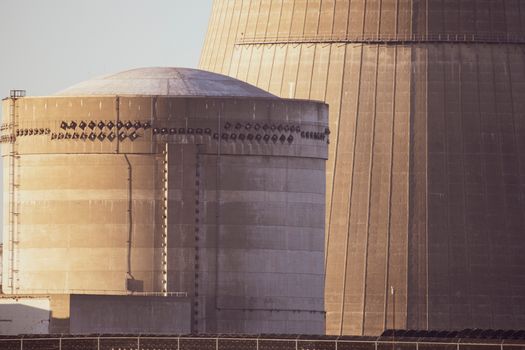
Nuclear Engineer

Flag Media

Please select a reason for flagging this content.

📊 Statistics

Average Starting Salary

For a graduate Nuclear Engineer in the UK, typical starting salaries range from approximately 28,000 to 35,000 pounds per year.

Experienced Professional Salary

With several years of experience, a Nuclear Engineer in the UK can expect to earn between 45,000 and 70,000 pounds annually. Senior or principal engineers and those in management roles can earn upwards of 80,000 pounds or more.

Job Outlook and Demand

The UK nuclear industry, encompassing power generation, defence, and decommissioning, has a consistent demand for skilled engineers. Projections indicate a need for thousands of new recruits across the sector over the next decade due to ongoing projects and an aging workforce.

🚀 Careers in this path

Flag Media

Please select a reason for flagging this content.

Nuclear Safety Inspector

Ensures nuclear facilities comply with strict safety regulations, conducting audits and investigations. This role focuses on the critical aspect of safety within the nuclear industry, vital for public confidence and operational integrity.

Radiological Protection Advisor

Specialises in protecting workers and the public from ionising radiation, designing and implementing radiation safety programmes. This is crucial in nuclear power plants, medical facilities, and research centres.

Nuclear Waste Management Specialist

Develops and implements strategies for the safe and secure handling, storage, and disposal of radioactive waste. This area addresses a significant challenge and long-term responsibility within the nuclear cycle, often involving cutting-edge scientific and engineering solutions.

Educational Foundations

A-Level or Equivalent Qualifications

Achieve strong grades in A-levels or equivalent qualifications, focusing on STEM subjects.

To lay a solid foundation for a degree in Nuclear Engineering, you should aim for high grades in subjects such as Mathematics, Physics, and often Chemistry. Some universities may also consider Further Mathematics or Computer Science beneficial. These subjects provide the core analytical and scientific understanding required for engineering studies.

Undergraduate Degree

Complete a Bachelor's degree in Nuclear Engineering or a closely related engineering discipline.

A Bachelor of Engineering (BEng) or Master of Engineering (MEng) degree is essential. While a specific Nuclear Engineering degree is ideal, programmes in Mechanical Engineering, Chemical Engineering, or Materials Science with relevant modules can also be a good starting point. Look for programmes accredited by the Engineering Council UK. An MEng is often preferred by employers and can lead to Chartered Engineer status more directly.

Specialised Modules & Projects

During your degree, focus on modules and projects related to nuclear science and engineering.

Engage with modules covering topics like nuclear physics, reactor design, thermodynamics, fluid mechanics, materials science, and radiation protection. Actively seek out final year projects or dissertations that have a nuclear focus. This demonstrates a specific interest and builds relevant knowledge and practical skills that will be attractive to employers in the nuclear sector.

Gaining Practical Experience

Internships and Placements

Seek out internships or industrial placements within the nuclear industry during your studies.

Many large nuclear companies and organisations in the UK (e.g., EDF Energy, Magnox, Sellafield Ltd, AWE, Rolls-Royce) offer summer internships or year-long placements. These provide invaluable hands-on experience, networking opportunities, and a chance to apply academic knowledge in a real-world setting. A successful placement can often lead to a graduate job offer.

Graduate Schemes

Apply for graduate schemes offered by nuclear sector employers upon completing your degree.

Graduate schemes are structured programmes designed to give new graduates exposure to different areas of a company's operations. They typically involve rotations through various departments, mentorship, and professional development training. These schemes are highly competitive but offer an excellent pathway into a full-time nuclear engineering role and professional registration.

Professional Development

Actively participate in professional organisations and continuous learning.

Join relevant professional bodies such as the Institution of Mechanical Engineers (IMechE), the Institution of Chemical Engineers (IChemE), or the Nuclear Institute (NI). Attend their events, webinars, and conferences to stay updated on industry trends, network with professionals, and work towards achieving Chartered Engineer (CEng) status. This commitment to ongoing learning is crucial for career progression.

Career Progression & Specialisation

Achieve Chartered Engineer Status

Work towards obtaining Chartered Engineer (CEng) status through a relevant professional institution.

CEng status is a highly respected professional qualification in the UK engineering sector. It demonstrates your competence, commitment to professional standards, and ability to lead. It typically requires an MEng degree (or equivalent), several years of supervised experience, and a professional review. This status significantly enhances your career prospects and earning potential.

Specialise in a Nuclear Field

Develop expertise in a specific area of nuclear engineering that aligns with your interests and industry needs.

The nuclear industry is vast, offering specialisation in areas like reactor design and operations, nuclear safety and regulation, waste management and decommissioning, fuel cycle technology, fusion energy research, or nuclear medicine applications. Gaining in-depth knowledge in a niche area can make you a valuable asset and open doors to more senior or research-focused roles.

Leadership and Project Management

Take on increased responsibility, leading projects and mentoring junior engineers.

As you gain experience and expertise, seek opportunities to manage projects, lead teams, and provide technical guidance. Developing strong leadership and project management skills is vital for advancing into senior engineering, principal engineer, or management positions within the nuclear sector. This often involves developing strong communication, problem-solving, and decision-making abilities.

🎬 Useful Videos

🎯 View Apprenticeships

Explore relevant apprenticeships that can help you kickstart your career in Nuclear Engineer. Apprenticeships offer hands-on experience and training while earning a wage.

Career Progressions

This page showcases various career options and the pathways to reach them. Each career listed here shares transferable skills and knowledge, making it easier for individuals to transition between them.

Your current career is highlighted to help you see how it fits into the broader landscape of potential career choices. By clicking on any career, you can learn more about it, including the training and education required to pursue it.

Remember, progressing in your career often involves further learning and training. This page provides insights into future career options as well as those that can lead up to your current one.

These career progression decisions are informed by comparing the skills and knowledge needed for different occupations, along with data on how people move between them. Explore the possibilities and discover the exciting journey ahead in your career!

Sample Qualifications

The user's input 'Nuclear Engineer' directly matches one of the provided official job titles. Both terms refer to professionals who research, design, develop, and operate nuclear power plants and related technologies.

How to become

You can get into this job through:

  • a university course
  • an apprenticeship
  • a graduate training scheme

University

You can do a degree in a subject like:

  • nuclear engineering
  • chemical engineering
  • mechanical engineering
  • maths
  • physics with nuclear technology
  • materials and nuclear engineering

You can find universities offering nuclear related courses through the Nuclear Institute.

Entry requirements

You'll usually need:

  • 2 or 3 A levels, or equivalent, including maths and physics
  • a degree in a relevant subject for postgraduate study

More Information

Apprenticeship

You may be able to apply for a place on an apprenticeship, such as:

  • Nuclear Scientist and Nuclear Engineer Level 6 Degree Apprenticeship
  • Nuclear Reactor Desk Engineer Level 6 Degree Apprenticeship

These take around 3 years to complete.

Entry requirements

You'll usually need:

  • 4 or 5 GCSEs at grades 9 to 4 (A* to C) and A levels, or equivalent, for a degree apprenticeship

More Information

Other Routes

You can start on a 2-year graduate training scheme called Nuclear Graduates, which is run by nuclear industry employers. 

On the scheme, you'll receive professional development training in different areas of the nuclear industry.

You'll normally need a degree in a science or engineering subject to apply for a place.

More Information

Career tips

You may need to relocate for work, as Britain's nuclear power stations are spread around the country. This includes ones in operation, those being decommissioned and proposed new sites.

You can find employers in each part of the country on the Nuclear Industry Association jobs map.

Further information

You can get details about working in the the nuclear industry through:

Interested in More Career Paths?

Explore other careers or use our AI to discover personalised paths based on your interests.

Stay connected

Join our newsletter to stay up to date on features and releases

Address
Developing Experts Limited
Exchange Street Buildings
35-37 Exchange Street
Norwich
NR2 1DP
UK

Phone
01603 273515

Email
[email protected]

Copyright 2026 Developing Experts, All rights reserved.