

Creating Career Path...

Finding Further Careers...

Nuclear Engineer

View this career for different education levels:

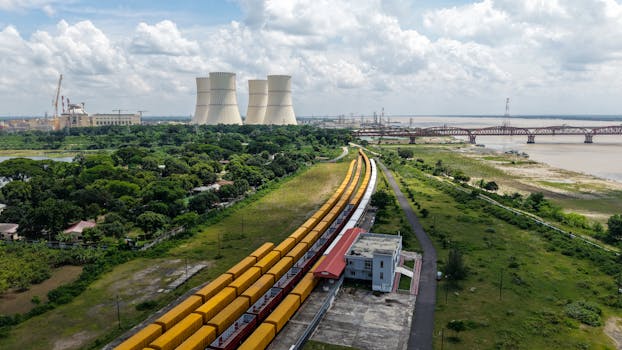
Imagine a world where we need lots of electricity to power our homes, schools, and hospitals! That's where a Nuclear Engineer comes in. These clever people work with something called nuclear energy, which is a very powerful way to make electricity. They help design, build, and look after nuclear power stations, making sure they are super safe and work properly. They also think about new ways to use nuclear power, like for medicine or exploring space! It's a job that needs a lot of careful thinking and problem-solving to keep everyone safe and make sure we have enough power.

Nuclear Engineer

Flag Media

Please select a reason for flagging this content.

📊 Statistics

Starting Salary

A new Nuclear Engineer in the UK might start earning around 28,000 to 35,000 pounds a year. That's a good amount for someone just beginning their career.

Experienced Salary

With more experience, a Nuclear Engineer in the UK can earn much more, sometimes between 45,000 and 70,000 pounds a year, and even over 80,000 pounds for very senior roles.

Job Outlook

The UK needs more Nuclear Engineers to help build new power stations and keep old ones safe. This means there are good chances for jobs in this area.

🚀 Careers in this path

Flag Media

Please select a reason for flagging this content.

Power Station Operator

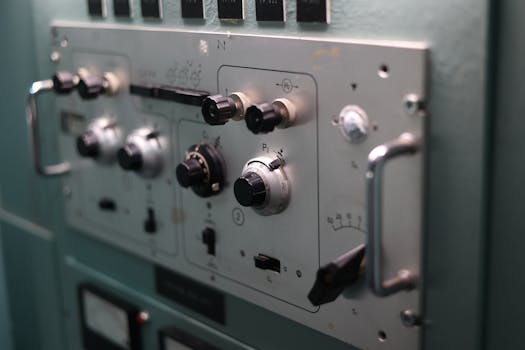
Imagine you are in charge of a giant power station, making sure all the machines work together perfectly to create electricity for homes and schools. You'd watch big screens and press buttons to keep everything running safely and smoothly, like a very important conductor of a huge orchestra.

Energy Researcher

This is like being a science detective, but for energy! You'd spend your time in a special lab, thinking up new and exciting ways to make electricity without harming the planet. Maybe you'd invent a new type of wind turbine or a super-efficient solar panel that looks like a flower. You'd be helping the world find better ways to power everything.

Radiation Safety Officer

Imagine being the superhero of safety at a place that works with powerful energy. Your job would be to make sure everyone is always safe and sound, using special tools to check for anything that might be invisible but harmful. You'd teach people how to stay protected and make sure all the safety rules are followed, like a very clever guardian.

Learning & Exploring

Be Curious at School

Pay close attention in your science and maths lessons. These subjects are like the secret ingredients for becoming a Nuclear Engineer!

At primary school, it's really helpful to enjoy maths, science, and design and technology. Learning about how things work, solving puzzles, and building models will give you a great start. Ask lots of 'why' and 'how' questions!

Read & Watch About Energy

Look for books and fun videos that explain how electricity is made, or how different types of energy work. You can learn lots without even realising it!

There are many fantastic children's books and educational programmes about science, energy, and the environment. Learning about solar panels, wind turbines, and even how a battery works can spark your interest in different energy sources, including nuclear power. Websites like BBC Bitesize often have great resources.

Visit Science Museums

Going to a science museum is like an adventure park for your brain! You can see cool experiments and learn about big machines.

Science museums, like the Science Museum in London or local discovery centres, often have exhibits explaining energy generation, engineering, and physics in a fun, interactive way. Seeing real-life examples and experiments can make abstract concepts much clearer and more exciting. Look out for workshops or special events too!

Building Knowledge

Choose Science at Secondary School

When you're a bit older, picking science subjects like physics and chemistry, and also maths, will be super important for this job.

At secondary school (around age 11-16), try to choose subjects like Physics, Chemistry, and Maths for your GCSEs. These subjects will teach you about the building blocks of matter, energy, and how to solve complex problems, which are all essential for a future in nuclear engineering. Doing well in these will open up more choices later.

Consider Engineering Clubs

See if your school has any clubs where you can build robots or do other cool engineering challenges. It's a great way to practise!

Many schools offer STEM clubs (Science, Technology, Engineering, and Maths) or even robotics clubs. Participating in these can give you hands-on experience, help you work in teams, and solve practical problems. These skills are very valuable for any type of engineering career, including nuclear engineering, where precision and problem-solving are key.

Look at A Levels

After secondary school, you'll choose A Levels. Maths and Physics are usually the best ones if you want to be a Nuclear Engineer.

To get into university to study engineering, you'll typically need strong A Levels. Maths and Physics are almost always required, and sometimes Chemistry or Further Maths can be very helpful too. These A Levels provide a deep understanding of the scientific and mathematical principles that underpin nuclear technology. It's important to aim for good grades!

Becoming an Expert

Go to University

The next big step is to go to university to study a special course like 'Nuclear Engineering' or 'Physics'.

Most Nuclear Engineers complete a university degree. A Bachelor's degree (BEng or MEng) in Nuclear Engineering, Mechanical Engineering, Electrical Engineering, or Physics is a common path. Some universities offer specialised nuclear engineering programmes, while others might offer modules or postgraduate courses in nuclear technology within a broader engineering degree. This is where you'll learn all the complex details.

Find Work Experience

Try to get some work experience, even if it's just for a few weeks, to see what engineers really do every day.

While at university or even before, try to find internships or work placements with engineering companies, power stations, or research facilities. This hands-on experience is invaluable. It helps you understand the day-to-day work, apply your academic knowledge, and build connections in the industry. Some companies offer specific programmes for students interested in nuclear careers.

Start Your First Job

After university, you can apply for special training programmes for new engineers to help you learn even more on the job.

Many companies in the nuclear industry, such as power generation companies, defence contractors, or regulatory bodies, offer graduate schemes. These programmes are designed to give new graduates comprehensive training and exposure to different aspects of nuclear engineering. You might work on design, operations, safety, or research. This is where your career truly begins!

🎬 Useful Videos

🎯 View Apprenticeships

Explore relevant apprenticeships that can help you kickstart your career in Nuclear Engineer. Apprenticeships offer hands-on experience and training while earning a wage.

Career Progressions

This page showcases various career options and the pathways to reach them. Each career listed here shares transferable skills and knowledge, making it easier for individuals to transition between them.

Your current career is highlighted to help you see how it fits into the broader landscape of potential career choices. By clicking on any career, you can learn more about it, including the training and education required to pursue it.

Remember, progressing in your career often involves further learning and training. This page provides insights into future career options as well as those that can lead up to your current one.

These career progression decisions are informed by comparing the skills and knowledge needed for different occupations, along with data on how people move between them. Explore the possibilities and discover the exciting journey ahead in your career!

Sample Qualifications

The user's input career 'Nuclear Engineer' directly matches one of the provided official job titles. Both roles involve the design, development, and operation of nuclear power plants and related technologies.

How to become

You can get into this job through:

  • a university course
  • an apprenticeship
  • a graduate training scheme

University

You can do a degree in a subject like:

  • nuclear engineering
  • chemical engineering
  • mechanical engineering
  • maths
  • physics with nuclear technology
  • materials and nuclear engineering

You can find universities offering nuclear related courses through the Nuclear Institute.

Entry requirements

You'll usually need:

  • 2 or 3 A levels, or equivalent, including maths and physics
  • a degree in a relevant subject for postgraduate study

More Information

Apprenticeship

You may be able to apply for a place on an apprenticeship, such as:

  • Nuclear Scientist and Nuclear Engineer Level 6 Degree Apprenticeship
  • Nuclear Reactor Desk Engineer Level 6 Degree Apprenticeship

These take around 3 years to complete.

Entry requirements

You'll usually need:

  • 4 or 5 GCSEs at grades 9 to 4 (A* to C) and A levels, or equivalent, for a degree apprenticeship

More Information

Other Routes

You can start on a 2-year graduate training scheme called Nuclear Graduates, which is run by nuclear industry employers. 

On the scheme, you'll receive professional development training in different areas of the nuclear industry.

You'll normally need a degree in a science or engineering subject to apply for a place.

More Information

Career tips

You may need to relocate for work, as Britain's nuclear power stations are spread around the country. This includes ones in operation, those being decommissioned and proposed new sites.

You can find employers in each part of the country on the Nuclear Industry Association jobs map.

Further information

You can get details about working in the the nuclear industry through:

Interested in More Career Paths?

Explore other careers or use our AI to discover personalised paths based on your interests.

Stay connected

Join our newsletter to stay up to date on features and releases

Address
Developing Experts Limited
Exchange Street Buildings
35-37 Exchange Street
Norwich
NR2 1DP
UK

Phone
01603 273515

Email
[email protected]

Copyright 2026 Developing Experts, All rights reserved.