
Creating Career Path...

Finding Further Careers...

Nuclear Engineer

View this career for different education levels:

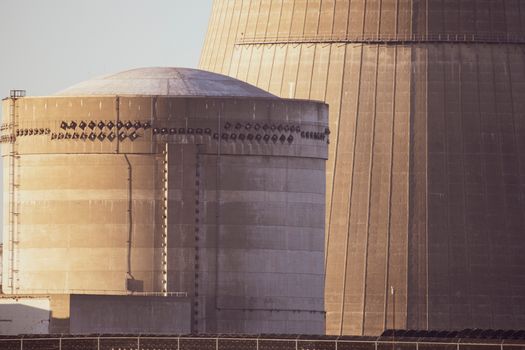
Imagine a world powered by tiny atoms! A Nuclear Engineer in the UK is a super important scientist and engineer who helps make this happen. They work with nuclear energy, which is a powerful way to create electricity without burning fossil fuels. This means they design, build, operate, and maintain nuclear power plants, making sure they are super safe and efficient. They might be involved in creating new types of reactors, managing nuclear waste, or even developing nuclear technology for other uses like medicine or defence. It's a job that involves lots of problem-solving and making sure everything runs perfectly to keep everyone safe and powered up. Being a Nuclear Engineer in the UK means you'd be involved in making sure our country has a reliable and cleaner source of electricity for homes and businesses. You could be working in different places, from design offices developing new power station plans, to actual power stations themselves, or even in research labs exploring future nuclear technologies. It's a challenging but very rewarding career that requires a strong understanding of physics, maths, and engineering principles. You'd be part of a team helping to shape the future of energy in the UK.

Nuclear Engineer

Flag Media

Please select a reason for flagging this content.

📊 Statistics

Starting Salary

A graduate Nuclear Engineer in the UK can expect to earn a starting salary typically between 28,000 and 35,000 pounds per year.

Experienced Salary

With more experience, a Nuclear Engineer in the UK can earn between 40,000 and 65,000 pounds, with senior roles potentially exceeding 75,000 pounds annually.

Job Market Outlook

The UK nuclear industry is experiencing growth, with new power plants being built and existing ones maintained. This means there is a good demand for skilled nuclear engineers in the coming years.

🚀 Careers in this path

Flag Media

Please select a reason for flagging this content.

Nuclear Reactor Operator

Imagine you're controlling a very important power station! A Nuclear Reactor Operator keeps an eye on all the equipment and makes sure everything runs safely and smoothly to make electricity for homes and businesses. It's a bit like being the captain of a very high-tech ship.

Nuclear Waste Management Specialist

This job is all about being super responsible! After we've used nuclear materials, they need to be stored very, very carefully. A Nuclear Waste Management Specialist plans how to store these materials safely so they don't harm anyone or the environment for a very long time. It's like being a super-smart environmental protector.

Radiation Safety Officer

Think of this as being a safety superhero! A Radiation Safety Officer makes sure that everyone working with nuclear materials is safe and protected from radiation. They set up rules and checks, and teach people how to work safely. They might work in power stations, hospitals, or research labs.

Build Your Foundations

Focus on STEM Subjects

At school, pay special attention to Science, Technology, Engineering, and Maths (STEM) subjects. These are the building blocks for a career in engineering.

In secondary school, try to take subjects like Physics, Chemistry, and Maths at GCSE and A-level. These subjects will teach you about how the world works, which is super important for understanding nuclear energy. If your school offers it, subjects like Design & Technology or Computer Science can also be really helpful for developing problem-solving skills.

Explore STEM Clubs and Activities

Join school clubs or attend workshops that focus on science and engineering. This is a fun way to learn more and see if you enjoy these areas.

Look for clubs like a science club, robotics club, or even a coding club. These activities give you hands-on experience and let you experiment with ideas. You might even find local workshops or events run by universities or engineering companies that you can attend during holidays to see real-world projects.

Research and Learn About Nuclear Energy

Start learning about what nuclear energy is and how it's used. The more you know, the better prepared you'll be.

Read books, watch documentaries, and explore reliable websites about nuclear power, nuclear physics, and famous engineers. You can learn about how nuclear power stations generate electricity, how nuclear technology is used in medicine, and the different types of jobs within the nuclear industry. Understanding the basics now will give you a great head start.

Further Education & Training

Choose A-Levels Wisely

Select A-level subjects that will prepare you for a university degree in engineering or a related science.

For a Nuclear Engineering degree, most universities will require A-levels in Maths and Physics. Chemistry is also highly recommended, and sometimes Further Maths can be a strong advantage. Aim for good grades in these subjects to increase your chances of getting into a good university course.

Apply for a Relevant University Degree

Study a university degree in a subject like Nuclear Engineering, Mechanical Engineering, Electrical Engineering, or Physics.

A degree in Nuclear Engineering is the most direct path. However, degrees in Mechanical, Electrical, Chemical, or Materials Engineering, or even Physics, can also lead to a career in the nuclear industry, especially if you choose modules or projects related to nuclear topics. Look for universities with strong engineering departments and good links to industry.

Consider Apprenticeships (Degree Apprenticeships)

Look into degree apprenticeships where you can work, learn, and earn a degree at the same time.

Some nuclear companies offer degree apprenticeships. This means you'd work for the company, gain hands-on experience, and they would support you in studying for a degree (usually part-time). It's a fantastic way to get practical experience and a qualification without the traditional university route, and you'll be earning a salary too.

Start Your Career

Gain Work Experience

Look for internships, placements, or summer jobs in engineering or related fields while you're studying.

Many engineering companies, including those in the nuclear sector, offer summer internships or year-long placements for university students. This is an excellent way to get real-world experience, make connections, and see what the job is actually like. It also looks great on your CV when you apply for your first full-time role.

Apply for Graduate Schemes or Entry-Level Roles

After university, apply for graduate programmes or entry-level positions specifically designed for new engineers.

Many large nuclear companies and organisations in the UK run graduate schemes. These programmes usually involve rotations through different departments, structured training, and mentorship, helping you develop a broad understanding of the company's operations. This is a common and effective way to start your career as a Nuclear Engineer.

Seek Professional Registration

Once you have some experience, work towards becoming a professionally registered engineer (e.g., Incorporated Engineer or Chartered Engineer).

Professional registration with an institution like the Institution of Mechanical Engineers (IMechE) or the Institution of Engineering and Technology (IET) is a mark of quality and professionalism. It shows you've met high standards of competence and commitment. While not required immediately, it's a goal for many engineers and can help with career progression and recognition.

🎬 Useful Videos

🎯 View Apprenticeships

Explore relevant apprenticeships that can help you kickstart your career in Nuclear Engineer. Apprenticeships offer hands-on experience and training while earning a wage.

Career Progressions

This page showcases various career options and the pathways to reach them. Each career listed here shares transferable skills and knowledge, making it easier for individuals to transition between them.

Your current career is highlighted to help you see how it fits into the broader landscape of potential career choices. By clicking on any career, you can learn more about it, including the training and education required to pursue it.

Remember, progressing in your career often involves further learning and training. This page provides insights into future career options as well as those that can lead up to your current one.

These career progression decisions are informed by comparing the skills and knowledge needed for different occupations, along with data on how people move between them. Explore the possibilities and discover the exciting journey ahead in your career!

Sample Qualifications

The user's input 'Nuclear Engineer' directly matches an available official job title. This role involves the design, development, and maintenance of nuclear power systems and related technologies, aligning precisely with the common understanding and scope of a Nuclear Engineer's responsibilities.

How to become

You can get into this job through:

  • a university course
  • an apprenticeship
  • a graduate training scheme

University

You can do a degree in a subject like:

  • nuclear engineering
  • chemical engineering
  • mechanical engineering
  • maths
  • physics with nuclear technology
  • materials and nuclear engineering

You can find universities offering nuclear related courses through the Nuclear Institute.

Entry requirements

You'll usually need:

  • 2 or 3 A levels, or equivalent, including maths and physics
  • a degree in a relevant subject for postgraduate study

More Information

Apprenticeship

You may be able to apply for a place on an apprenticeship, such as:

  • Nuclear Scientist and Nuclear Engineer Level 6 Degree Apprenticeship
  • Nuclear Reactor Desk Engineer Level 6 Degree Apprenticeship

These take around 3 years to complete.

Entry requirements

You'll usually need:

  • 4 or 5 GCSEs at grades 9 to 4 (A* to C) and A levels, or equivalent, for a degree apprenticeship

More Information

Other Routes

You can start on a 2-year graduate training scheme called Nuclear Graduates, which is run by nuclear industry employers. 

On the scheme, you'll receive professional development training in different areas of the nuclear industry.

You'll normally need a degree in a science or engineering subject to apply for a place.

More Information

Career tips

You may need to relocate for work, as Britain's nuclear power stations are spread around the country. This includes ones in operation, those being decommissioned and proposed new sites.

You can find employers in each part of the country on the Nuclear Industry Association jobs map.

Further information

You can get details about working in the the nuclear industry through:

Interested in More Career Paths?

Explore other careers or use our AI to discover personalised paths based on your interests.

Stay connected

Join our newsletter to stay up to date on features and releases

Address
Developing Experts Limited
Exchange Street Buildings
35-37 Exchange Street
Norwich
NR2 1DP
UK

Phone
01603 273515

Email
[email protected]

Copyright 2026 Developing Experts, All rights reserved.