



Creating Career Path...

Finding Further Careers...

Building Insulation Installer

View this career for different education levels:

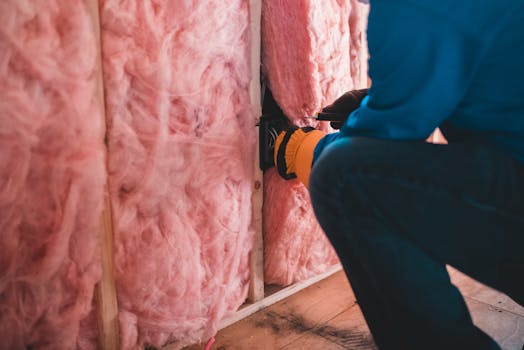
Imagine a big warm coat for a house – that is what a Building Insulation Installer helps to put on! These clever people work inside and outside buildings to add special materials that keep the heat in during winter and sometimes keep the heat out during summer. They might put insulation in the walls, in the roof, or under the floor. This job is super important because it helps families save money on their heating bills and also helps the planet by using less energy. It means carefully cutting and fitting materials like fluffy rolls, rigid boards, or even blowing in special foam. You need to be good at measuring, using tools safely, and working as part of a team. Building Insulation Installers make sure homes are cosy and energy-efficient. They might work in brand new houses being built, or they might help to make older houses warmer. They need to understand different types of insulation and know where is the best place to put them. This job can be hands-on and sometimes involves working in small spaces, so being nimble and strong is helpful. Safety is always key, so wearing special gear like gloves and masks is important to protect yourself from dust and fibres. It is a really valuable job because it helps everyone live in comfortable homes and helps protect our environment too.

Building Insulation Installer

Flag Media

Please select a reason for flagging this content.

📊 Statistics

Average Starting Salary

When you first start as an Insulation Installer in the UK, you might earn around 20,000 to 24,000 pounds a year. This is like the money you earn when you are learning the ropes.

Experienced Salary

Once you have learned a lot and have more experience, you could earn between 28,000 to 35,000 pounds a year. Sometimes even more if you become a supervisor or specialise in certain types of insulation.

Job Opportunities

There are usually thousands of jobs for people who work in construction trades like insulation installers across the UK. This job is important for making homes and buildings warmer and more energy efficient.

🚀 Careers in this path

Flag Media

Please select a reason for flagging this content.

Loft Insulation Helper

Imagine helping grown-ups put big, soft blankets in the very top of houses to keep them warm and cosy! You'd learn about different materials that stop the heat from escaping through the roof, like a warm hat for your house.

Flag Media

Please select a reason for flagging this content.

Wall Insulation Assistant

This is like being a secret agent for warmth! You'd help put special materials inside walls to keep the house snug, like a warm jumper. You'd learn how different walls are built and where the best places are to put the insulation.

Flag Media

Please select a reason for flagging this content.

Draft Excluder Creator

Have you ever felt a cold breeze coming from under a door? A Draft Excluder Creator makes clever things, like long fabric sausages, to stop those chilly drafts. You'd learn about why drafts happen and how to block them, making rooms feel much warmer.

Learning the Basics

Be Curious About Buildings

Start by looking at the buildings around you. How do you think they stay warm or cool? Ask grown-ups questions about their homes.

When you're out and about, pay attention to different types of houses and buildings. Notice their walls, roofs, and windows. You could even draw pictures of them and imagine what's inside. Asking questions like 'Why do houses have thick walls?' or 'How do heaters work?' can spark your interest in how buildings are made comfortable.

Help with Simple DIY

If a grown-up is doing a small repair or project around the house, offer to help. It's a great way to learn about tools and materials.

Even simple tasks like tidying up a shed, helping to paint a wall, or holding a tape measure can teach you valuable skills. You'll learn how to follow instructions, use basic tools safely (with supervision), and understand different materials. This hands-on experience builds confidence and practical knowledge.

Learn About Staying Safe

It's super important to be safe when working. Learn about wearing gloves, masks, and eye protection, even for pretend play.

Safety is the most important thing on a building site. Start learning about it now by understanding why we wear certain protective gear. For example, why do builders wear hard hats? Why do insulation installers wear gloves and masks? Understanding these reasons early on will help you develop good safety habits for the future.

School and Growing Skills

Do Well in School

Try your best in subjects like Maths and Design & Technology. These will help you understand measurements and building.

Maths is really important for measuring spaces and materials, making sure everything fits perfectly. Design & Technology helps you understand how things are made and how to use tools. Science can also be useful to understand how heat moves through different materials. The better you do in these subjects, the easier it will be to learn the practical skills needed later.

Join a Craft Club

Find a club at school or in your community where you can build or make things. This helps you get good with your hands.

Activities like model making, woodwork clubs, or even art and craft groups can improve your fine motor skills and your ability to follow instructions and plans. These clubs allow you to experiment with different materials and tools in a fun, supervised environment, which is perfect for a future installer.

Learn About Our Planet

Understand why it's good to save energy. Insulation helps our planet by making buildings more efficient.

Learning about climate change and renewable energy will show you how important insulation is. By keeping homes warm with less energy, insulation helps reduce pollution and saves natural resources. Knowing this will give you a real purpose in your job, knowing you're helping the environment and people's homes.

Training and Becoming an Expert

Explore College Courses

After school, look into college courses like 'Construction' or 'Building Services Engineering' that can teach you lots about buildings.

These courses will give you a deeper understanding of construction practices, health and safety regulations, and the different types of insulation materials and methods. You'll learn from experienced teachers and often get hands-on training in workshops, preparing you for real-world jobs. It's a great way to get a qualification and meet people who work in the industry.

Find an Apprenticeship

An apprenticeship lets you learn on the job with an experienced builder while also going to college some of the time. You even get paid!

This is one of the best ways to become an insulation installer. You'll work alongside skilled professionals, learning practical techniques directly on construction sites. You'll gain valuable experience, earn a wage, and work towards a recognised qualification, all at the same time. Apprenticeships are often offered by construction companies looking for new talent.

Get Your CSCS Card

To work on most building sites in the UK, you'll need a special card called a CSCS card, which proves you understand safety.

The CSCS (Construction Skills Certification Scheme) card shows that you have completed basic health and safety training and are safe to work on a construction site. You'll need to pass a test to get it, but it's essential for getting many jobs in the construction industry, including insulation installation. It's a vital step to show you're ready for professional work.

🎬 Useful Videos

🎯 View Apprenticeships

Explore relevant apprenticeships that can help you kickstart your career in Building Insulation Installer. Apprenticeships offer hands-on experience and training while earning a wage.

Career Progressions

This page showcases various career options and the pathways to reach them. Each career listed here shares transferable skills and knowledge, making it easier for individuals to transition between them.

Your current career is highlighted to help you see how it fits into the broader landscape of potential career choices. By clicking on any career, you can learn more about it, including the training and education required to pursue it.

Remember, progressing in your career often involves further learning and training. This page provides insights into future career options as well as those that can lead up to your current one.

These career progression decisions are informed by comparing the skills and knowledge needed for different occupations, along with data on how people move between them. Explore the possibilities and discover the exciting journey ahead in your career!

Sample Qualifications

A Building Insulation Installer primarily focuses on installing insulation within buildings, which directly aligns with the duties of a Cavity insulation installer. While 'Thermal insulation engineer' sounds related, it often implies a broader scope including design and advanced systems, whereas the user's input specifies a direct installation role within a building context.

How to become

You can get into this job through:

  • a college course
  • an apprenticeship
  • applying directly

College

You could learn some relevant skills by doing a college course, such as:

  • construction and building crafts
  • insulation building treatments
  • construction operations

Completing a college course can help when looking for a trainee job.

Entry requirements

Entry requirements for these courses vary.

More Information

Apprenticeship

You could apply to do an apprenticeship with an insulation or construction company.

These include:

  • Insulation Installation Operative Level 2 Intermediate Apprenticeship
  • Commercial Thermal Insulation Operative Level 2 Intermediate Apprenticeship
  • Industrial Thermal Insulation Technician Level 3 Advanced Apprenticeship

Entry requirements

You'll usually need:

  • some GCSEs, usually including English and maths, or equivalent, for an intermediate apprenticeship
  • 5 GCSEs at grades 9 to 4 (A* to C), or equivalent, including English and maths, for an advanced apprenticeship

More Information

Direct Application

You could apply directly for jobs. Employers will usually look for GCSEs at grades 9 to 4 (A* to C) in subjects like English, maths, or design and technology.

Experience in construction, loft insulation, pipe lagging or building cladding would be helpful.

More Information

Registration

Career tips

You would fit materials in new buildings and upgrade or retrofit insulation in older ones.

You'll work on all types of premises from schools and hospitals to domestic properties.

Further information

You can find out more about a career in cavity insulation from Go Construct.

Interested in More Career Paths?

Explore other careers or use our AI to discover personalised paths based on your interests.

Stay connected

Join our newsletter to stay up to date on features and releases

Address
Developing Experts Limited
Exchange Street Buildings
35-37 Exchange Street
Norwich
NR2 1DP
UK

Phone
01603 273515

Email
[email protected]

Copyright 2026 Developing Experts, All rights reserved.