

Creating Career Path...

Finding Further Careers...

Heat Pump Installer

View this career for different education levels:

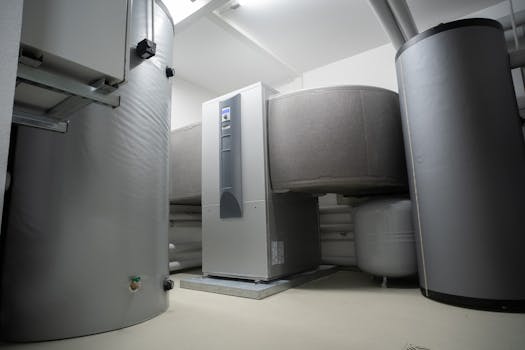
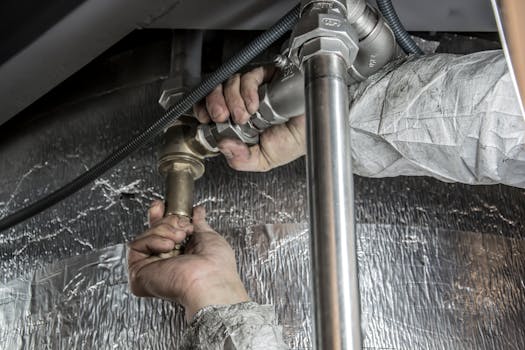
A Heat Pump Installer is a specialist who fits and maintains heat pump systems in homes and businesses. Heat pumps are a really clever way to heat buildings using electricity, but they're much more efficient than traditional electric heaters because they move heat from one place to another, rather than creating it directly. For example, they can take heat from the air outside, or even from the ground, and use it to warm up your house and provide hot water. Your job would involve understanding how different buildings work, measuring up for new systems, installing all the pipes and wiring, and making sure everything is working perfectly and safely. You'd need to be good with your hands, enjoy solving problems, and be happy working both indoors and outdoors. This is a very important job for the UK as we try to use more clean, green energy to help protect our planet.

Heat Pump Installer

Flag Media

Please select a reason for flagging this content.

📊 Statistics

Average Salary for a Heat Pump Installer

In the UK, a heat pump installer can expect to earn between 30,000 and 45,000 per year, though experienced installers with specialist qualifications could earn more.

Growth in Heat Pump Installations

The UK government aims to install 600,000 heat pumps per year by 2028. This means a big increase in jobs for skilled installers.

Entry-Level Salary

For someone starting out as an apprentice or new installer, salaries might begin around 20,000 to 25,000 per year while they gain experience and qualifications.

🚀 Careers in this path

Flag Media

Please select a reason for flagging this content.

Heat Pump Service Engineer

Imagine you've helped install a heat pump, and then your job is to visit people's homes to make sure it's working perfectly. You'd check it regularly and fix anything small that might go wrong. It's a bit like being a doctor for heat pumps, making sure they stay healthy and keep homes warm!

Flag Media

Please select a reason for flagging this content.

Renewable Energy Consultant for Homes

This job is about helping families choose the best green energy for their house. You'd learn all about heat pumps, solar panels, and other eco-friendly systems. Then, you'd explain to people which one would save them the most money and be best for the planet, helping them make a clever choice for their home.

Flag Media

Please select a reason for flagging this content.

Ground Source Heat Pump Specialist

Instead of just installing any heat pump, you could become super good at installing a special kind called 'ground source' heat pumps. These use heat from the earth! It involves learning how to dig pipes deep into the ground. It's a very specific skill and important for bigger homes or new builds.

Exploring Your Interests

Learn About Heat Pumps

Start by finding out what heat pumps are and how they work. You can watch videos, read articles, or even ask adults if they know anyone who has one.

Heat pumps are like fridges in reverse! They take heat from outside (even when it's cold) and move it inside to warm your home, or they can cool it down in summer. They're more efficient than traditional boilers and use electricity, which can come from renewable sources. Understanding the basic science will give you a great head start.

Get Hands-On with Tools

Try out some basic DIY projects at home or school. This will help you get comfortable using tools safely and following instructions.

Many schools offer design and technology lessons where you can use tools like screwdrivers, wrenches, and measuring tapes. At home, you could help with simple repairs or building flat-pack furniture. Getting familiar with tools now will make future practical training much easier and help you develop good hand-eye coordination.

Focus on STEM Subjects

Pay attention in your Science, Technology, Engineering, and Maths (STEM) classes. These subjects build important skills for this career.

Science will help you understand how heat transfer works and the principles behind heat pumps. Maths is crucial for measurements and calculations. Technology and engineering teach you problem-solving and how systems are designed. These subjects provide the foundational knowledge you'll need for more advanced training later on.

Building Foundational Skills

Choose Relevant GCSEs

When you pick your GCSEs, try to include subjects like Maths, Science (especially Physics or Combined Science), and Design & Technology.

These subjects will give you a strong academic base. Maths is essential for calculating pipe lengths, heat loss, and system sizing. Science will help you grasp the thermodynamics and refrigeration principles. Design & Technology will enhance your practical problem-solving and understanding of construction processes.

Consider a College Course or Apprenticeship

After GCSEs, you could look into a Level 2 or 3 college course in plumbing, heating, or refrigeration, or apply for an apprenticeship.

A college course, such as a BTEC or NVQ, provides classroom learning and practical workshops, giving you a broad understanding. An apprenticeship combines working for a company with studying at college, meaning you earn a wage while gaining qualifications and hands-on experience directly related to the job. This is often the most direct route into skilled trades.

Gain Work Experience

Look for opportunities to get some work experience, even if it's just for a week. This could be with a local plumbing or heating company.

Work experience gives you a real feel for what the job is like. You'll see what a typical day involves, meet people in the trade, and learn about the different tools and tasks. It's a great way to show future employers that you're keen and committed, and it might even lead to an apprenticeship opportunity.

Becoming a Qualified Installer

Complete Specialist Heat Pump Training

Once you have a plumbing or heating qualification, you'll need specific training for heat pumps, often through an industry-recognised course.

Courses like the 'Level 3 Award in Installation and Maintenance of Air Source Heat Pumps (QCF)' are crucial. These courses cover the specific design, installation, commissioning, and maintenance of heat pump systems, including health and safety, electrical safety, and environmental regulations. You'll learn about different types of heat pumps (air source, ground source) and the best practices for each.

Obtain Relevant Certifications

Get certified by recognised industry bodies like MCS (Microgeneration Certification Scheme) or F-Gas if working with refrigerants.

MCS certification is vital for installers of renewable technologies, as it ensures installations meet a high standard and allows customers to access government grants. If heat pumps contain refrigerants, you'll need an F-Gas qualification to handle them legally and safely. These certifications demonstrate your competence and professionalism to clients and employers.

Stay Updated and Develop Skills

The technology is always changing, so keep learning about new heat pump systems and regulations through ongoing training and professional development.

The renewable energy sector is constantly evolving. Attend workshops, read industry publications, and participate in manufacturer training sessions to keep your knowledge current. This will ensure you remain competent, compliant, and able to offer the latest and most efficient solutions to your customers, helping you advance in your career.

🎬 Useful Videos

🎯 View Apprenticeships

Explore relevant apprenticeships that can help you kickstart your career in Heat Pump Installer. Apprenticeships offer hands-on experience and training while earning a wage.

Career Progressions

This page showcases various career options and the pathways to reach them. Each career listed here shares transferable skills and knowledge, making it easier for individuals to transition between them.

Your current career is highlighted to help you see how it fits into the broader landscape of potential career choices. By clicking on any career, you can learn more about it, including the training and education required to pursue it.

Remember, progressing in your career often involves further learning and training. This page provides insights into future career options as well as those that can lead up to your current one.

These career progression decisions are informed by comparing the skills and knowledge needed for different occupations, along with data on how people move between them. Explore the possibilities and discover the exciting journey ahead in your career!

Sample Qualifications

This is the most direct and accurate match. A Heat Pump Installer's primary role involves the installation of heat pump systems, which aligns perfectly with the job description of a Heat Pump Engineer, focusing specifically on this technology.

How to become

You can get into this job through:

  • a college course
  • an apprenticeship
  • working towards this role

College

You could take a college course in a related subject like plumbing and heating, or a T Level in Building Services Engineering for Construction.

These courses teach you some of the skills you'll need to apply for a trainee plumber, heating and ventilation engineer, or gas service technician position with a company.

Once you've built up your experience, you could take extra training, usually lasting between 3 and 5 days.

This would include:

  • heat pump foundation knowledge
  • low temperature heating and hot water systems
  • individual heat pump technology

Entry requirements

Entry requirements for these courses vary.

  • 4 or 5 GCSEs at grades 9 to 4 (A* to C), or equivalent, including English and maths for a T Level

More Information

Apprenticeship

You could apply to do an apprenticeship, such as:

  • Building Services Engineering Level 2 Foundation Apprenticeship
  • Low Carbon Heating Technician Level 3 Advanced Apprenticeship
  • Heat Network Maintenance Technician Level 3 Advanced Apprenticeship

Foundation apprenticeship

You can apply for a foundation apprenticeship if you're aged 16 to 21.

If you're aged 22 to 24, you can apply if you:

Entry requirements

You'll usually need:

  • no specific qualifications or experience to apply for a foundation apprenticeship
  • 5 GCSEs at grades 9 to 4 (A* to C), or equivalent, including English and maths, for an advanced apprenticeship

More Information

Work

You could train as a gas service technician, heating and ventilation engineer or plumber. You could then do additional training to become a heat pump engineer.

Training would cover:

  • low temperature heating and hot water systems
  • heat pump installation and maintenance
  • different types of heat pump technologies

Lots of organisations offer training in heat pump installation. You can search for heat training providers in your local region.

More Information

Professional and industry bodies

You could join the Heat Pump Association (HPA) for professional development opportunities.

Further information

You can get more advice on heat pump careers and training from the Chartered Institute of Plumbing and Heating Engineering (CIPHE).

Interested in More Career Paths?

Explore other careers or use our AI to discover personalised paths based on your interests.

Stay connected

Join our newsletter to stay up to date on features and releases

Address
Developing Experts Limited
Exchange Street Buildings
35-37 Exchange Street
Norwich
NR2 1DP
UK

Phone
01603 273515

Email
[email protected]

Copyright 2026 Developing Experts, All rights reserved.