Creating Career Path...

Finding Further Careers...

Carbon Analyst

View this career for different education levels:

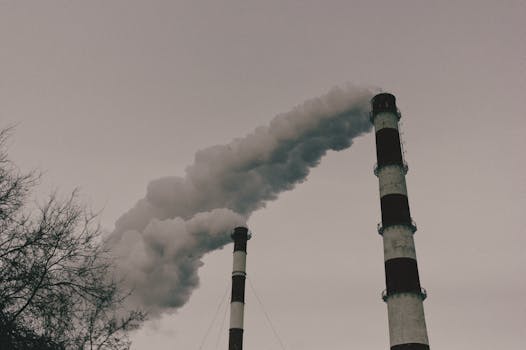
Imagine you're a detective, but instead of solving crimes, you're solving mysteries about how much carbon dioxide businesses or organisations produce. That's a bit like what a Carbon Analyst does! They are super important people who help companies understand their impact on the environment, specifically how much carbon they're releasing into the atmosphere. This involves collecting lots of data, like how much electricity a factory uses, how far its delivery lorries travel, or what materials it uses to make products. They then analyse this data to work out the 'carbon footprint' and suggest ways to reduce it. Their job is all about making businesses more eco-friendly and helping the UK meet its goals to tackle climate change. A Carbon Analyst might also help companies understand different environmental rules and regulations, making sure they are following the law. They might use special software to track emissions, create reports to show progress, and even help educate staff within a company about why reducing carbon is so important. It's a role that combines science, maths, and a passion for protecting our planet, making a real difference in the fight against climate change.

Carbon Analyst

Flag Media

Please select a reason for flagging this content.

📊 Statistics

Average UK Salary

A Carbon Analyst in the UK can expect to earn an average salary of around £35,000 to £45,000 per year. For those just starting out, it might be closer to £25,000 to £30,000, while very experienced analysts could earn £50,000 or more.

Job Market Growth

The demand for Carbon Analysts and similar sustainability roles in the UK is growing steadily. As the UK aims for net-zero emissions, more businesses need experts to help them reduce their carbon footprint, meaning there are increasing opportunities.

Required Education

Most Carbon Analyst roles in the UK typically require a university degree, often in subjects like environmental science, sustainability, engineering, or a related field. Some roles might also look for postgraduate qualifications or specific industry certifications.

🚀 Careers in this path

Sustainability Officer for a Business

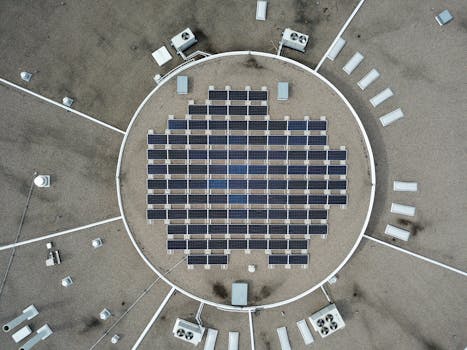
Imagine working for a big company and helping them find ways to be kinder to the planet. You'd research how much carbon they use, suggest new ways to save energy, like using solar panels, and help them recycle more. It's like being a detective for green solutions!

Environmental Data Analyst

This job is like being a super-smart detective with numbers! You would look at lots of information about the environment, like how much pollution there is or how much electricity people are using. Then, you'd help explain what the numbers mean so people can make better decisions to protect the planet.

Climate Change Researcher

This role involves studying how our planet's climate is changing and what's causing it. You might look at ice samples, measure air quality, or study weather patterns to understand the big picture. It's all about finding out what's happening and sharing that knowledge to help us deal with climate change.

Build Your Foundations

Do Well in Science and Maths

Focus on your Science (especially Chemistry and Biology) and Maths subjects at school. These are super important for understanding how carbon works and for analysing data.

Understanding scientific principles like the carbon cycle and how different processes release greenhouse gases is crucial. Maths skills will help you interpret statistics, calculate emissions, and understand complex data models. Try to engage with these subjects, ask questions, and practice regularly.

Explore Environmental Topics

Read books, watch documentaries, and follow news about climate change, renewable energy, and environmental protection. This will help you understand the big picture.

Developing a genuine interest in environmental issues early on will make your studies and future career much more engaging. Look for resources that explain concepts like 'net zero', 'carbon footprint', and 'sustainability'. Knowing the current challenges and solutions will give you a strong foundation.

Join Eco-Clubs or Projects

If your school has an eco-club, join it! Or start your own project to make your school or local area more environmentally friendly. This shows you're passionate.

Getting involved in practical environmental projects, even small ones, can be incredibly valuable. It teaches you about teamwork, problem-solving, and how to put ideas into action. You might learn about waste reduction, energy saving, or even planting trees, all of which relate to carbon management.

Further Your Education

Choose A-Levels or Equivalent

For your A-levels or equivalent qualifications, consider subjects like Maths, Science (Chemistry, Physics, Biology), Geography, and Environmental Science. These provide a great base.

These subjects will give you the analytical and scientific skills needed for a Carbon Analyst role. Maths is essential for data analysis, while the sciences and geography provide an understanding of environmental systems and climate processes. Environmental Science is particularly relevant as it often covers sustainability and ecological principles.

Go to University

Look for university degrees in subjects like Environmental Science, Sustainability, Data Science, or Engineering with an environmental focus. A degree is usually needed for this job.

A degree in a relevant field will provide you with the specialist knowledge and analytical tools required. Many universities now offer dedicated degrees in 'Environmental Sustainability', 'Climate Change', or 'Energy and Environment' which are perfect. Look at modules covering carbon accounting, environmental policy, and data analysis.

Gain Practical Experience

While studying, try to get internships or volunteer with organisations focused on sustainability or the environment. This real-world experience is super valuable.

Internships or voluntary work can give you a taste of what the job is like and help you build connections. You might help with data collection, report writing, or assisting with environmental projects. Even a part-time role that involves data handling can be beneficial for developing analytical skills.

Start Your Career

Look for Entry-Level Roles

Search for jobs like 'Junior Carbon Analyst', 'Sustainability Assistant', or 'Environmental Data Technician'. These are great starting points to learn on the job.

Entry-level roles allow you to apply your academic knowledge in a practical setting. You'll often be supporting senior analysts, collecting data, preparing reports, and learning about industry-specific regulations and software. Don't be afraid to start small; every experience builds your expertise.

Learn Industry Software and Regulations

Once you're in a job, you'll learn about specific software used for carbon accounting and the rules (like UK environmental regulations) that businesses must follow.

Carbon Analysts often use specialised software for collecting, analysing, and reporting emissions data. Familiarise yourself with common tools and reporting frameworks (e.g., GHG Protocol). Understanding UK and international environmental regulations is also key to ensuring compliance for the companies you work with.

Keep Learning and Growing

The world of sustainability is always changing. Keep up-to-date with new technologies and regulations by reading, attending workshops, and maybe even getting more qualifications.

Continuous professional development is vital in this rapidly evolving field. Look into short courses or certifications in areas like carbon footprinting, life cycle assessment, or specific data analytics tools. Networking with other professionals through industry events can also provide valuable insights and opportunities.

🎬 Useful Videos

🎯 View Apprenticeships

Explore relevant apprenticeships that can help you kickstart your career in Carbon Analyst. Apprenticeships offer hands-on experience and training while earning a wage.

Career Progressions

This page showcases various career options and the pathways to reach them. Each career listed here shares transferable skills and knowledge, making it easier for individuals to transition between them.

Your current career is highlighted to help you see how it fits into the broader landscape of potential career choices. By clicking on any career, you can learn more about it, including the training and education required to pursue it.

Remember, progressing in your career often involves further learning and training. This page provides insights into future career options as well as those that can lead up to your current one.

These career progression decisions are informed by comparing the skills and knowledge needed for different occupations, along with data on how people move between them. Explore the possibilities and discover the exciting journey ahead in your career!

Sample Qualifications

A Carbon Analyst typically evaluates the financial implications and risks associated with carbon emissions and sustainability, which aligns closely with the financial modelling, risk assessment, and market analysis duties of an Investment Analyst, albeit with a specialised focus.

How to become

You can get into this job through:

  • a university course
  • an apprenticeship
  • a graduate training scheme

University

You'll usually need a degree at upper second class or higher. Most degree subjects are accepted, but you may find these particularly useful:

  • economics
  • maths
  • business studies
  • accountancy
  • finance

If your degree is not related to business or finance, you could do a relevant postgraduate qualification like a master's in business administration (MBA).

A course with a placement year or a summer internship with give you valuable experience and an advantage when applying for work.

Entry requirements

You'll usually need:

  • 4 or 5 GCSEs at grades 9 to 4 (A* to C), or equivalent, including English and maths
  • 2 to 3 A levels, or equivalent, for a degree
  • a degree in any subject for a postgraduate course

More Information

Apprenticeship

You can get into this job through a senior investment and commercial banking professional degree apprenticeship. This is at level 7, which is equivalent to a master's qualification.

This will usually take about 18 to 24 months to complete. You will take professional exams as part of the apprenticeship and at the end you will be able to apply for membership of the relevant professional body.

Entry requirements

You'll usually need:

  • 4 or 5 GCSEs at grades 9 to 4 (A* to C) and A levels, or equivalent, for a degree apprenticeship

More Information

Other Routes

You could start as a graduate trainee in an investment bank or a stockbroking firm. Trainees must pass an exam that is recognised by the Financial Conduct Authority. These include:

More Information

Career tips

You may find it useful to have knowledge of a specific industry for some jobs, for example experience in areas like energy, engineering or life sciences could be helpful.

Language skills, particularly French, German or Japanese, can also be useful if you're working with overseas clients and markets.

Professional and industry bodies

You could join organisations like the CFA Institute and Chartered Institute for Securities & Investment for professional recognition and training opportunities.

Further information

You can find out more about becoming an investment analyst from:

Interested in More Career Paths?

Explore other careers or use our AI to discover personalised paths based on your interests.

Stay connected

Join our newsletter to stay up to date on features and releases

Address
Developing Experts Limited
Exchange Street Buildings
35-37 Exchange Street
Norwich
NR2 1DP
UK

Phone
01603 273515

Email
[email protected]

Copyright 2026 Developing Experts, All rights reserved.