



Creating Career Path...

Finding Further Careers...

Quality Assurance Inspector

View this career for different education levels:

Primary Post-16

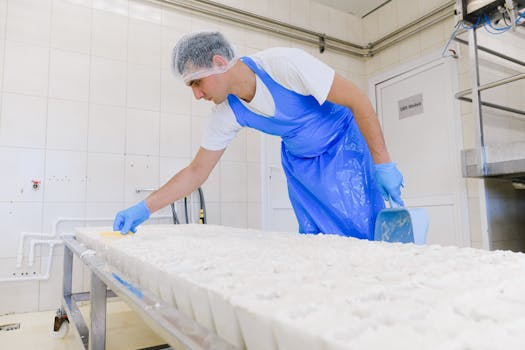
Imagine you are making your favourite toy or a delicious cake. A Quality Assurance Inspector is like a super detective who makes sure that everything is made perfectly and safely! They check products at different stages to make sure they meet all the rules and are good enough for people to use or eat. They might look at how things are built, test if they work properly, or check if food is fresh and clean. If something isnt quite right, they help figure out what went wrong so it can be fixed. This job is really important because it helps keep everyone safe and happy with the things they buy. Being a Quality Assurance Inspector means you need to be very careful and pay close attention to details. You might use special tools to measure things, read instruction manuals to know exactly what to look for, and write reports about what you find. You could work in a busy factory, a quiet laboratory, or even in a kitchen where food is made. Its a job that helps make sure that everything from your bike to your breakfast cereal is made to the very best standard!

Quality Assurance Inspector

Flag Media

Please select a reason for flagging this content.

📊 Statistics

Typical Salary Range

A Quality Assurance Inspector in the UK can expect to earn between 20,000 and 35,000 pounds a year, depending on their experience and where they work. This means they earn a good wage for their important work.

Number of Jobs

Across the UK, there are thousands of people working as Quality Assurance Inspectors in many different industries, from making cars to making food. There are always opportunities for people who are good at spotting details.

Working Hours

Most Quality Assurance Inspectors work about 37 to 40 hours a week, which is usually Monday to Friday. Sometimes, they might need to work shifts if they are inspecting things in a factory that runs all the time.

🚀 Careers in this path

Flag Media

Please select a reason for flagging this content.

Toy Tester

Imagine playing with new toys all day long to make sure they are fun and safe for children. You'd check if they work properly, if all the parts are there, and if they're strong enough not to break easily.

Flag Media

Please select a reason for flagging this content.

Food Taster for Sweets

Your job would be to try different sweets and treats to make sure they taste super yummy! You'd check if they're the right colour, smell good, and have the perfect texture to make everyone happy.

Flag Media

Please select a reason for flagging this content.

Book Checker

You'd get to look at new children's books to make sure all the pages are in the right order, there are no missing words, and all the pictures look bright and colourful. It's like being a detective for books!

Learning the Basics

Be a Good Helper at Home

Start by helping your parents or guardians check things around the house, like making sure your toys are put away neatly or that your clothes are folded correctly. This teaches you to pay attention to detail.

When you help at home, try to spot if something is out of place or if a task could be done a bit better. For example, if you're putting away dishes, check if they are really clean. This helps you get good at noticing small details, which is super important for a Quality Assurance Inspector. You'll learn that doing things properly from the start makes everything better.

Play Detective with Building Blocks

When you build with LEGO or other blocks, carefully check if all the pieces fit together perfectly and if your creation is strong and stable. Look for any wobbly parts!

Building things teaches you how different parts connect and how to follow instructions. As you build, pretend you are a Quality Assurance Inspector for your own creations. Make sure every block is in the right place and that the structure won't fall apart easily. This kind of careful checking helps you understand how things are put together and how to spot if something isn't quite right.

Ask Questions and Observe

When you see something being made, like a cake in the kitchen or a craft project at school, ask how it's done and notice all the steps. Watch carefully how things are put together.

Being curious is a great skill for a Quality Assurance Inspector! When you see how things are made, from baking biscuits to making a drawing, try to understand the 'how' and 'why'. Ask your teachers or parents questions like 'Why do we do it this way?' or 'What happens if we miss a step?'. The more you observe and ask, the better you'll understand the process of making things and how to spot if something goes wrong.

Growing Your Skills

Learn to Follow Instructions Carefully

At school or when playing games, practise following rules and instructions exactly. A Quality Assurance Inspector needs to follow very specific guides to check products.

In many jobs, especially as an inspector, you'll need to follow detailed instructions called 'specifications'. These tell you exactly what to look for and how a product should be. Practising this now, whether it's for a recipe, a school project, or a board game, will help you become good at making sure every step is done correctly and nothing is missed. This skill is vital for making sure products meet high standards.

Develop Your 'Eagle Eyes'

Play 'spot the difference' games or try to find hidden objects in pictures. This helps you train your eyes to notice small details and differences.

A Quality Assurance Inspector needs very sharp eyesight and a keen eye for detail. They have to spot tiny scratches, dents, or mistakes that others might miss. Games that challenge you to find differences or hidden objects are perfect for training your brain and eyes to focus on small details. The better you are at spotting tiny things, the better you'll be at finding problems with products.

Understand What is 'Good' and 'Not Good'

When you draw or make things, think about what makes your work 'good' or 'finished'. What makes it meet your own expectations?

Part of being a Quality Assurance Inspector is knowing what a 'good' product looks like. Think about your own creations: what makes a drawing perfect for you? Is it staying within the lines, using certain colours, or having all the parts? Learning to define 'good' and 'not good' in your own work helps you understand quality standards. You'll use this skill to compare a product to what it's supposed to be.

Future Steps

Visit a Factory or Workshop

When you're older, try to visit places where things are made, like a bakery, a car factory (if possible!), or a toy workshop. See how things are inspected.

Visiting places where products are made, such as a local bakery, a craft workshop, or even a larger manufacturing plant during an open day, can give you a real glimpse into the world of production. You might even see people doing quality checks! Observing how items are created and then checked for faults will show you first-hand what a Quality Assurance Inspector does in their daily job. It's a great way to see if this career sparks your interest.

Study Science and Maths

At school, pay attention in your science and maths lessons. These subjects teach you how things work and how to measure and compare.

Science and maths are really useful for a Quality Assurance Inspector. Science helps you understand the materials products are made from and how they should behave. Maths helps you measure things accurately, check sizes, and even understand statistics about how many items might have a fault. Being good at these subjects will give you a strong foundation for understanding the technical side of quality checking.

Practise Being Thorough and Fair

When playing games or doing tasks, try to be very thorough in your checks and fair in your judgments. This is important for an inspector.

A Quality Assurance Inspector needs to be very thorough, checking every single detail, and also fair. They must make decisions based on the facts and the rules, not just how they feel. Practising this in your daily life, like making sure you check every answer in your homework or fairly judging a game, will help you develop the responsible and objective mindset needed to ensure product quality without bias.

🎬 Useful Videos

🎯 View Apprenticeships

Explore relevant apprenticeships that can help you kickstart your career in Quality Assurance Inspector. Apprenticeships offer hands-on experience and training while earning a wage.

Career Progressions

This page showcases various career options and the pathways to reach them. Each career listed here shares transferable skills and knowledge, making it easier for individuals to transition between them.

Your current career is highlighted to help you see how it fits into the broader landscape of potential career choices. By clicking on any career, you can learn more about it, including the training and education required to pursue it.

Remember, progressing in your career often involves further learning and training. This page provides insights into future career options as well as those that can lead up to your current one.

These career progression decisions are informed by comparing the skills and knowledge needed for different occupations, along with data on how people move between them. Explore the possibilities and discover the exciting journey ahead in your career!

Sample Qualifications

A Quality Assurance Inspector typically verifies products and processes meet quality standards, which directly aligns with the duties of a Quality Control Officer who ensures adherence to quality specifications and procedures within an organisation.

How to become

You can get into this job through:

  • a university course
  • an apprenticeship
  • applying directly
  • working towards this role
  • specialist courses run by professional bodies

University

You could do a foundation degree, higher national diploma or degree.

Subjects that cover quality control include:

  • production management
  • business and management
  • manufacturing engineering

You may need a degree that is specific to the industry you want to work in, for example:

  • science
  • construction
  • engineering
  • pharmaceuticals

Entry requirements

You'll usually need:

  • 1 or 2 A levels, or equivalent, for a foundation degree or higher national diploma
  • 2 to 3 A levels, or equivalent, for a degree

More Information

Apprenticeship

You could do a Quality Practitioner Level 4 Higher Apprenticeship.

This could take between 1 and 2 years to complete.

Entry requirements

You'll usually need:

  • 4 or 5 GCSEs at grades 9 to 4 (A* to C) and A levels, or equivalent, for a higher or degree apprenticeship

More Information

Work

You could start work as a quality control assistant and move into a quality officer role by training on the job, for example through the Chartered Quality Institute.

Direct Application

You could apply directly for jobs if you have a a experience in quality control.

You'll find job opportunities in any industry or sector that has quality control processes, such as engineering, manufacturing or health and safety .

Other Routes

You could take quality control qualifications through the Chartered Quality Institute, or as part of a leadership course from the Chartered Management Institute.

More Information

Career tips

You may find it helps when applying for jobs in quality control if you have some knowledge of British quality standards and methods.

You can move into management roles once you have gained experience as a quality control officer.

Further information

You can find out more about working in quality control through the Chartered Quality Institute.

Interested in More Career Paths?

Explore other careers or use our AI to discover personalised paths based on your interests.

Stay connected

Join our newsletter to stay up to date on features and releases

Address
Developing Experts Limited
Exchange Street Buildings
35-37 Exchange Street
Norwich
NR2 1DP
UK

Phone
01603 273515

Email
[email protected]

Copyright 2026 Developing Experts, All rights reserved.