
Creating Career Path...

Finding Further Careers...

Metal Machining Setter and Setter Operator

View this career for different education levels:

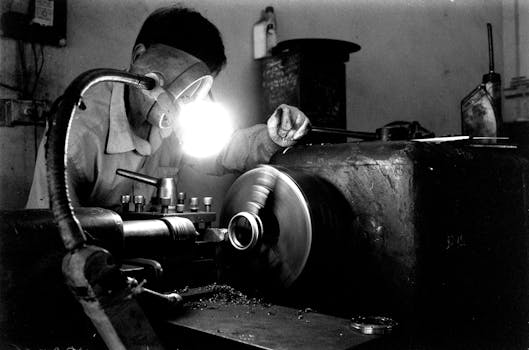
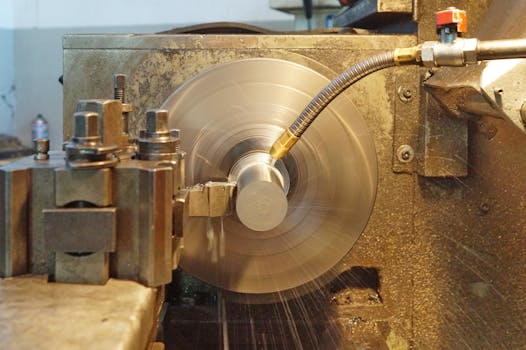
A Metal Machining Setter and Setter Operator is a super important job in making lots of different things, from car parts to aeroplane components or even medical equipment! Imagine you have a big, clever machine that can cut, drill, or shape metal with amazing accuracy. A 'Setter's' main job is to get that machine ready to do its work. This means loading the right tools, adjusting settings, and making sure the machine is programmed correctly for the specific metal part it needs to make. They read technical drawings, which are like very detailed maps, to understand exactly how the part should look. Once the machine is set up, the 'Setter Operator' then makes sure it runs smoothly. They might load the raw metal into the machine, keep an eye on it while it's working, and check the finished parts to make sure they are perfect and exactly to the right size and shape. If something goes wrong, they know how to fix it or make adjustments. It's a hands-on job that needs a good eye for detail, a knack for solving problems, and an understanding of how machines work. It combines technical skills with practical work.

Metal Machining Setter and Setter Operator

Flag Media

Please select a reason for flagging this content.

📊 Statistics

Average Salary (Experienced)

An experienced Metal Machining Setter and Setter Operator in the UK can expect to earn an average salary ranging from 25,000 to 35,000 per year. Starting salaries might be a bit lower, especially for apprentices.

Number of Job Openings

There are consistently thousands of job openings for machinists and machine setters across the UK, particularly in manufacturing hubs. This shows a steady demand for these skilled roles.

Weekly Working Hours

Most Metal Machining Setter and Setter Operator jobs in the UK involve working around 37 to 40 hours per week, often in shifts (day, night, or rotating) to keep production lines running.

🚀 Careers in this path

Flag Media

Please select a reason for flagging this content.

CNC Machinist

Imagine you're like a wizard, but instead of spells, you use computers to tell big machines how to carve and shape metal perfectly. You'd set up the machine, load the metal, and watch it turn a block into something amazing, like a part for a car or a phone.

Flag Media

Please select a reason for flagging this content.

Toolmaker

A toolmaker is like a master craftsman who creates the special tools that other machines use to make things. You'd be super precise, making sure every mould, die, or cutting tool is perfect so that thousands of identical parts can be made later on. It's all about making the tools that make other things!

Flag Media

Please select a reason for flagging this content.

Precision Engineer

This is all about making things incredibly accurate, often for high-tech items like medical equipment, aerospace parts, or scientific instruments. You'd work with really advanced machines and tools to make sure everything is exactly the right size and shape, down to a tiny fraction of a millimetre.

Exploring and Learning

Understand Metalworking Basics

Start by learning about different types of metals and how they can be shaped and cut. This could involve looking up videos online or reading simple books.

Metals like steel, aluminium, and brass all behave differently when cut or shaped. Understanding their properties is key. You could watch videos showing how metal is drilled, turned on a lathe, or milled. Look for simple explanations of tools like files, hacksaws, and basic measuring equipment like rulers and calipers. Understanding these foundational concepts will make it easier to grasp more complex machining later on.

Develop Practical Skills

Get hands-on experience by building models or joining clubs that involve making things, even if it's not metal initially.

Things like building model kits, doing woodwork projects, or joining a school club where you design and make items can help you develop important skills. These include using tools safely, understanding measurements, and following instructions carefully. These 'making' skills are super important for a future in machining, as you'll be working with precision and practical application daily. Even something like LEGO Technic can help you think about how parts fit together.

Explore STEM Subjects

Pay attention in your maths, science, and design & technology classes at school. They teach really important skills for this career.

Maths is crucial for understanding measurements, angles, and calculations needed for machine settings. Science, especially physics, helps you understand how materials behave and the forces involved in cutting. Design & Technology (DT) lessons often involve practical projects where you learn about materials, tools, and creating objects, which is a direct link to what a Metal Machining Setter and Setter Operator does. These subjects build a strong foundation for technical understanding.

Pathways and Training

Choose Relevant GCSEs

When you choose your GCSEs, pick subjects like Design & Technology, Maths, and Science as they are very useful for a career in manufacturing.

Good grades in Maths and Science (especially Physics or Combined Science) show you have a solid understanding of numbers, measurements, and how things work. Design & Technology (DT) can be particularly helpful as it often includes practical work with materials and understanding manufacturing processes. Some schools might offer engineering or manufacturing-focused vocational qualifications at this stage too, which could be a great choice to get a head start.

Consider a College Course or Apprenticeship

After GCSEs, you can look into college courses in engineering or manufacturing, or apply for an apprenticeship.

An apprenticeship is a fantastic way to learn because you get hands-on training while also studying for qualifications, and you get paid! Look for engineering, manufacturing, or machining apprenticeships. College courses, like a BTEC in Engineering, will teach you the theory and practical skills in a workshop environment. Both routes lead to recognised qualifications and valuable experience. Research local colleges and companies that offer these programmes.

Gain Work Experience

Try to get some work experience in a factory or engineering workshop during school holidays if you can.

Even a few days or weeks of work experience can give you a real insight into what the job is like. You'll see machines in action, understand workshop safety rules, and meet people who work in the industry. It's a great way to show potential employers that you're keen and committed to this career path. Ask your teachers if they know of any local companies that offer placements, or have your parents help you contact manufacturing businesses nearby.

Career Development

Master Machine Operation

Focus on becoming really good at setting up and operating different types of metal machining equipment.

This involves learning how to read engineering drawings, select the correct cutting tools, adjust machine settings (like speed and feed rates), and operate machines safely and efficiently. You'll become skilled in using Computer Numerical Control (CNC) machines, which are controlled by computers, and traditional manual machines. Practice makes perfect here, and paying close attention to detail is key to producing high-quality parts. You'll learn how to check the finished parts using precision measuring instruments.

Learn Programming (CNC)

For modern machines, learning how to program them (like telling the computer what to do) is a really valuable skill.

Many modern metal machining machines are CNC (Computer Numerical Control). This means they are controlled by computer programs. Learning the basics of G-code and M-code, which are the languages used to program these machines, will make you a highly sought-after operator. This involves understanding how to translate an engineering drawing into instructions the machine can follow to cut the metal precisely. Many apprenticeships and college courses will cover this, but extra practice and self-study will set you apart.

Aim for Specialisation or Leadership

Once you're experienced, you can specialise in certain types of machines or aim to become a team leader.

With experience, you might become an expert in specific types of machining, like grinding, milling, or turning, or with particular materials. You could also progress to roles such as a supervisor, where you would manage a team of operators and setters, or even move into roles like a manufacturing engineer or quality control inspector. Continuous learning, staying updated with new technologies, and taking on more responsibility will help you advance your career.

🎬 Useful Videos

🎯 View Apprenticeships

Explore relevant apprenticeships that can help you kickstart your career in Metal Machining Setter and Setter Operator. Apprenticeships offer hands-on experience and training while earning a wage.

Career Progressions

This page showcases various career options and the pathways to reach them. Each career listed here shares transferable skills and knowledge, making it easier for individuals to transition between them.

Your current career is highlighted to help you see how it fits into the broader landscape of potential career choices. By clicking on any career, you can learn more about it, including the training and education required to pursue it.

Remember, progressing in your career often involves further learning and training. This page provides insights into future career options as well as those that can lead up to your current one.

These career progression decisions are informed by comparing the skills and knowledge needed for different occupations, along with data on how people move between them. Explore the possibilities and discover the exciting journey ahead in your career!

Sample Qualifications

The user's input refers to 'setter' and 'setter operator' roles involving 'metal machining'. From the limited list provided, 'Print operator' is the closest match as it involves setting up and operating machinery (printing presses) and requires a similar skill set in machine operation and setup, even though the material (metal vs. print) differs. Other options are either completely unrelated (e.g., AI engineer, Demolition operative) or involve manual labour without a direct machine 'setting' or 'operating' component (e.g., Recycling operative).

How to become

You can get into this job through:

  • a college course
  • an apprenticeship
  • working towards this role
  • applying directly
  • training with a professional body

College

You could do a college course, which would teach you some of the skills and knowledge you need in this job. 

Courses include:

  • printmaking
  • reprographics
  • understanding the print working environment

Entry requirements

Entry requirements for these courses vary.

More Information

Apprenticeship

You could apply to do a print industry apprenticeship with a printing company. For example:

  • Print Operative Level 2 Intermediate Apprenticeship
  • Print Technician Level 3 Advanced Apprenticeship

These apprenticeships can take between 2 and 3 years to complete. They combine training on the job and time spent with a learning provider.

Entry requirements

You'll usually need:

  • some GCSEs, usually including English and maths, or equivalent, for an intermediate apprenticeship
  • 5 GCSEs at grades 9 to 4 (A* to C), or equivalent, including English and maths, for an advanced apprenticeship

More Information

Work

You could start as a print room or reprographics assistant and become a print operator or technician through on-the-job training and promotion.

Direct Application

You'll need a good general standard of education to apply directly for printing jobs. GCSEs in maths, English, art and IT may give you an advantage when looking for work. Some employers may ask for A levels or equivalent qualifications.

Other Routes

You can do printing, packaging and graphic communications courses through the British Printing Industries Federation.

More Information

Career tips

A working knowledge of desktop publishing software will be useful, though not essential, as you will receive training from your employer.

Further information

You can find out more about printing careers from the British Printing Industries Federation.

Interested in More Career Paths?

Explore other careers or use our AI to discover personalised paths based on your interests.

Stay connected

Join our newsletter to stay up to date on features and releases

Address
Developing Experts Limited
Exchange Street Buildings
35-37 Exchange Street
Norwich
NR2 1DP
UK

Phone
01603 273515

Email
[email protected]

Copyright 2026 Developing Experts, All rights reserved.