
Creating Career Path...

Finding Further Careers...

Metalworking Production and Maintenance Fitter

View this career for different education levels:

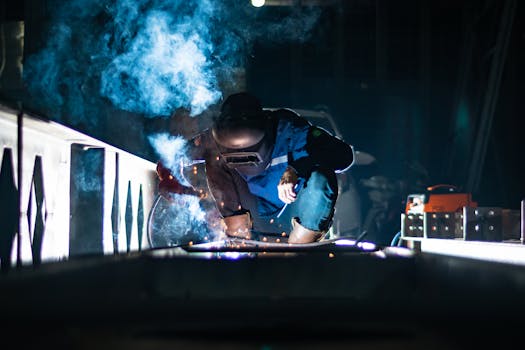
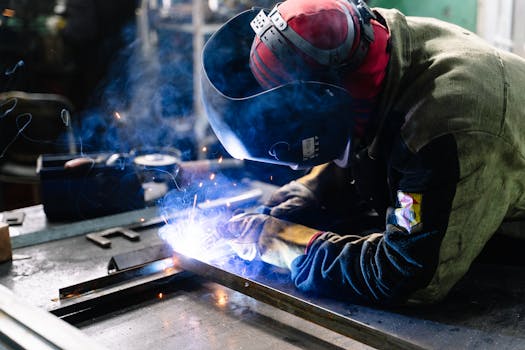
A Metalworking Production and Maintenance Fitter is a bit like a highly skilled mechanic, but for big machines and factory equipment, rather than just cars. Imagine a busy factory where metal products are made, like parts for aeroplanes, cars, or even household appliances. A production fitter helps build and set up the machines that do all that work. They'll read technical drawings, use tools to assemble parts, and make sure everything is put together correctly and safely. It's a very hands-on job where you get to see how complex machinery comes to life. Once the machines are up and running, the 'maintenance' part of the job kicks in. A maintenance fitter is responsible for keeping all that important equipment working smoothly. This means regularly checking machines, performing repairs if something breaks down, and carrying out scheduled servicing to prevent problems before they start. They use their problem-solving skills to diagnose issues, replace worn-out parts, and adjust settings to ensure the factory keeps producing things without interruption. It's a crucial role that helps keep industries running and ensures products are made efficiently and to a high standard.

Metalworking Production and Maintenance Fitter

Flag Media

Please select a reason for flagging this content.

📊 Statistics

Average UK Salary

For a Metalworking Production and Maintenance Fitter in the UK, the average salary often ranges from about 25,000 to 35,000 pounds per year. Experienced fitters with specialised skills can earn more.

Number of Positions

There are thousands of fitters employed across the UK in various manufacturing and engineering sectors. While specific numbers for this exact role are hard to pinpoint, the broader category of 'Maintenance and Skilled Trades' sees tens of thousands of roles available annually, showing consistent demand.

Working Hours

Most fitters work around 37-40 hours a week. However, shift work, including nights and weekends, is common, especially in production environments where machinery runs continuously. Overtime may also be available.

🚀 Careers in this path

Flag Media

Please select a reason for flagging this content.

Welder

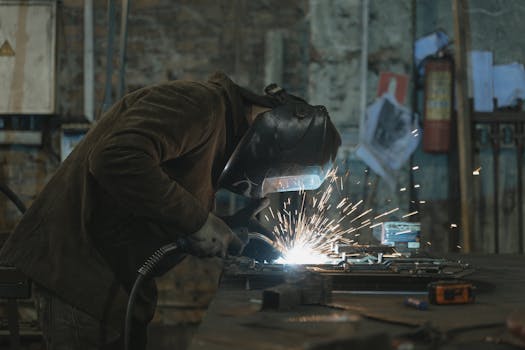
If you enjoy putting metal parts together, a Welder uses special tools to join pieces of metal very strongly. You could make things like bridges, cars, or parts for buildings.

Flag Media

Please select a reason for flagging this content.

Fabricator

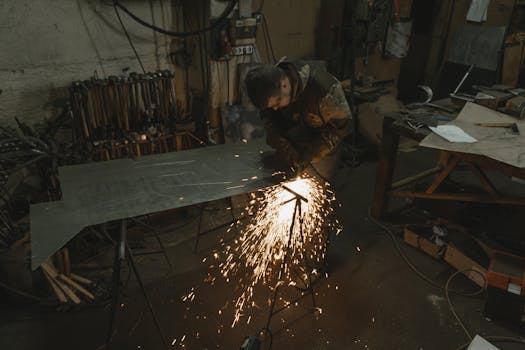
A Fabricator takes flat sheets of metal and cuts, bends, and shapes them into specific items or structures. You could be making things like metal cabinets, fences, or parts for machines.

Flag Media

Please select a reason for flagging this content.

Maintenance Technician

If you like fixing things, a Maintenance Technician checks and repairs machines and equipment in factories or workshops. You'd make sure everything is working safely and properly, often using tools to fix metal parts.

Build Your Foundations

Excel in School Subjects

Focus on subjects like Maths, Design & Technology (D&T), and Science, especially Physics. These subjects will give you the basic knowledge needed for understanding how machines work and for problem-solving.

Good grades in Maths will help you with measurements and calculations, which are super important for fitting parts accurately. D&T will give you hands-on experience with tools and materials, and Science, particularly Physics, will explain the principles behind how machines move and function. Try to get involved in any practical projects or clubs that use tools or build things.

Explore Practical Hobbies

Get involved in hobbies that involve making or fixing things, like model building, repairing bikes, or even helping out with DIY projects at home. This helps you get comfortable with tools and problem-solving.

Practical hobbies are a fantastic way to develop your hand-eye coordination, learn how to use basic tools safely, and understand how different parts fit together. Whether it's taking apart an old gadget to see how it works or building something from a kit, these experiences will build your confidence and give you a head start for a hands-on career. Local youth clubs or community workshops might offer relevant activities.

Research the Role

Learn more about what a Metalworking Production and Maintenance Fitter actually does day-to-day. Look up videos, articles, and job descriptions to get a clearer picture.

Understanding the day-to-day tasks will help you decide if this career is a good fit for you. You can look at websites like the National Careers Service in the UK, watch YouTube videos of fitters at work in factories, or even try to find someone in this role to talk to. Knowing what to expect will help you prepare better for your future steps and confirm your interest.

Gain Qualifications and Experience

Consider a College Course

After your GCSEs, you could study a Level 2 or 3 qualification in engineering, manufacturing, or a related field at a local college. This will give you more specific skills and knowledge.

Courses like a BTEC National Diploma in Engineering or a City & Guilds qualification in Mechanical Engineering can provide you with practical skills and theoretical knowledge relevant to fitting. These courses often include workshop practice where you'll learn about tools, machinery, and safety procedures used in metalworking and manufacturing environments. They are a great way to prepare for an apprenticeship or entry-level job.

Seek an Apprenticeship

An apprenticeship is a brilliant way to learn on the job. You'll work for a company, get paid, and study for a qualification at the same time, learning directly from experienced fitters.

Look for engineering or manufacturing apprenticeships. These typically last 2-4 years and combine practical work experience with classroom-based learning at a college or training provider. You'll learn to assemble, install, maintain, and repair machinery used in metal production, gaining hands-on experience with precision tools, welding, and diagnostic equipment. Many employers prefer apprentices, as it gives you real-world skills and a recognised qualification.

Develop Practical Skills

During your training or apprenticeship, focus on developing key practical skills like precision measuring, reading technical drawings, using hand and power tools, and understanding different metalworking processes.

A Metalworking Production and Maintenance Fitter needs to be very precise. You'll learn how to use calipers, micrometers, and other measuring tools accurately. Understanding engineering drawings is crucial for assembling parts correctly. You'll also become skilled in using a range of hand tools, power tools, and potentially even some welding or machining equipment. Safety procedures for operating machinery are also a vital part of your practical skill set.

Advance Your Career

Gain Experience and Specialise

Once qualified, work in the industry to gain experience. You might even choose to specialise in certain types of machinery, specific metalworking techniques, or maintenance roles.

After completing your apprenticeship or college course, finding your first full-time role is key. With experience, you can become an expert in areas like hydraulic systems, pneumatic systems, CNC machinery, or advanced welding techniques. Specialisation can lead to more complex and interesting work, and also potentially higher pay. Continuously seeking out new challenges and learning opportunities will benefit your career.

Pursue Further Training

Stay updated with new technologies and methods by taking short courses or certifications. This shows you're committed to your craft and helps you develop new skills.

The manufacturing industry is always evolving, with new machines and technologies being introduced. Taking short courses in areas like CAD (Computer-Aided Design), advanced diagnostic techniques, or specific machinery maintenance will keep your skills sharp and make you more valuable to employers. Some companies offer in-house training, or you can look for accredited courses from professional bodies or colleges.

Look for Leadership Opportunities

With enough experience and continued learning, you could move into roles like a Senior Fitter, Team Leader, or even a Maintenance Manager, overseeing other fitters and projects.

As you gain more experience and demonstrate strong problem-solving and communication skills, opportunities to lead others might arise. A Senior Fitter might train new apprentices, while a Team Leader or Supervisor would manage a small team, coordinate maintenance schedules, and ensure projects are completed efficiently and safely. These roles require good organisational skills and the ability to mentor others.

🎬 Useful Videos

🎯 View Apprenticeships

Explore relevant apprenticeships that can help you kickstart your career in Metalworking Production and Maintenance Fitter. Apprenticeships offer hands-on experience and training while earning a wage.

Career Progressions

This page showcases various career options and the pathways to reach them. Each career listed here shares transferable skills and knowledge, making it easier for individuals to transition between them.

Your current career is highlighted to help you see how it fits into the broader landscape of potential career choices. By clicking on any career, you can learn more about it, including the training and education required to pursue it.

Remember, progressing in your career often involves further learning and training. This page provides insights into future career options as well as those that can lead up to your current one.

These career progression decisions are informed by comparing the skills and knowledge needed for different occupations, along with data on how people move between them. Explore the possibilities and discover the exciting journey ahead in your career!

Sample Qualifications

A Metalworking Production and Maintenance Fitter combines production aspects with a strong emphasis on maintenance of metalworking machinery and equipment. This directly aligns with the duties of a 'Maintenance fitter', which involves servicing and repairing mechanical systems.

How to become

You can get into this job through:

  • a college course
  • an apprenticeship
  • working towards this role
  • applying directly

College

You could take a college course to learn some of the skills you'll need in this job. 

Relevant subjects include:

  • engineering
  • mechanical or electrical engineering
  • fabrication and welding
  • T Level in Maintenance, Installation and Repair for Engineering and Manufacturing

Entry requirements

Entry requirements for these courses vary.

  • 4 or 5 GCSEs at grades 9 to 4 (A* to C), or equivalent, including English and maths for a T Level

More Information

Apprenticeship

You could apply to do an apprenticeship, such as:

  • Engineering and Manufacturing Level 2 Foundation Apprenticeship
  • Engineering Fitter Level 2 Intermediate Apprenticeship
  • Engineering Maintenance Technician Level 3 Advanced Apprenticeship
  • Maintenance Operations Engineering Technician Level 3 Advanced Apprenticeship

Foundation apprenticeship

You can apply for a foundation apprenticeship if you're aged 16 to 21.

If you're aged 22 to 24, you can apply if you:

Entry requirements

You'll usually need:

  • no specific qualifications or experience to apply for a foundation apprenticeship
  • some GCSEs, usually including English and maths, or equivalent, for an intermediate apprenticeship
  • 5 GCSEs at grades 9 to 4 (A* to C), or equivalent, including English and maths, for an advanced apprenticeship

More Information

Work

You could start as an engineering operative or trainee craftsperson and do training on the job to become a fitter.

Direct Application

You can apply directly for maintenance fitter jobs if you've got qualifications and experience in maintenance work, like:

  • mechanical engineering
  • pipefitting
  • welding
  • electrical engineering

More Information

Registration

Further information

You can find more about careers in engineering from the ECITB and Tomorrow's Engineers.

Interested in More Career Paths?

Explore other careers or use our AI to discover personalised paths based on your interests.

Stay connected

Join our newsletter to stay up to date on features and releases

Address
Developing Experts Limited
Exchange Street Buildings
35-37 Exchange Street
Norwich
NR2 1DP
UK

Phone
01603 273515

Email
[email protected]

Copyright 2026 Developing Experts, All rights reserved.