Creating Career Path...

Finding Further Careers...

Joiner

View this career for different education levels:

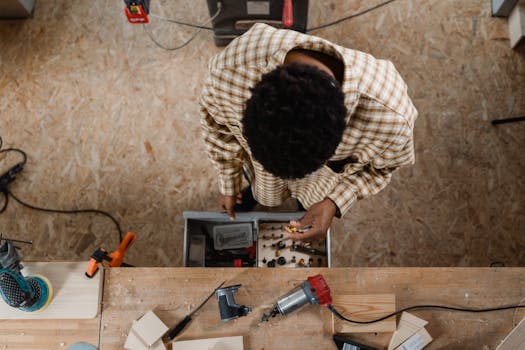
A joiner is a skilled craftsperson who works with wood to make and fit wooden items for buildings. Unlike carpenters who often work on the structural parts of a building, joiners usually focus on the 'second fix' and 'third fix' elements, which are the visible, finished parts. This means they might make and install things like doors, window frames, staircases, skirting boards, fitted wardrobes, and kitchen units. They use a variety of tools, both hand tools and power tools, to cut, shape, and join pieces of wood accurately and expertly. It's a job that requires precision, attention to detail, and a good eye for design. Being a joiner involves a lot of practical work, often on construction sites or in workshops. You might spend time reading technical drawings and plans to understand what needs to be made and where it needs to go. Safety is very important, as you'll be working with sharp tools and machinery. Many joiners learn their trade through an apprenticeship, which combines on-the-job training with college study, helping them to develop all the necessary skills and knowledge to create beautiful and functional wooden pieces.

Joiner

Flag Media

Please select a reason for flagging this content.

📊 Statistics

Average Salary Range

In the UK, a trainee joiner might start on around 18,000 to 22,000 pounds per year. Experienced joiners can earn between 25,000 and 35,000 pounds, with highly skilled or specialist joiners potentially earning more than 40,000 pounds annually, especially if self-employed or in managerial roles.

Number of Positions

The construction sector, where joiners work, is a significant employer in the UK. There are thousands of joinery positions across the country, from small local businesses to large construction firms, and demand remains steady for skilled tradespeople. Many joiners are also self-employed.

Typical Working Hours

Most joiners work around 37-40 hours a week, usually from Monday to Friday. However, project deadlines or urgent repairs might sometimes require working longer hours or on weekends.

🚀 Careers in this path

Flag Media

Please select a reason for flagging this content.

Cabinet Maker

If you like making things from wood, a Cabinet Maker designs and builds beautiful wooden furniture like wardrobes, tables, and kitchen cabinets. You'd learn to use special tools to make strong and fancy items.

Flag Media

Please select a reason for flagging this content.

Set Builder

For someone who enjoys building and creativity, a Set Builder makes all the amazing backdrops and props for films, TV shows, and theatre plays. You'd be working with wood and other materials to bring exciting scenes to life.

Flag Media

Please select a reason for flagging this content.

Boat Builder

If you're interested in woodworking and love the idea of being near water, a Boat Builder constructs and repairs wooden boats and yachts. You'd learn how to make structures that are not only strong but also waterproof.

Build Your Foundations

Excel in Practical Subjects

Focus on subjects like Design and Technology (DT) at school. These lessons will help you get hands-on experience and understand how materials work.

Design and Technology (DT) lessons are super helpful because you'll learn about different materials, how to use tools safely, and how to design and make things. You'll also learn to follow instructions carefully and understand measurements, which are really important for a Joiner. Try to get involved in any extra projects that involve making things.

Start DIY Projects at Home

Practice your skills by helping out with DIY projects around the house or trying simple woodworking crafts. This helps you get comfortable with tools.

Ask a parent, guardian, or an adult to show you how to safely use basic tools like a hammer, screwdriver, or tape measure. You could try building a birdhouse, a small shelf, or even repairing something broken. This practical experience builds confidence and shows you enjoy working with your hands, which is key for a Joiner.

Research the Trade

Learn more about what a Joiner does day-to-day. Look up videos, read articles, or talk to people who work in construction.

Understanding the day-to-day life of a Joiner will help you decide if it's the right path for you. You can find videos online showing joiners at work, both in workshops and on building sites. If you know anyone in construction, ask them about their job and what they like about it. This research will give you a real insight into the career.

Gain Experience & Qualifications

Consider a College Course

After secondary school, you can enrol in a college course like a Level 2 or 3 Diploma in Bench Joinery or Site Carpentry. These courses teach you specialist skills.

College courses are a fantastic way to learn the specific skills and knowledge needed to become a qualified Joiner. You'll get hands-on training in workshops, learning about different types of wood, joints, tools, and health and safety. These qualifications are highly valued by employers and often lead directly into apprenticeships or jobs.

Look for an Apprenticeship

An apprenticeship lets you learn on the job while getting paid. You'll work with experienced Joiners and gain practical skills.

Apprenticeships are one of the best ways to become a Joiner in the UK. You'll spend most of your time working for a construction company or joinery firm, learning from experienced professionals. You'll also attend college part-time to gain your qualifications. It's a great way to earn money, gain qualifications, and build up a network of contacts in the industry.

Get Work Experience

Even if you're not doing an apprenticeship, try to get some work experience with a local builder or joiner. This shows you're keen.

Contact local building companies, joinery workshops, or independent carpenters to see if they offer work experience placements. Even a few weeks can be incredibly valuable. It will give you a taste of the working environment, help you understand daily tasks, and make your CV stand out when you apply for jobs or apprenticeships later on.

Start Your Career

Apply for Entry-Level Jobs

Once you have your qualifications and some experience, start applying for jobs as a Junior Joiner, Trainee Joiner, or Carpenter's Mate.

Look on job websites, company career pages, and consider contacting local construction firms directly. Make sure your CV highlights your qualifications, any work experience you've gained, and your passion for working with wood. Be ready to talk about the projects you've worked on, even if they were just at home or during your college course.

Continue Learning and Developing

The construction industry is always changing. Keep learning new techniques, tools, and safety practices.

Once you're in a job, don't stop learning! You can take advanced courses in specific areas like bespoke furniture making, restoration, or even get tickets for operating specialist machinery. Staying up-to-date with new materials and construction methods will make you a more valuable and versatile Joiner.

Specialise or Go Self-Employed

As you gain experience, you might want to specialise in a particular type of joinery or even start your own business.

With several years of experience, you could specialise in areas like shopfitting, kitchen fitting, restoration work, or creating custom-made furniture. Many experienced joiners also choose to become self-employed, running their own business and taking on a variety of projects. This offers more independence and control over your work.

🎬 Useful Videos

🎯 View Apprenticeships

Explore relevant apprenticeships that can help you kickstart your career in Joiner. Apprenticeships offer hands-on experience and training while earning a wage.

Career Progressions

This page showcases various career options and the pathways to reach them. Each career listed here shares transferable skills and knowledge, making it easier for individuals to transition between them.

Your current career is highlighted to help you see how it fits into the broader landscape of potential career choices. By clicking on any career, you can learn more about it, including the training and education required to pursue it.

Remember, progressing in your career often involves further learning and training. This page provides insights into future career options as well as those that can lead up to your current one.

These career progression decisions are informed by comparing the skills and knowledge needed for different occupations, along with data on how people move between them. Explore the possibilities and discover the exciting journey ahead in your career!

Sample Qualifications

A Joiner is a skilled tradesperson who fabricates and installs wooden components for buildings, which aligns directly with the duties and expertise of a Carpenter, particularly those involved in finishing work and custom installations within construction.

How to become

You can get into this job through:

  • a college course
  • an apprenticeship

College

You could take a college course like:

  • bench joinery
  • site carpentry
  • T Level in On Site Construction

Courses like these would teach you some of the skills and knowledge you need to find a trainee position with a company.

Entry requirements

Entry requirements for these courses vary.

  • 4 or 5 GCSEs at grades 9 to 4 (A* to C), or equivalent, including English and maths for a T Level

More Information

Apprenticeship

You could apply to do an apprenticeship, such as:

  • Onsite Trades Level 2 Foundation Apprenticeship
  • Carpentry and Joinery Level 2 Intermediate Apprenticeship
  • Wood Machinist Level 2 Intermediate Apprenticeship
  • Craft Carpentry and Joinery Level 3 Advanced Apprenticeship

You could also do a Wood Product Manufacturing Operative Level 2 Intermediate Apprenticeship, producing goods used in the furniture making and construction industries.

Foundation apprenticeship

You can apply for a foundation apprenticeship if you're aged 16 to 21.

If you're aged 22 to 24, you can apply if you:

Entry requirements

You'll usually need:

  • no specific qualifications or experience to apply for a foundation apprenticeship
  • some GCSEs, usually including English and maths, or equivalent, for an intermediate apprenticeship
  • 5 GCSEs at grades 9 to 4 (A* to C), or equivalent, including English and maths, for an advanced apprenticeship

More Information

More Information

Registration

Career tips

If you're thinking of changing career to carpentry, look out for short or part-time 'taster' courses at your local college. These are designed to help you find out if carpentry is for you.

Further information

You can find out more about becoming a carpenter from Go Construct and House Building Careers.

Interested in More Career Paths?

Explore other careers or use our AI to discover personalised paths based on your interests.

Stay connected

Join our newsletter to stay up to date on features and releases

Address
Developing Experts Limited
Exchange Street Buildings
35-37 Exchange Street
Norwich
NR2 1DP
UK

Phone
01603 273515

Email
[email protected]

Copyright 2026 Developing Experts, All rights reserved.