Creating Career Path...

Finding Further Careers...

Bricklayer

View this career for different education levels:

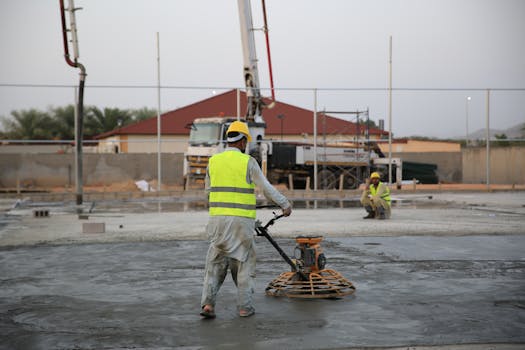
A bricklayer is a skilled craftsperson responsible for constructing and repairing walls, chimneys, partitions, and other structures using bricks, blocks, and other types of masonry units. This role is fundamental to the construction industry, whether it's building new homes, commercial properties, or undertaking renovation and restoration projects. The work involves preparing the worksite, interpreting architectural drawings, mixing mortar, laying bricks or blocks accurately and efficiently, and ensuring the structure is level, plumb, and square. Attention to detail is crucial for both the structural integrity and aesthetic finish of the build. Bricklayers also often work with different types of materials, like concrete blocks, stone, and various types of bricks, adapting their techniques accordingly. It's a physically demanding job that requires strength, stamina, and precision, often performed outdoors in varying weather conditions. Beyond the physical laying of bricks, a bricklayer needs to understand health and safety regulations, material properties, and basic calculations for quantities and measurements. They might also be involved in setting out the foundations for walls, using damp-proof courses, and installing cavity wall insulation. Many bricklayers learn their trade through apprenticeships, combining on-the-job experience with college-based learning to gain vocational qualifications such as NVQs or diplomas. The career offers a tangible sense of achievement, seeing structures rise from the ground, and provides opportunities for specialisation in areas like heritage restoration or decorative brickwork.


Bricklayer

Flag Media

Please select a reason for flagging this content.

📊 Statistics

Average Salary Range (UK)

Starting salaries for apprentices or newly qualified bricklayers can be around £19,000 to £24,000 per year. Experienced bricklayers can typically earn between £28,000 and £40,000, with highly skilled or self-employed professionals potentially exceeding £50,000, especially for specialised projects or those in high-demand areas.

Job Outlook and Demand (UK)

The construction industry in the UK consistently experiences demand for skilled bricklayers. Government initiatives for housing and infrastructure, coupled with an aging workforce, suggest a steady need for new professionals. While specific 'number of positions' data fluctuates, the Construction Skills Network (CSN) often highlights bricklaying as a trade with ongoing recruitment requirements across various regions.

Working Hours (Typical)

A standard working week for a bricklayer is typically around 39 to 40 hours, Monday to Friday. However, project deadlines and weather conditions can lead to variations, including early starts, late finishes, and occasional weekend work. Self-employed bricklayers have more flexibility but also take on more responsibility for securing work.

🚀 Careers in this path

Flag Media

Please select a reason for flagging this content.

Heritage Stonemason

Specialises in restoring and conserving historic buildings, working with traditional materials and techniques. This could involve working on listed buildings, cathedrals, or historic estates. Requires a keen eye for detail and respect for historical accuracy.

Flag Media

Please select a reason for flagging this content.

Paving and Landscaping Specialist

Focuses on the construction of outdoor hardscapes, such as patios, driveways, garden walls, and pathways. This role often involves working with various materials like natural stone, block paving, and concrete, and requires an understanding of drainage and aesthetics in outdoor spaces.

Flag Media

Please select a reason for flagging this content.

Refractory Bricklayer

Works with heat-resistant bricks and materials to build and repair furnaces, kilns, incinerators, and other high-temperature industrial structures. This is a specialised and often well-paid niche within bricklaying, requiring precision and an understanding of thermal properties.

Foundation & Learning

Research the Trade

Understand what a bricklayer does day-to-day, the skills required, and the typical working environment.

Start by looking into industry bodies like the Federation of Master Builders (FMB) or the Construction Industry Training Board (CITB) in the UK. Many bricklayers work outdoors in various weather conditions, handling heavy materials and using tools like trowels, levels, and hammers. It's a physically demanding job but offers the satisfaction of seeing tangible results of your work.

Consider an Apprenticeship

An apprenticeship is a highly recommended route, combining on-the-job training with theoretical learning.

Look for apprenticeships through the National Apprenticeship Service website or directly with local construction companies. Apprenticeships typically last 2-3 years, where you'll gain practical experience alongside an experienced bricklayer while also attending college to earn relevant qualifications like NVQs (National Vocational Qualifications) in Trowel Occupations. You'll learn everything from mixing mortar to building complex structures.

Undertake a College Course

If an apprenticeship isn't immediately available, a college course can provide a solid grounding in bricklaying skills.

Many further education colleges offer full-time or part-time courses such as Level 1, 2, or 3 Diplomas in Bricklaying. These courses cover essential practical skills, health and safety regulations, and theoretical knowledge of construction. While they may not offer the same on-site experience as an apprenticeship, they can make you more attractive to employers and potentially shorten the duration of a subsequent apprenticeship.

Skill Development & Experience

Gain On-Site Experience

Apply your learned skills in real-world construction environments, initially under supervision.

Whether through an apprenticeship, a trainee role, or even volunteering on small projects, getting hands-on experience is crucial. This is where you'll perfect your technique for laying bricks, blocks, and stone, learn to read architectural drawings, and understand site safety protocols. You'll work with different types of mortar, learn various bonding patterns, and develop speed and accuracy.

Obtain Your CSCS Card

The Construction Skills Certification Scheme (CSCS) card is essential for working on UK construction sites.

You'll need to pass the CITB Health, Safety and Environment Test to obtain a CSCS card. This demonstrates that you have a basic level of health and safety awareness, which is a mandatory requirement for most employers in the UK construction industry. Different coloured cards reflect different levels of qualification and experience, with a 'Skilled Worker' card being appropriate once you have an NVQ Level 2.

Develop Specialised Skills

Beyond basic bricklaying, consider learning more advanced or niche masonry techniques.

This could include skills like heritage brickwork, working with specific types of stone, damp proofing, pointing, or building intricate arches and decorative features. Specialising can open up more diverse job opportunities, often in restoration or bespoke projects, and can lead to higher earning potential. Continuously seeking opportunities to learn new techniques will make you a more versatile and valuable asset.

Career Advancement & Independence

Become a Senior or Foreman

With experience, you can progress to supervising less experienced bricklayers and managing projects.

As a senior bricklayer or foreman, you'll be responsible for overseeing teams, ensuring work quality, managing materials, and adhering to project deadlines and budgets. This often involves more administrative tasks, problem-solving, and direct communication with site managers and clients. Strong leadership and communication skills, alongside your technical expertise, are vital for this step.

Start Your Own Business

Many experienced bricklayers choose to become self-employed, offering their services directly to clients or contractors.

This involves setting up as a sole trader or limited company, managing your own finances, marketing your services, quoting for jobs, and potentially hiring other bricklayers. You'll need a strong network, excellent organisational skills, and a reputation for high-quality work. Being self-employed offers greater autonomy and potential for higher earnings, but also comes with increased responsibility.

Continuous Professional Development

Stay updated with new materials, techniques, and building regulations to remain competitive.

The construction industry is always evolving, with new materials, sustainable practices, and changes in building codes. Attending workshops, manufacturer training courses, or reading industry publications will help you keep your skills sharp and adaptable. For example, understanding energy-efficient building techniques or new types of insulation can significantly enhance your employability and expertise in a modern context.

🎬 Useful Videos

🎯 View Apprenticeships

Explore relevant apprenticeships that can help you kickstart your career in Bricklayer. Apprenticeships offer hands-on experience and training while earning a wage.

Career Progressions

This page showcases various career options and the pathways to reach them. Each career listed here shares transferable skills and knowledge, making it easier for individuals to transition between them.

Your current career is highlighted to help you see how it fits into the broader landscape of potential career choices. By clicking on any career, you can learn more about it, including the training and education required to pursue it.

Remember, progressing in your career often involves further learning and training. This page provides insights into future career options as well as those that can lead up to your current one.

These career progression decisions are informed by comparing the skills and knowledge needed for different occupations, along with data on how people move between them. Explore the possibilities and discover the exciting journey ahead in your career!

Advanced Careers

Sample Qualifications

How to become

You can get into this job through:

  • a college course
  • an apprenticeship
  • working towards this role

College

You can take a college course like:

  • basic construction skills
  • bricklaying
  • T Level in On Site Construction

These courses teach you some of the skills you'll need to find a trainee bricklayer job with a construction company.

Some colleges and private training organisations may offer short or part-time bricklaying 'taster' courses. These may be of help to you if you're thinking of a change in career.

Entry requirements

Entry requirements for these courses vary.

  • 4 or 5 GCSEs at grades 9 to 4 (A* to C), or equivalent, including English and maths for a T Level

More Information

Apprenticeship

You can apply to do an apprenticeship, such as:

  • Onsite Trades Level 2 Foundation Apprenticeship
  • Bricklaying Level 2 Intermediate Apprenticeship
  • Craft Bricklaying Level 3 Advanced Apprenticeship

Foundation apprenticeship

You can apply for a foundation apprenticeship if you're aged 16 to 21.

If you're aged 22 to 24, you can apply if you:

Entry requirements

You'll usually need:

  • no specific qualifications or experience to apply for a foundation apprenticeship
  • some GCSEs, usually including English and maths, or equivalent, for an intermediate apprenticeship
  • 5 GCSEs at grades 9 to 4 (A* to C), or equivalent, including English and maths, for an advanced apprenticeship

More Information

Work

You could start as a construction site labourer or hod carrier, with a bricklaying team or 'gang', and do training on the job to become a bricklayer.

More Information

Registration

Further information

You can find out more about becoming a bricklayer from Go Construct and House Building Careers.

Interested in More Career Paths?

Explore other careers or use our AI to discover personalised paths based on your interests.

Stay connected

Join our newsletter to stay up to date on features and releases

Address
Developing Experts Limited
Exchange Street Buildings
35-37 Exchange Street
Norwich
NR2 1DP
UK

Phone
01603 273515

Email
[email protected]

Copyright 2026 Developing Experts, All rights reserved.